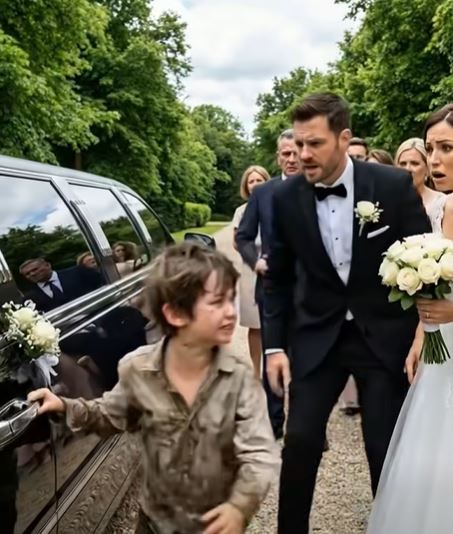
Not when he first stepped through the doorway holding a small plastic bag with everything he owned. Not when I showed him his room, carefully prepared with fresh sheets and a shelf of books I hoped he might like.
Not even when my wife, Laura, knelt beside him and gently told him he was safe now. He simply watched us with wide, guarded eyes, his silence heavier than any sound.
Daniel was seven years old.
The social worker had warned us. He had been moved through four foster homes in two years, each placement ending the same way—with confusion, frustration, and reports describing him as “unresponsive.” Some believed he could not speak. Others said he simply refused. No one truly knew.
But we had chosen him anyway.
There was something about the photograph we had been shown—a fragile boy with solemn eyes that seemed far older than his years. Beneath the silence, we sensed a story waiting to be heard.
The first weeks were difficult. Daniel moved quietly through the house like a shadow, observing everything, participating in nothing. He ate what we served without complaint, followed instructions without hesitation, and showed no signs of defiance. Yet he never smiled, never laughed, never uttered a single word.
At night, we sometimes heard him pacing his room, his small footsteps moving back and forth until sleep finally claimed him. Other times, he would sit by the window for hours, staring into the darkness as though waiting for something—or someone.
We tried everything. We encouraged him gently, never forcing conversation. We gave him art supplies, hoping he might express himself through drawing. We read stories aloud, inviting him to join us. We played music, took him to parks, introduced him to other children. But Daniel remained silent.
And yet, silence does not mean emptiness.
Gradually, we learned his language—the subtle ways he communicated without words. A slight nod meant agreement. A lowered gaze meant discomfort. A careful touch of the sleeve meant gratitude. His silence was not absence; it was protection, a barrier built from experiences we could only imagine.
Months passed. Our bond with him deepened, not through conversation but through presence. Laura would sit beside him while he drew intricate pictures filled with dark shapes and distant figures. I taught him how to plant seeds in the garden, watching as his small hands carefully pressed them into the soil. He never spoke, but he began to trust.
Then one morning, everything changed.
A letter arrived from the court.
Because Daniel’s biological relatives had come forward disputing the adoption, a final hearing would determine his permanent placement. A judge would decide whether he would remain with us or be returned to distant relatives he had never met.
The weeks leading up to the hearing were filled with tension. Lawyers explained that Daniel’s wishes could influence the decision, but there was one problem—he had never spoken.
“If he doesn’t respond,” the attorney told us gently, “the judge may assume he cannot form an attachment or express preference.”
The thought terrified us. Not because we doubted our love for him, but because we feared the system would mistake his silence for indifference.
The day of the hearing arrived cold and gray.
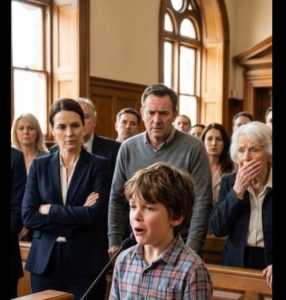
The courtroom felt enormous, its high ceilings and polished surfaces amplifying every sound. Daniel sat between Laura and me, his small hands folded in his lap, his expression calm but unreadable.
Witnesses spoke. Social workers described his history. Psychologists offered theories about trauma and selective mutism. The relatives seeking custody argued their case, insisting they could provide a “proper family environment.”
Throughout it all, Daniel remained silent.
Finally, the judge—a middle-aged woman with kind but piercing eyes—leaned forward.
She had listened patiently to every testimony, her gaze often resting on Daniel with quiet curiosity. After a long pause, she spoke directly to him.
“Daniel,” she said gently, her voice filling the silent courtroom, “I understand that talking may be difficult for you. But I want to ask you one simple question.”
The room seemed to hold its breath.
She continued, her tone soft but steady. “Where do you feel safe?”
The words lingered in the air.
For a moment, nothing happened. Daniel sat perfectly still, his eyes fixed on the polished floor. I felt Laura’s hand tighten around mine. The silence stretched, heavy with uncertainty.
Then, slowly, something changed.
Daniel lifted his head.
His eyes moved from the judge to Laura, then to me. His small fingers trembled as he gripped the edge of the chair. His lips parted slightly, as though he were testing a forgotten ability.