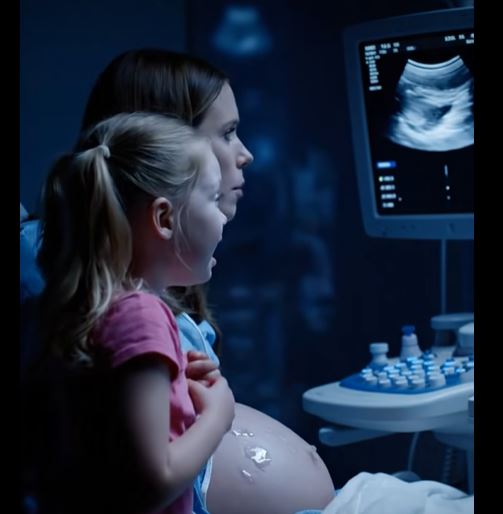
The prenatal clinic smelled faintly of disinfectant and lavender, a combination meant to calm expectant mothers. I had been here so many times during this pregnancy that the routine felt almost automatic. Check in at the front desk. Sit in the same beige chair. Flip through outdated parenting magazines. Listen to the soft hum of medical equipment behind closed doors.
My seven-year-old son, Noah, sat beside me swinging his legs, humming under his breath while tracing the patterns in the carpet with his sneaker. I had brought him along because his school had a half day, and he was excited about seeing the ultrasound screen again. He loved telling people he was going to be a big brother.
“Do you think the baby knows my voice yet?” he asked, pressing his hand gently against my belly.
“I think so,” I smiled. “You talk enough for both of us.”
He grinned, proud of that.
When the nurse called my name, everything felt perfectly normal. Noah hopped up, grabbed my hand, and followed me down the hallway toward the exam room. The walls were lined with framed photos of newborns and smiling families, reminders of why this place usually felt hopeful rather than scary.
Inside the room, the nurse checked my blood pressure, asked the usual questions, and typed notes into the computer. Noah watched closely, fascinated by every button and beep. When the doctor entered, she greeted us warmly and asked Noah if he was ready to see the baby again.
“Yes!” he said enthusiastically, climbing onto the chair near the exam table.
The ultrasound machine whirred to life, and the room dimmed slightly. I lay back, relaxed, already anticipating the familiar sight of a tiny heartbeat flickering on the screen. The doctor moved the probe gently, concentrating, her eyes scanning the monitor.
At first, nothing seemed wrong.
Then Noah stiffened.
I felt it before I heard it—the sudden tension in his small hand gripping mine too tightly. His eyes were fixed on the screen, unblinking.
It wasn’t a playful shout or a startled yelp. It was raw, sharp, terrified. The kind of scream that slices through your body and leaves your heart pounding in your throat.
“STOP! STOP! SOMETHING’S WRONG!”
The doctor pulled the probe away instantly. The nurse rushed forward. I sat up, panic flooding my chest.
“Noah, what is it?” I demanded, grabbing his shoulders. “What did you see?”
He was shaking now, tears streaming down his face. “The baby,” he cried. “The baby isn’t moving right. It’s too quiet.”
The room went completely still.
The doctor’s expression changed—not to alarm, but to something focused and serious. She placed a hand on my arm. “Let’s take a breath,” she said calmly. “Noah, sweetheart, can you tell me what made you scared?”
“I didn’t hear the whooshing,” he sobbed. “Last time it went whoosh-whoosh-whoosh. This time it didn’t.”
My stomach dropped.
He was right. The rhythmic sound of the heartbeat—the sound that had become the reassurance of my pregnancy—had been absent.
The doctor nodded slowly and turned back to the machine. “I’m going to take another look,” she said evenly. “Nurse, could you please step outside with Noah for a moment?”
Noah clung to me. “Don’t let the baby go,” he whispered desperately.
“I won’t,” I promised, though fear was clawing up my throat.
Once Noah was led out, the room felt unbearably quiet. The doctor adjusted the machine, her movements precise, professional, but I could see the tension in her jaw. Seconds stretched into an eternity.
Relief crashed over me so suddenly I burst into tears. The doctor smiled gently. “The baby is okay,” she said. “Sometimes the angle just makes it hard to hear at first.”
But then her expression shifted again.
“However,” she continued carefully, “your son noticed something important. There was a brief deceleration earlier. It corrected itself, but it tells me we need to take a closer look.”
Within minutes, the room filled with controlled urgency. Another doctor was called in. More images were taken. They explained that the umbilical cord had briefly compressed due to the baby’s position. It wasn’t an emergency yet—but it could have become one if unnoticed.
“If you had gone home and this continued,” the doctor said gently, “you might not have felt anything until it was serious.”
I thought of Noah’s scream. His panic. His instinct.
They decided to admit me for monitoring. The nurse brought Noah back in, and when I told him the baby was okay, he collapsed into my arms, crying with relief.