It all started with a quiet phone call on an ordinary morning—one of those days where nothing feels unusual, yet everything is about to change.
After fifteen years of early mornings, long days, and constant effort, I finally made the difficult decision to sell my flower shop. Letting it go wasn’t easy. That little shop had been part of my identity for so long. But deep down, I knew it was time. I had some savings set aside and, for the first time in years, a chance to slow down and think about what I wanted next.
That morning, I was sitting alone at my kitchen table, holding a cup of coffee, when my phone rang. It was my sister, Lisa.
“Ivy… can I come over?” she asked, her voice unusually quiet.
Something in her tone made me say yes without hesitation.
When she arrived, I immediately noticed how tired she looked. Her eyes were heavy, her expression tense. She didn’t waste time with small talk.
“We’re about to lose the house,” she said.
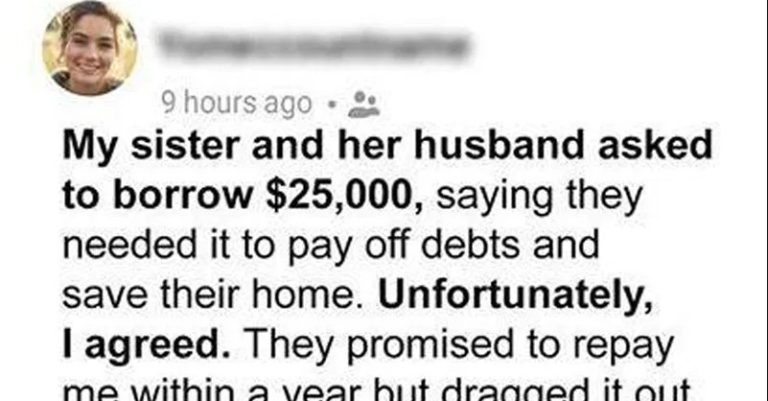
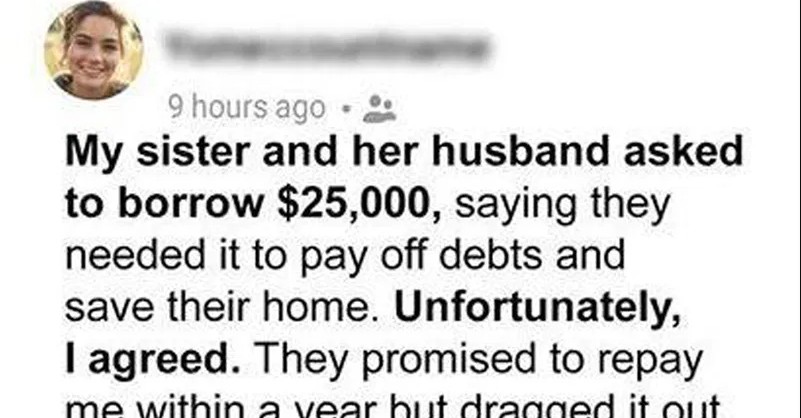
She explained everything in a rush—how Rick’s construction business had been struggling for months, how bills had piled up, and how the bank was starting to pressure them. They had tried to recover, but nothing had worked. They were out of options.
I didn’t need much time to think.
“How much do you need?” I asked.
“Twenty-five thousand,” she replied quietly.
It was a significant amount—almost half of everything I had saved after selling the shop. Still, she was my sister. Helping her felt like the right thing to do.
Later that day, Rick came by. He looked uncomfortable but grateful. We kept things simple and signed a basic loan agreement.
“We won’t forget this,” he said.
At the time, I believed him.
When the money reached their account, Lisa called me in tears, overwhelmed with relief. Knowing I had helped gave me a sense of peace.
But as time passed, things began to feel different.
Months went by, and the topic of repayment never came up. There were no small payments, no updates, no plans. Instead, their social media began telling a different story—weekend trips, dinners out, new clothes. At one point, Rick even bought a brand-new truck.
Meanwhile, I was adjusting to a simpler lifestyle. I cut back on expenses and started hosting small workshops to rebuild my income. It wasn’t easy, but it was honest work, and slowly, it began to grow.
A year later, during a family dinner, I gently brought up the subject.
“So… how are things financially?” I asked.
Lisa smiled. “Much better. Rick even got a bonus.”
But the loan was never mentioned.
Another year passed in a similar way—vague promises, delayed conversations, and avoidance. Finally, after Thanksgiving, I decided I couldn’t stay silent anymore.
“It’s been two years,” I said calmly to Rick. “What’s your plan to pay me back?”
He looked at me with surprise, as if the question itself was unexpected.
“Maybe next year,” he said casually. “You’re doing fine, Ivy. You can afford to wait.”
In that moment, everything became clear.
They had never truly seen it as a loan.
They saw it as something I could give up easily—because I was on my own, because I didn’t have a family depending on me. That realization hurt more than the money itself.
Not long after that conversation, I made a difficult decision. I stepped back. I stopped answering calls, skipped family gatherings, and created distance.
Losing that connection with my sister was painful. But being taken for granted by the people I trusted most was even harder.
Life, however, continued.
I focused on rebuilding—this time in a different way. My workshops slowly grew into something meaningful. They gave me purpose again, and over time, stability returned.
Then one day, during a conversation with my cousin, I learned something unexpected. Rick had borrowed money from several family members over the years—and hadn’t repaid any of them.
Months later, my phone rang again.
It was Lisa.
Her voice sounded different this time—heavier, quieter.
“I’m divorcing him,” she said. “He hid money from me. We could have paid you back a long time ago. I’m sorry.”
There was a long pause between us.

She told me she intended to make things right once everything was settled.
Three months later, I received a check in the mail. It was for the full amount—plus interest. Inside the envelope, there was a short handwritten note:
“Thank you for giving me the chance to fix this.”
That moment didn’t erase the past, but it opened the door to something new.
Over time, Lisa and I slowly rebuilt our relationship. It wasn’t immediate, and it wasn’t perfect—but it was honest.
Eventually, she began helping me with my workshops. What started as support gradually turned into a shared project, and then into a small but steady business we built together.
Looking back, the experience taught me more than I expected—about trust, boundaries, and the importance of standing up for yourself, even when it’s difficult.