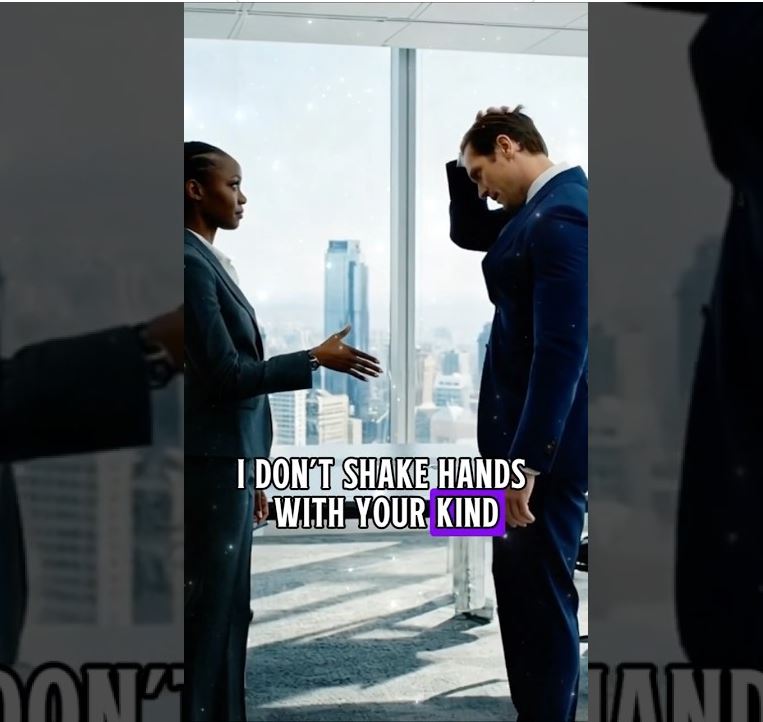
It was supposed to be a routine board meeting—just another Monday in the glass-and-steel tower that housed Reynolds & Co., one of the city’s most prestigious investment firms. The room hummed with quiet anticipation, the faint whir of air conditioning blending with the low murmur of executives reviewing reports on sleek tablets. Charts, projections, and quarterly statements lay neatly before each attendee, a testament to years of precision and planning.

At the head of the table sat Jonathan Pierce, the firm’s rising star. Ambitious, polished, and undeniably talented, he had climbed the corporate ladder with impressive speed. Every decision, every presentation, every calculated move had been executed flawlessly—or so it seemed. His colleagues admired him, some envied him, but no one doubted his competence.
The meeting began smoothly. Jonathan presented the quarterly figures, highlighting gains, analyzing minor losses, and outlining strategies for growth. His voice was confident, articulate, each slide transitioning seamlessly into the next. Everyone nodded, taking notes, absorbing the information.
Then came a comment.
From across the table, a junior analyst named David—usually quiet and overlooked—leaned back in his chair, arms crossed, and smirked.
“Interesting numbers, Jonathan,” he said, his tone dripping with subtle mockery. “Though I’m not sure they tell the whole story. I guess we’ll see if your strategy actually holds up in the real world.”
The room went still. Conversations died mid-word. All eyes shifted to Jonathan. The comment seemed small—insignificant to an outsider—but it carried a bite, a quiet challenge to his authority and credibility.
Jonathan’s first instinct was to laugh it off, to brush it aside with the same charm he used so often. But something in the tone, the casual dismissal of his hard work, struck a nerve. It wasn’t just the numbers—it was the implication that his expertise and leadership could be questioned so casually, publicly, in front of the entire board.
“David,” Jonathan said, keeping his voice measured, “I assure you, these figures are accurate, and our projections are sound. If you’d like, we can review the methodology after the meeting.”
David leaned back further, unconcerned. “I don’t think that’s necessary,” he said. “I just wanted to point out that sometimes confidence doesn’t equal competence.”
A ripple of tension passed around the room. Some executives shifted uncomfortably. The CEO, seated at the far end, raised an eyebrow but said nothing. Jonathan felt his jaw tighten. He had two choices: ignore the slight, or respond in a way that would demonstrate authority.
He chose the latter.
Without a word, Jonathan clicked to the next slide. But instead of continuing with the presentation, he pulled up an internal audit report—an internal audit that revealed several ethical lapses and compliance oversights tied directly to David’s projects. Screens flickered across the table. The room went silent again, this time with the weight of shock and disbelief.
Jonathan’s voice was calm, precise, and icy. “Since you questioned my competence, I think it’s important everyone sees how we define accountability here.”
Eyes widened. Gasps were exchanged. David’s confident smirk faltered. For the first time, the junior analyst looked vulnerable, exposed, and cornered.
By the time the meeting adjourned, the board had made a swift decision. David’s actions had revealed more than just a disrespectful attitude—they highlighted negligence and lapses that couldn’t be ignored. Within days, his career at Reynolds & Co. was terminated. What had seemed like a minor act of casual mockery became the pivot point for a complete downfall.
Word spread quickly throughout the firm. Emails circulated, conversations paused in elevators, and colleagues whispered in hushed tones. “Did you see what happened with David?” “One wrong move, and it’s over.” The lesson was clear: a single act of disrespect, when paired with a lack of diligence, could undo years of ambition almost instantly.
Jonathan, meanwhile, remained professional, unaffected in appearance, though inwardly he understood the thin line he walked every day. In a world where reputation is fragile and trust is currency, even small missteps can have outsized consequences.