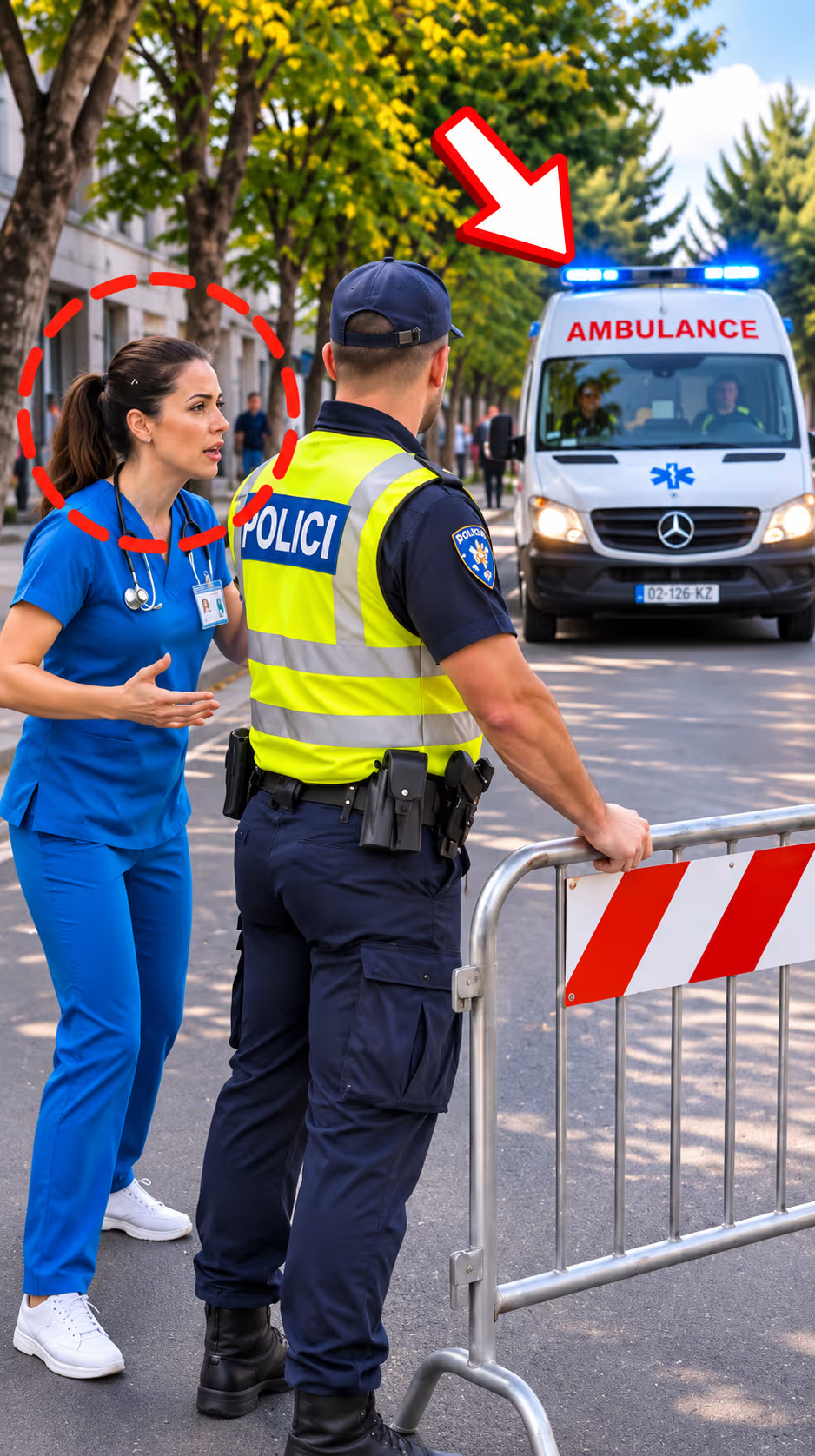
An Ambulance Stopped on an Empty Road
The ambulance driver pressed the horn as two police officers stood beside a road barrier.
“We have a patient inside. We need to get through,” he called.
Officer Daniel Harris raised one hand, signaling the driver to stop.
The narrow road ahead had been closed following an overnight storm that damaged part of a nearby bridge.
Inside the ambulance, paramedic Sarah Collins monitored an elderly patient who needed urgent hospital treatment.
The driver, Michael Turner, explained that the alternative route would add considerable travel time.
Daniel looked toward his partner, Officer Rebecca Moore, who was checking the closure notice.
Neither officer wanted to delay an emergency vehicle unnecessarily.
But the barrier had been placed there because the road might be unsafe.
Then Sarah opened the ambulance’s side window and explained why every minute mattered.
An Emergency Journey Takes an Unexpected Turn
The ambulance had left a residential neighborhood approximately fifteen minutes earlier.
Its patient, seventy-four-year-old Thomas Bennett, had developed severe chest discomfort and difficulty breathing.
His wife had called emergency services after noticing his condition worsening.
Paramedics assessed Thomas at home and arranged immediate transport to the hospital.
Sarah remained beside him while Michael drove toward the emergency department.
The usual route crossed a small bridge connecting two sections of the city.
Earlier that morning, heavy rain had caused flooding along the surrounding creek.
Road maintenance crews discovered damage near the bridge’s western approach.
Police closed the roadway while engineers assessed whether vehicles could cross safely.
Daniel and Rebecca were assigned to prevent traffic from entering the restricted section.
Several drivers had already been redirected toward the northern bypass.
When the ambulance approached with its emergency lights activated, Daniel immediately recognized the urgency.
However, he had not yet received confirmation that the bridge could support emergency vehicles.
He instructed Michael to stop while Rebecca contacted the road maintenance supervisor.

The Officers Face a Difficult Decision
Michael lowered his window and explained the patient’s condition.
He asked whether the officers could temporarily move the barrier.
Daniel understood the request but pointed toward the damaged roadway.
He explained that part of the road shoulder had been weakened by flooding.
Michael said the ambulance could remain near the center of the lane.
Rebecca contacted dispatch and requested an updated assessment of the bridge.
The dispatcher confirmed that maintenance crews were still inspecting the western approach.
No general reopening authorization had been issued.
Inside the ambulance, Sarah continued monitoring Thomas’s breathing and vital signs.
She communicated with the receiving hospital and reported the unexpected delay.
Thomas remained conscious but appeared increasingly uncomfortable.
Sarah reassured him that they were working to reach the hospital safely.
Michael asked Daniel whether another emergency route was available.
Daniel identified the northern bypass but acknowledged that it was significantly longer.
Rebecca then received information that an engineering supervisor was already near the bridge.
She requested an immediate assessment of whether a controlled ambulance crossing was possible.
The officers waited for confirmation rather than making an unsafe assumption.
A New Assessment Changes the Situation
A road maintenance vehicle approached from the opposite side of the closure.
Engineering supervisor Andrew Foster stepped out and spoke with Rebecca.
He explained that the bridge itself had passed its initial structural inspection.
The main concern involved a damaged shoulder near the western approach.
Workers had already marked the unsafe section with temporary barriers.
Andrew said the central travel lane remained intact but required a final inspection.
Daniel asked whether a single emergency vehicle could cross under controlled conditions.
Andrew examined the ambulance’s position and reviewed the latest inspection report.
He then walked toward the western approach with a maintenance colleague.
Rebecca remained beside the ambulance while Daniel coordinated with dispatch.
Sarah provided another update about Thomas’s condition.
The hospital confirmed that its emergency team was preparing for his arrival.
Several minutes later, Andrew returned with the completed assessment.
He confirmed that the central lane could accommodate one ambulance traveling slowly.
The damaged shoulder would remain closed to all vehicles.
Rebecca requested formal authorization for a controlled emergency crossing.
Dispatch confirmed that the temporary passage could proceed under the engineer’s direction.
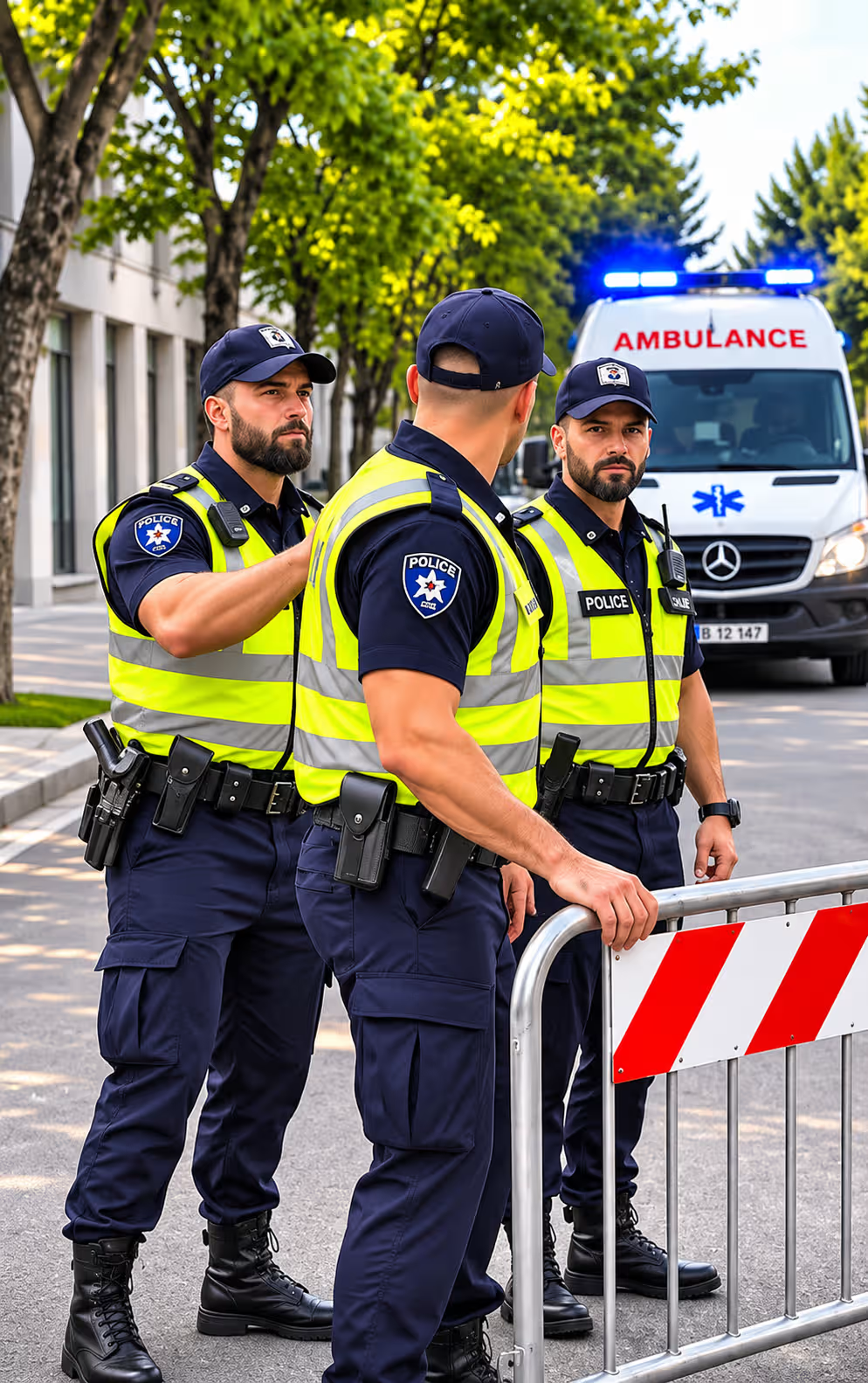
The Officers Remove the Barrier
Daniel approached Michael’s window and explained the approved crossing procedure.
The ambulance would follow the central lane at a reduced speed.
No other traffic would be permitted onto the bridge during the crossing.
Rebecca positioned her patrol vehicle to prevent approaching drivers from entering the closure.
Andrew directed the maintenance crew to clear loose equipment from the approved lane.
Daniel and another officer then lifted the movable road barrier.
They carried it toward the shoulder, keeping it outside the designated passage.
Rebecca confirmed over the radio that the opposite approach was secured.
Daniel checked the road once more before signaling Michael to proceed.
Michael acknowledged the instructions and carefully released the ambulance’s brakes.
The vehicle moved forward slowly, remaining between the temporary safety markers.
Sarah continued caring for Thomas without interrupting her monitoring.
Andrew watched the ambulance approach the bridge and checked its alignment.
The vehicle crossed the central section without difficulty.
Michael maintained the approved speed until reaching the far side.
Rebecca received confirmation that the ambulance had cleared the restricted area safely.
Daniel immediately instructed the officers to restore the barrier.
The road remained closed to ordinary traffic while repairs continued.
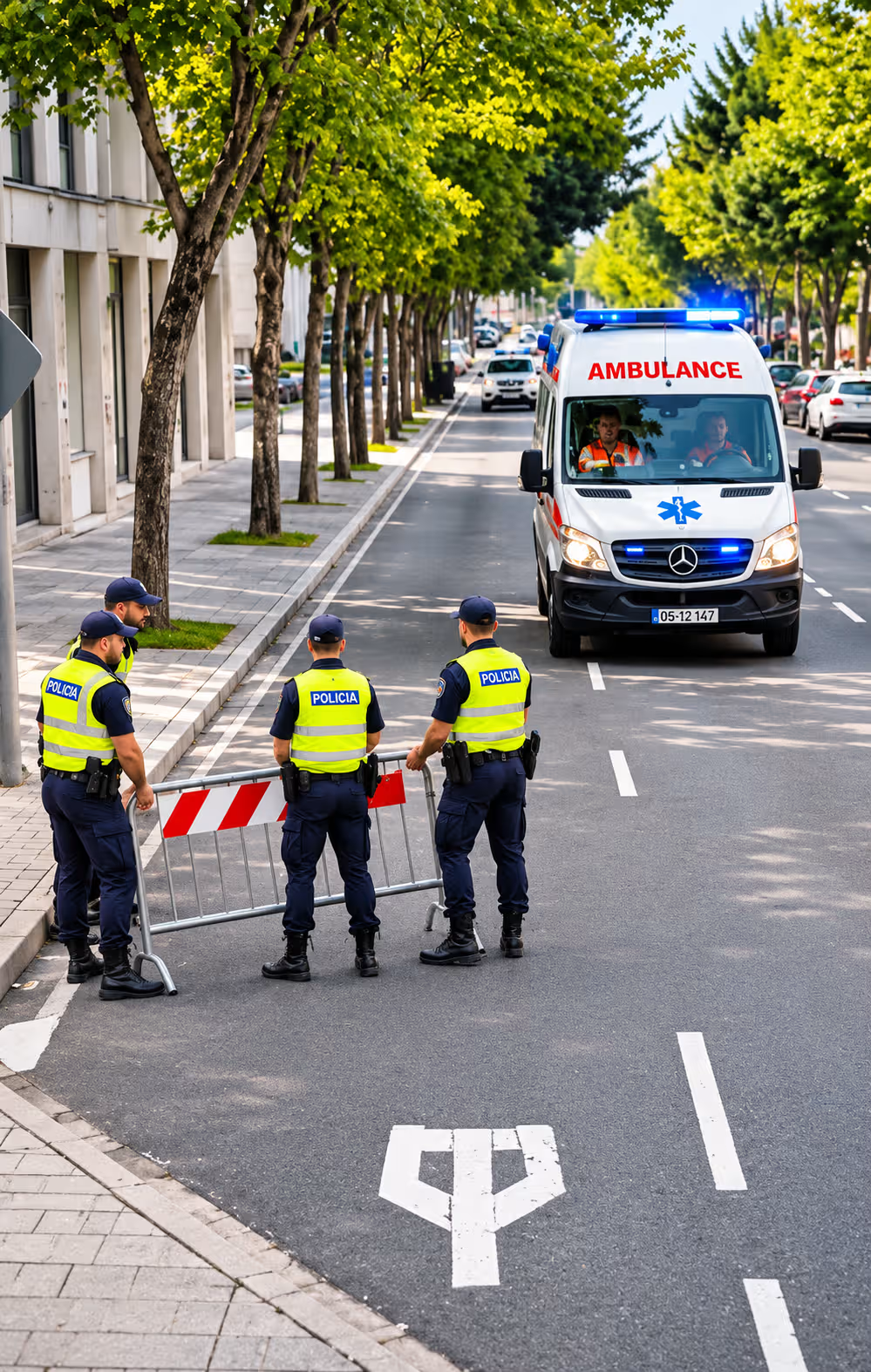
The Patient Reaches the Hospital
Once beyond the damaged section, Michael resumed the emergency journey.
He informed dispatch that the ambulance had successfully passed the bridge.
Sarah contacted the hospital with an updated arrival estimate.
Thomas continued receiving care throughout the remaining journey.
He asked whether they were finally close to the emergency department.
Sarah reassured him that the hospital was only a short distance away.
Several minutes later, Michael turned into the emergency ambulance entrance.
A medical team was waiting with a hospital stretcher.
Sarah transferred responsibility for Thomas’s care and explained his symptoms and treatment.
Doctors immediately began evaluating the cause of his chest discomfort.
Further testing identified a serious cardiac condition requiring prompt medical attention.
Thomas received treatment and remained under observation.
Later that afternoon, his wife arrived and spoke with the attending physician.
She learned that her husband was stable and responding to treatment.
The medical team explained that continued monitoring would be necessary.
Meanwhile, Daniel and Rebecca completed their incident report.
They documented the engineering authorization, traffic controls, and successful emergency crossing.
A Road Closure With an Important Lesson
The following morning, the police department reviewed the circumstances surrounding the ambulance’s passage.
Supervisors confirmed that the officers had followed the required emergency coordination procedures.
They also recognized the importance of communication between police, dispatch, and road maintenance personnel.
The damaged roadway remained closed until repairs were completed.
Additional warning signs were installed to inform drivers about the northern bypass.
Emergency dispatchers received updated information about temporary access restrictions.
Several days later, Thomas’s condition had improved enough for doctors to discuss his discharge.
His wife sent a message thanking the ambulance crew and responding officers.
She understood that the road closure had presented a difficult situation.
She appreciated that everyone involved had worked to find a safe solution.
Daniel shared the message with Rebecca and the maintenance supervisor.
Neither officer considered the incident an extraordinary achievement.
They believed their responsibility was to protect road users while assisting emergency services.
This fictional story followed an ambulance delayed by a storm-damaged roadway.
The officers initially blocked the route because its safety had not been confirmed.
The officers understood that protecting lives sometimes meant stopping traffic, but it also meant knowing when a safe path could be opened for someone who urgently needed help.