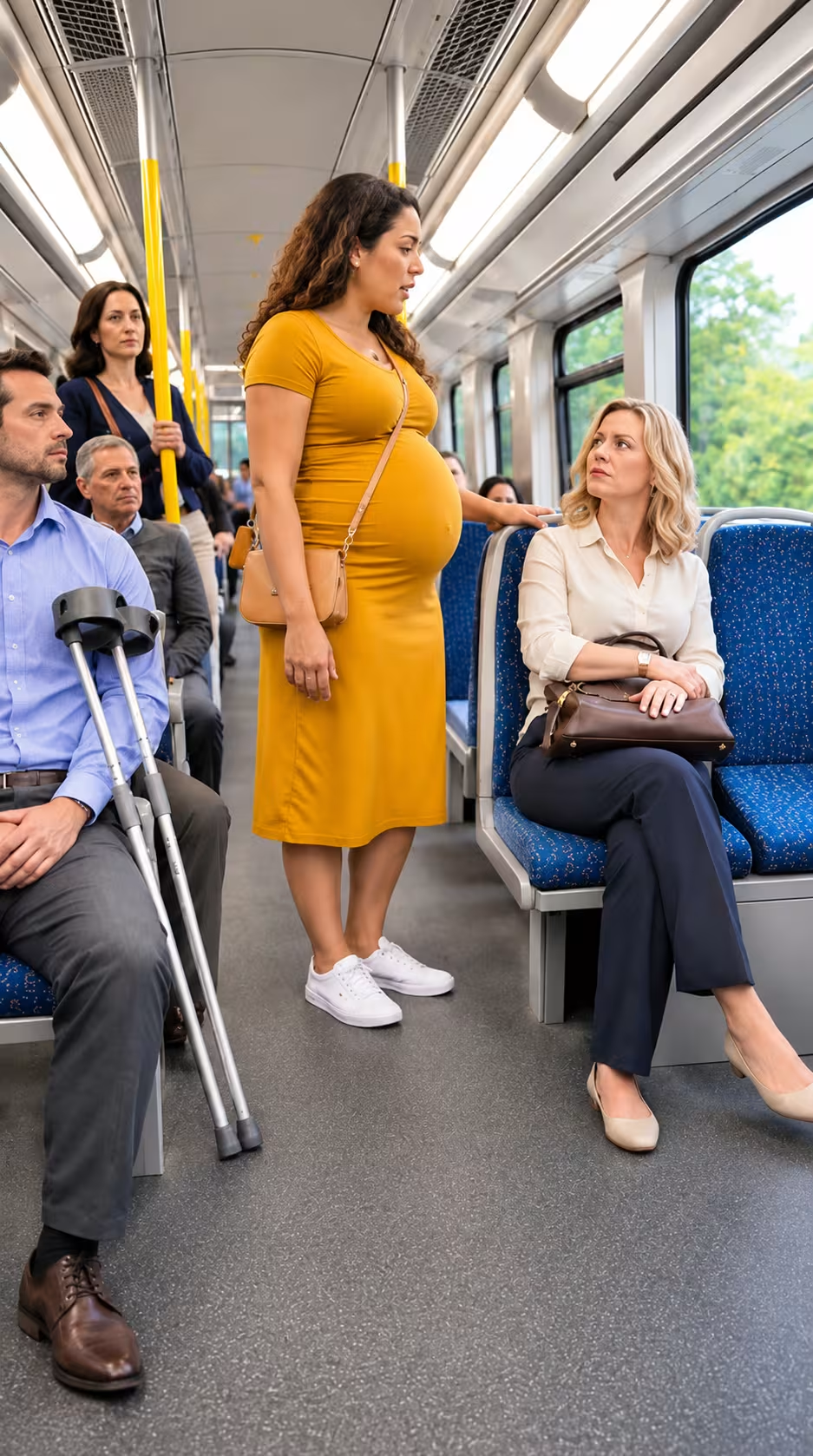
The pregnant woman tightened her grip on the overhead rail as the train slowed around a bend.
Thirty-two-year-old Emily Carter had been standing for nearly twenty minutes, surrounded by passengers returning home.
She noticed a woman sitting near the aisle and politely asked whether she could take her seat.
The seated woman looked up, hesitated, and explained that she also needed to remain seated.
Emily thanked her, although standing had become increasingly uncomfortable.
A few feet away, a man using crutches overheard their conversation.
He carefully reached for his belongings and offered Emily his seat.
Before she could answer, several nearby passengers began discussing how best to help.
Their conversation would reveal that appearances rarely explained everything about another person’s needs.
A Busy Journey After a Long Appointment
Emily had spent the morning attending a routine prenatal appointment across the city.
She was seven months pregnant and had been experiencing increasing fatigue during longer journeys.
Her appointment had gone smoothly, and she looked forward to returning home.
Normally, her husband collected her afterward, but an unexpected work commitment had changed their plans.
Emily decided to travel by train because the station was close to her apartment.
When she boarded, the carriage was already crowded with commuters and afternoon shoppers.
Every visible seat was occupied, including those designated for passengers needing additional assistance.
Emily moved toward a vertical rail and adjusted the strap of her handbag.
The train departed, gradually gathering speed as it left the station.
At first, she felt comfortable enough to stand.
However, repeated changes in speed made maintaining her balance more difficult.
She noticed several passengers holding shopping bags and looking at their phones.
Near the window, a woman sat quietly with a folded coat across her knees.
Emily considered asking for the seat but hesitated.
After another uncomfortable movement of the train, she decided to speak.
A Polite Request Creates an Awkward Moment
The seated woman’s name was Rachel Morgan, a forty-five-year-old office administrator.
She had boarded the train several stations earlier after attending a medical appointment.
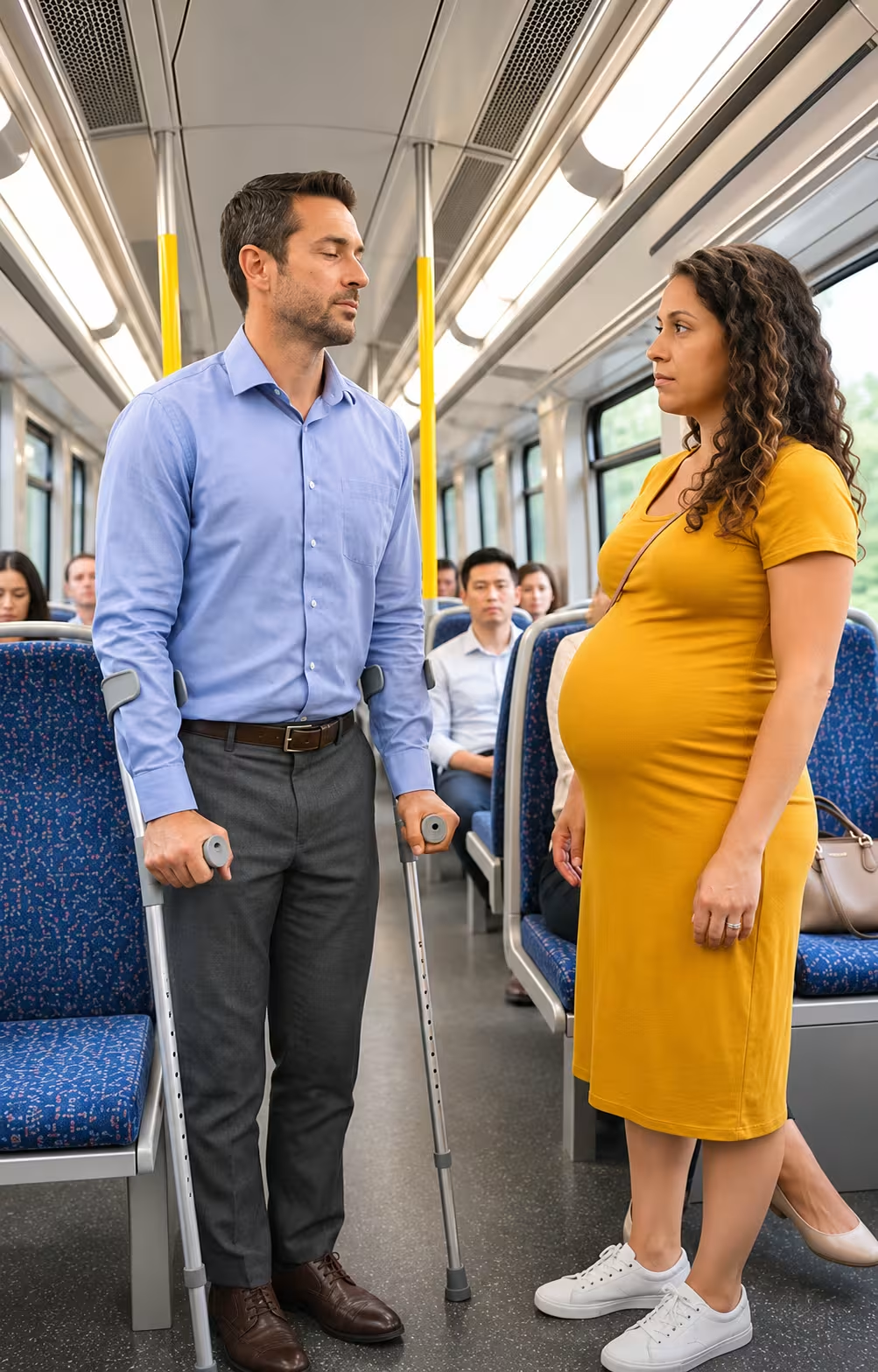
Emily approached carefully and asked whether Rachel would mind giving her the seat.
Rachel looked up and noticed Emily’s pregnancy.
For a moment, she appeared uncertain how to respond.
She apologized and explained that she needed to remain seated herself.
Emily accepted the answer without asking for further details.
Rachel shifted slightly, making room for Emily to hold the nearby rail more comfortably.
The train continued moving, and Emily adjusted her footing.
A passenger standing nearby noticed the exchange but remained silent.
Emily wondered whether another seat might become available at the next station.
She did not want to make Rachel uncomfortable or draw attention to their conversation.
Rachel looked toward Emily and appeared concerned.
She quietly explained that she was recovering from a recent medical procedure.
Standing for an extended period was difficult for her, even though her condition was not visible.
Emily thanked her for explaining and assured her that she understood.
A Man With Crutches Offers His Seat
A few feet away, thirty-eight-year-old Daniel Harris had overheard their conversation.
Daniel was traveling home after a rehabilitation appointment for an injured ankle.
Two forearm crutches rested beside his seat, secured carefully between his knees.
He noticed Emily shifting her weight while holding the overhead rail.
Daniel asked whether she would like to sit in his place.
Emily looked toward his crutches and immediately expressed concern.
She thanked him but explained that she did not want him standing on an injured leg.
Daniel smiled and said he appreciated her consideration.
He began gathering his belongings, believing he could manage briefly with support.
Before he stood, an older passenger named Thomas Bennett spoke from across the aisle.
Thomas suggested that someone without mobility difficulties might be better positioned to help.
Another passenger, a university student named Olivia Reed, looked up from her book.
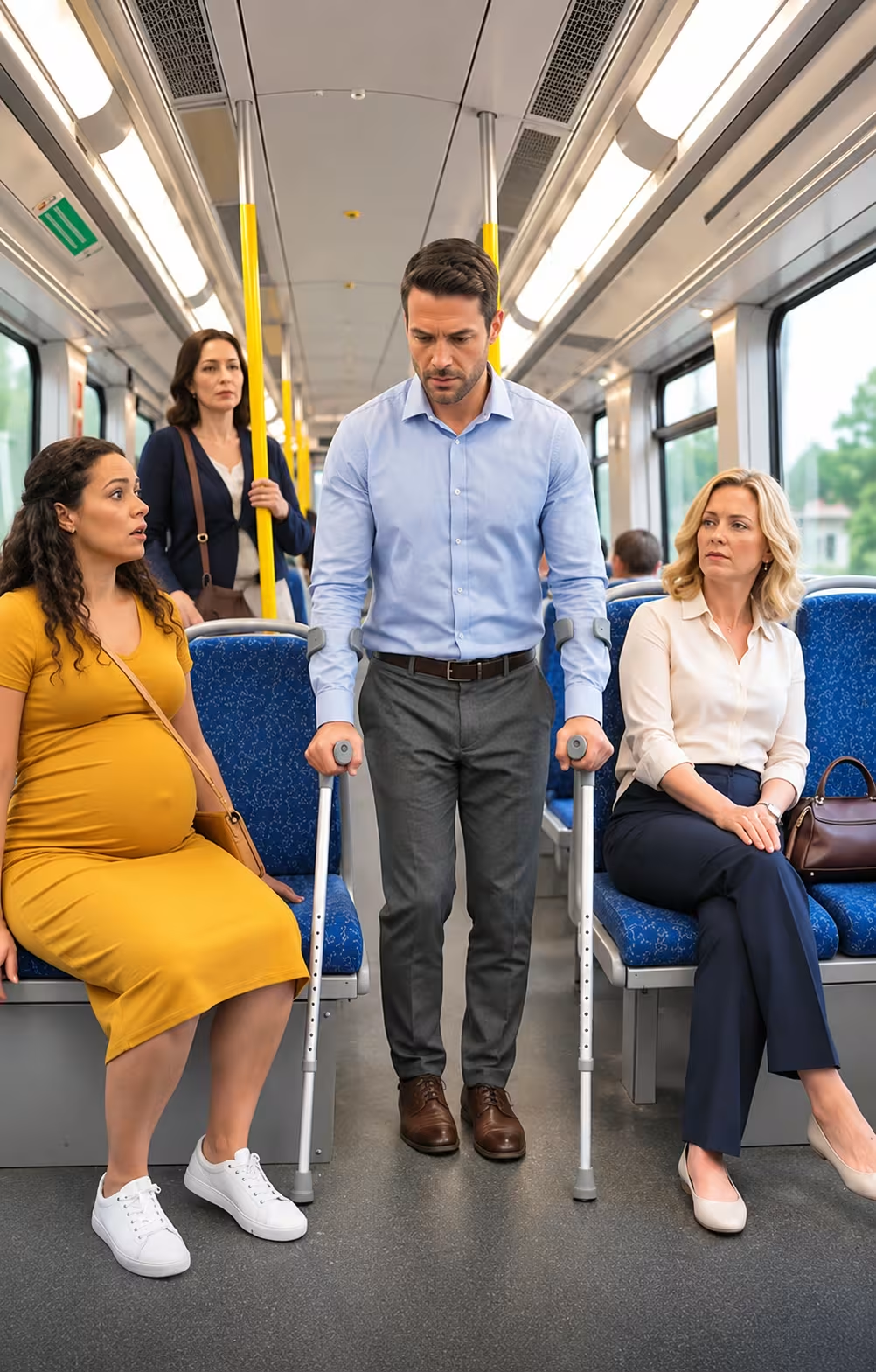
She immediately offered to exchange seats with Emily.
Daniel paused and remained seated while Olivia stood.
Emily thanked them both, relieved that a safer arrangement had become available.
The nearby passengers began discussing how easily important needs could be overlooked.
Several Passengers Join the Conversation
Olivia stepped into the aisle and invited Emily to take her seat.
She moved her backpack away to clear the surrounding space.
Emily sat down carefully and thanked her for responding.
Daniel adjusted his crutches and explained that he had offered because he recognized Emily’s discomfort.
Rachel thanked Olivia for finding a solution that did not require another passenger to struggle.
Thomas observed that people sometimes assumed anyone sitting comfortably could stand without difficulty.
Rachel agreed, explaining that her own medical needs were not immediately obvious.
Emily listened thoughtfully and acknowledged that she had initially known nothing about Rachel’s circumstances.
Olivia said that asking politely and respecting an answer were equally important.
Another passenger offered to hold Olivia’s backpack while she stood.
The conversation remained calm, with everyone contributing practical suggestions.
Daniel mentioned that priority seating worked best when passengers considered both visible and invisible disabilities.
Thomas agreed that cooperation was more useful than deciding who deserved assistance most.
Emily thanked the group for helping without turning the situation into an argument.
The train slowed as it approached another station.
Several passengers prepared to leave, creating additional space inside the carriage.

A Small Act Changes the Atmosphere
When the doors opened, two passengers stepped onto the platform.
Thomas noticed an empty seat near the opposite window.
He pointed it out to Olivia, who thanked him and sat down.
Everyone involved now had somewhere comfortable to rest.
Emily placed her handbag on her lap and looked toward Daniel.
She asked whether his ankle was recovering well.
Daniel explained that rehabilitation was progressing, although walking remained difficult.
He had injured himself several weeks earlier and was gradually regaining mobility.
Rachel mentioned that her own recovery required patience and regular medical appointments.
The conversation shifted naturally toward the challenges of traveling while recovering from health problems.
Emily explained that pregnancy had changed how she planned ordinary journeys.
She had previously taken crowded trains without thinking much about seating arrangements.
Now she understood how exhausting even short periods of standing could become.
Thomas shared that he sometimes needed assistance because of age-related mobility limitations.
Olivia listened as the passengers exchanged experiences.
She said the conversation had reminded her not to judge someone’s needs by appearance.
The group continued talking until the train approached Emily’s destination.
A Journey Remembered for Its Kindness
Emily prepared to leave as the train slowed near her station.
Olivia offered to help retrieve her handbag, but Emily said she could manage.
Daniel wished her well with the remainder of her pregnancy.
Rachel smiled and hoped that Emily’s journey home would be comfortable.
Thomas reminded everyone to take care when leaving the crowded carriage.
Emily thanked the passengers for their consideration before stepping onto the platform.
She walked toward the station exit, reflecting on the conversation.
Later that evening, she described the experience to her husband.
She explained that the woman she had initially approached also needed her seat.
The man using crutches had offered his place despite his own mobility difficulties.
Fortunately, another passenger had provided a solution that accommodated everyone.
Her husband appreciated hearing that the exchange had ended respectfully.
Emily decided to allow more travel time for future appointments.
She also planned to consider quieter services whenever possible.
In this fictional story, a pregnant woman requested a seat during a crowded train journey.
A seated woman explained her own needs, while a man using crutches offered assistance.
Other passengers joined the conversation and helped find a practical arrangement.
The experience reminded everyone that consideration should extend to people whose difficulties were not immediately visible.
As Emily reached home, she remembered that genuine kindness was not about deciding whose struggle mattered most, but about listening carefully and finding a way to help without overlooking anyone else’s needs.