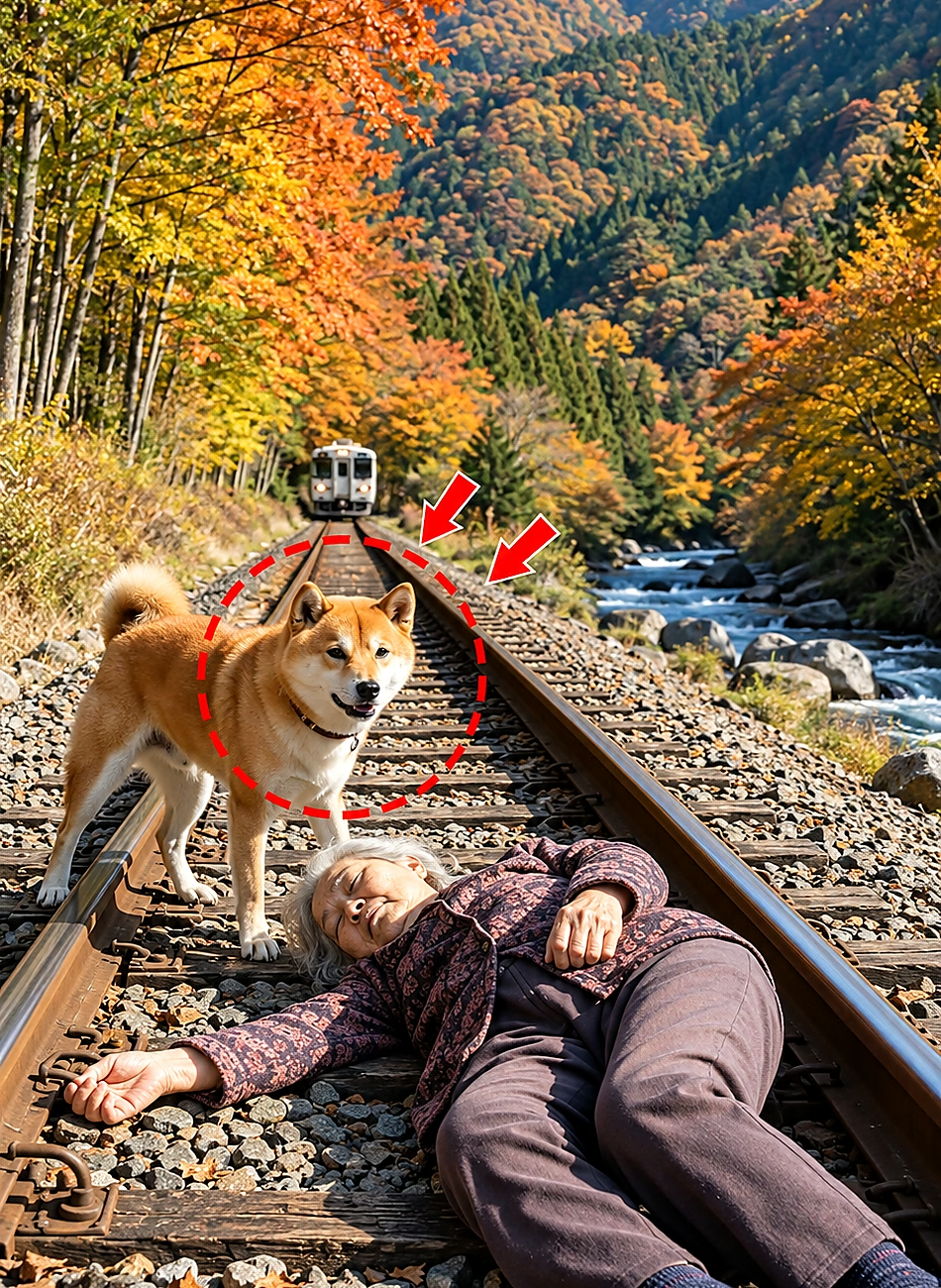
A Dog’s Desperate Barking Near the Railway Crossing
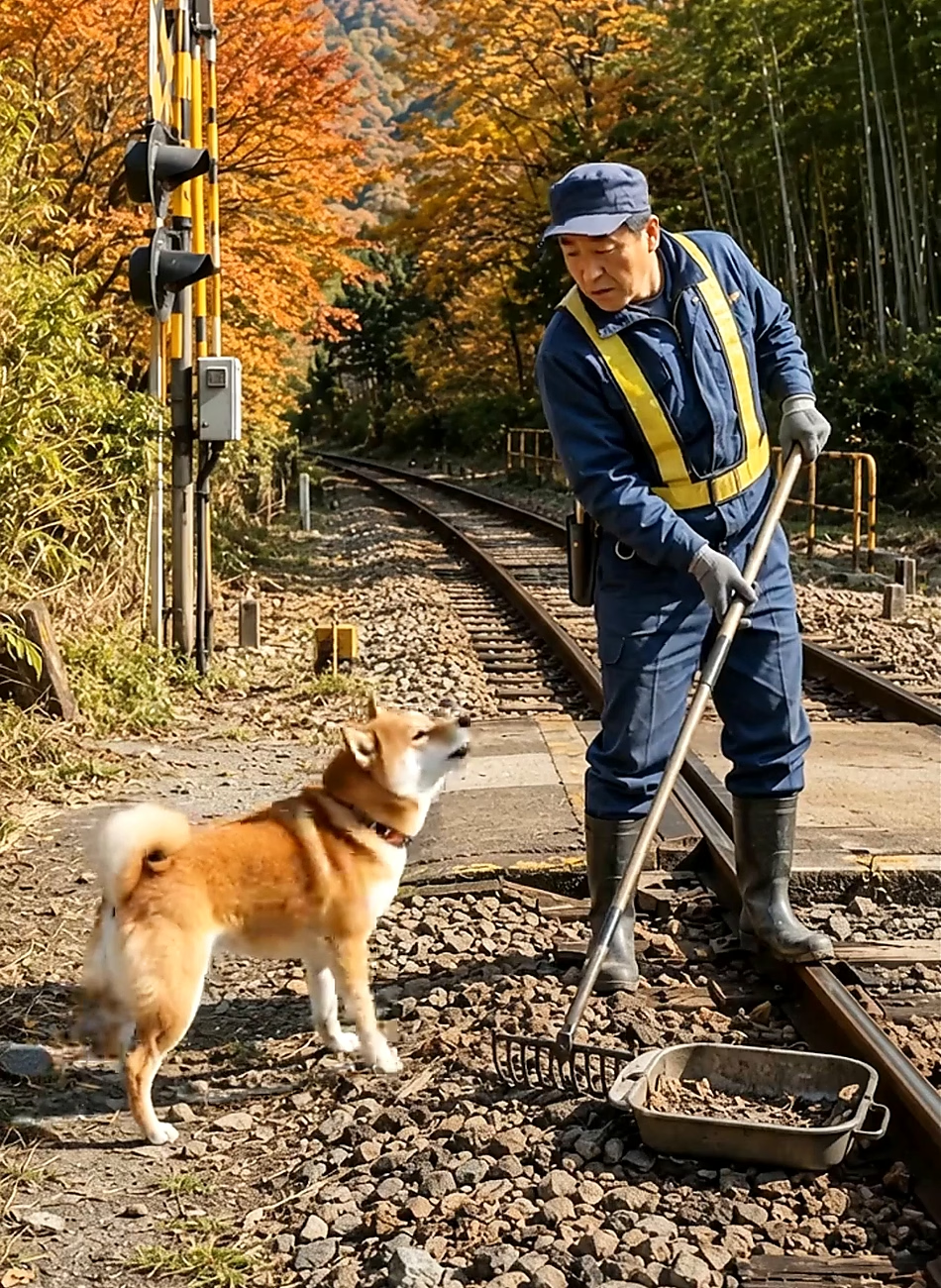
The brown dog raced toward the railway maintenance shed, barking louder with every step.
Railway worker Thomas Reed looked up from his inspection paperwork near the rural crossing.
The dog stopped beside him, then ran back toward a bend in the tracks.
Thomas initially thought the animal had wandered away from a nearby farmhouse.
But its repeated movements suggested something unusual was happening beyond the crossing.
A distant signal indicated that a passenger train was approaching the section.
Thomas checked the railway corridor before looking toward the direction the dog had come from.
The animal returned again, pulling at the loose fabric of his work trousers.
Thomas contacted the railway control center and reported a possible obstruction.
Then he followed the authorized maintenance path toward the bend.
Through the grass, he noticed a motionless figure lying between the rails.
An Elderly Man Is Found in a Dangerous Position
Thomas stopped at a protected observation point and confirmed that someone was on the tracks.
An elderly man lay beside a walking cane, apparently unable to stand.
The dog ran toward him before returning to Thomas with another urgent bark.
Thomas immediately updated railway control with the exact track location and visible danger.
The controller initiated emergency protection procedures and contacted the approaching train’s driver.
Thomas was instructed to remain clear until the track was confirmed protected.
He watched the elderly man raise one arm weakly toward the maintenance path.
The man’s gray jacket was dusty, and his walking cane lay beyond his reach.
Thomas called out, asking whether the man could hear him.
The elderly man answered faintly, explaining that his leg had given way.
He had fallen while attempting to cross near an unauthorized footpath.
The dog stood beside him, repeatedly looking toward Thomas.
A low vibration from the distant railway line made the urgency unmistakable.
Thomas continued communicating with control rather than entering the active track.
The approaching train still needed to be brought safely under control.
A Critical Message Reaches the Approaching Train
Inside the passenger train, driver Michael received an emergency warning from railway control.
The message identified a possible person on the track beyond the upcoming bend.
Michael immediately followed the railway’s emergency braking and communication procedures.
Passengers felt the train slowing sharply as the braking system responded.
Meanwhile, Thomas remained in contact with the controller near the maintenance path.
He reported that the elderly man was conscious but appeared unable to move independently.
The controller confirmed that emergency services had been notified.
Thomas also requested a railway response team to assist with safe track access.
The dog continued pacing between the fallen man and the grassy embankment.
Thomas noticed a collar tag bearing the name Rusty.
He suspected the animal belonged to the elderly man, although he could not confirm it.
The controller warned that the train had not yet been confirmed stationary.
Thomas stayed outside the danger area while monitoring the man’s movements.
Then the train’s headlights appeared beyond the distant curve.
The elderly man heard the approaching train and attempted to pull himself upright.
His injured leg collapsed beneath him, leaving him lying across the track again.
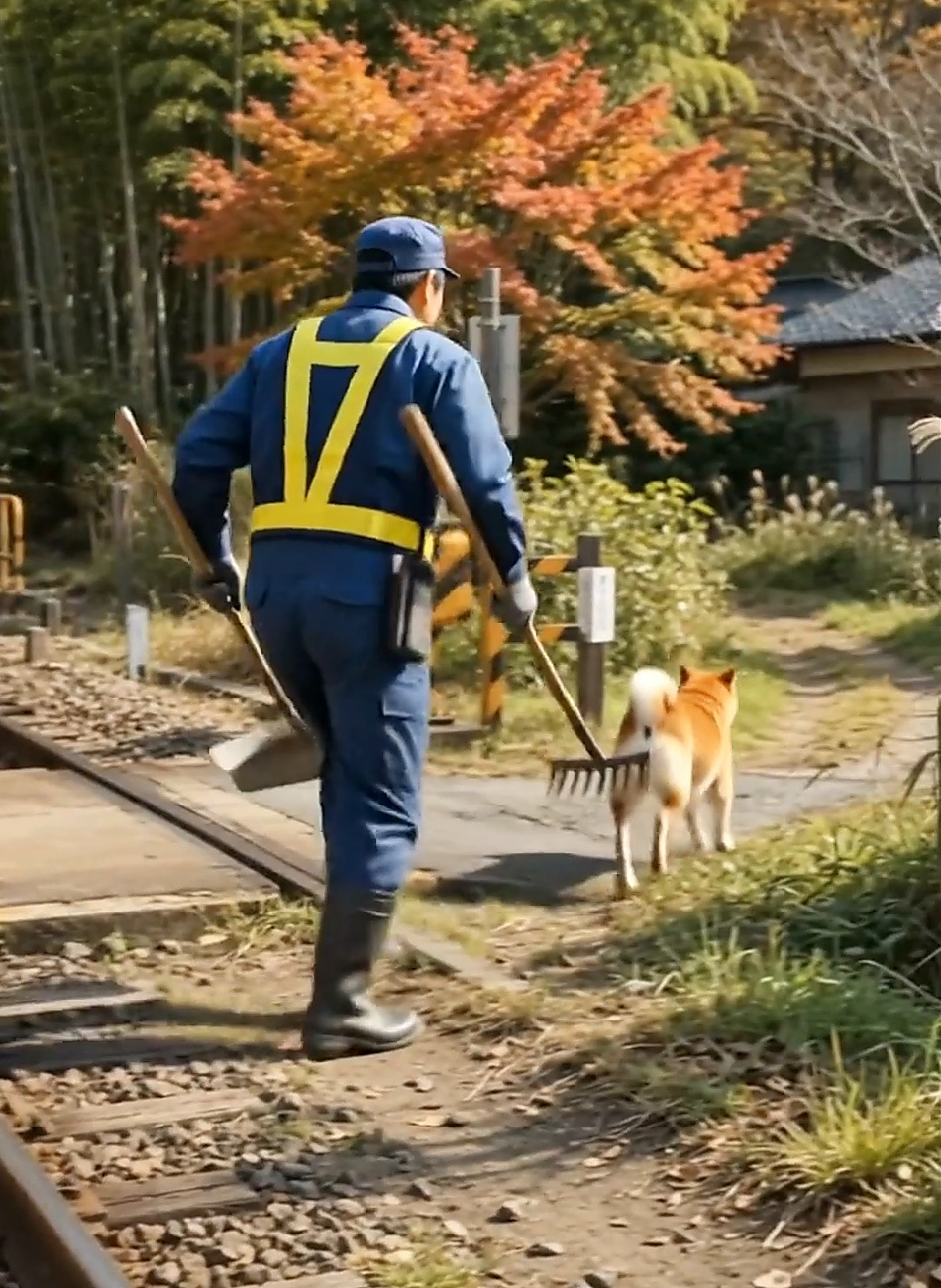
The Train Stops Before Reaching the Fallen Man
Michael maintained emergency braking as the train approached the reported location.
The railway controller continued coordinating communications between the driver and maintenance staff.
Thomas watched the train slow along the straight section beyond the bend.
Rusty remained near the elderly man, apparently unaware of the approaching danger.
The train finally stopped before reaching the location where the man lay.
Thomas immediately requested confirmation that the line was protected against further train movements.
The controller verified the required safety arrangements before authorizing emergency access.
Only then did Thomas and an authorized colleague approach the fallen man.
The elderly gentleman introduced himself as Harold Wilson and explained that he was seventy-eight.
He said his right knee had suddenly weakened while he crossed the railway.
Thomas noticed swelling around Harold’s ankle and a scrape along his forehead.
Harold remained alert but complained of pain whenever he tried moving.
Thomas asked him to stay still until the medical responders could assess him.
Rusty pressed his nose against Harold’s sleeve before settling beside his shoulder.
The colleague maintained communication with railway control while Thomas reassured the injured man.
For the first time, Harold understood that the approaching train had stopped safely.
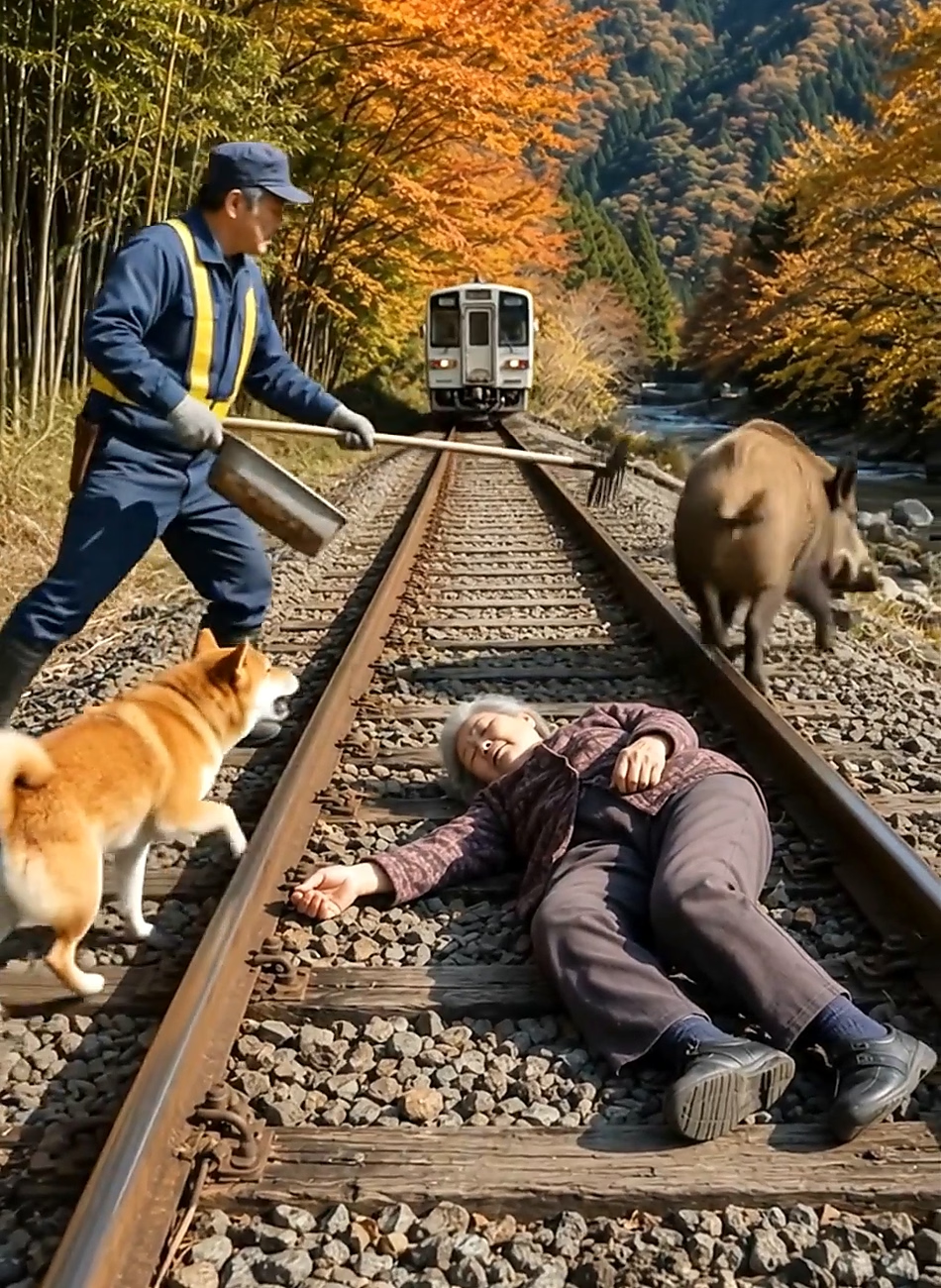
The Rescue Team Brings Harold Away From the Tracks
Emergency responders arrived through the railway’s designated maintenance access route.
A paramedic named Olivia approached Harold after receiving confirmation that the track remained protected.
She assessed his breathing, circulation, awareness, and possible injuries from the fall.
Harold explained that he had become dizzy shortly before his knee gave way.
Olivia recognized that moving him without assessment could worsen an injury.
The team prepared appropriate immobilization and transport equipment for the uneven railway ground.
Thomas helped coordinate access while the responders worked directly with Harold.
Rusty remained close, occasionally standing whenever the paramedics adjusted their equipment.
A responder gently guided the dog toward Thomas and secured his leash.
Harold watched as the team carefully transferred him onto a rescue stretcher.
He briefly grimaced when his injured leg was supported.
Olivia checked his condition again before the team began moving him.
The responders carried Harold toward the maintenance access point under railway safety supervision.
A waiting ambulance stood beyond the crossing, away from the protected track.
Once Harold reached the ambulance, Thomas reported the completed evacuation to railway control.
A Railway Worker Never Forgets the Dog’s Warning
Several weeks later, Thomas received a letter from Harold’s family.
The elderly man was recovering at home and attending scheduled rehabilitation appointments.
His daughter had included a photograph of Rusty lying beside Harold’s favorite armchair.
Thomas remembered the dog’s frantic movements outside the railway maintenance shed.
At first, the repeated barking had seemed like ordinary animal behavior.
But Rusty’s determination had directed attention toward a dangerous situation beyond the crossing.
Thomas’s emergency report allowed railway control to warn the approaching train.
The driver responded according to established procedures and stopped before reaching Harold.
Only after railway personnel confirmed the track was protected did rescuers approach him.
The coordinated response prevented another danger while allowing medical care to begin.
This fictional story illustrated the importance of animal behavior, railway safety, and professional emergency coordination.
Rusty had drawn attention to his injured owner without understanding the larger danger.
Thomas had recognized the warning and acted through the appropriate railway communication system.
The driver, controller, and rescue team each played an essential role in the outcome.
Harold later told his family that he remembered hearing Rusty barking before help arrived.
He could not explain how the dog had found the maintenance worker.
What mattered was that someone had understood the animal’s unusual behavior.
Rusty could not stop the approaching train, but his determination helped bring the people who saved his owner’s life.