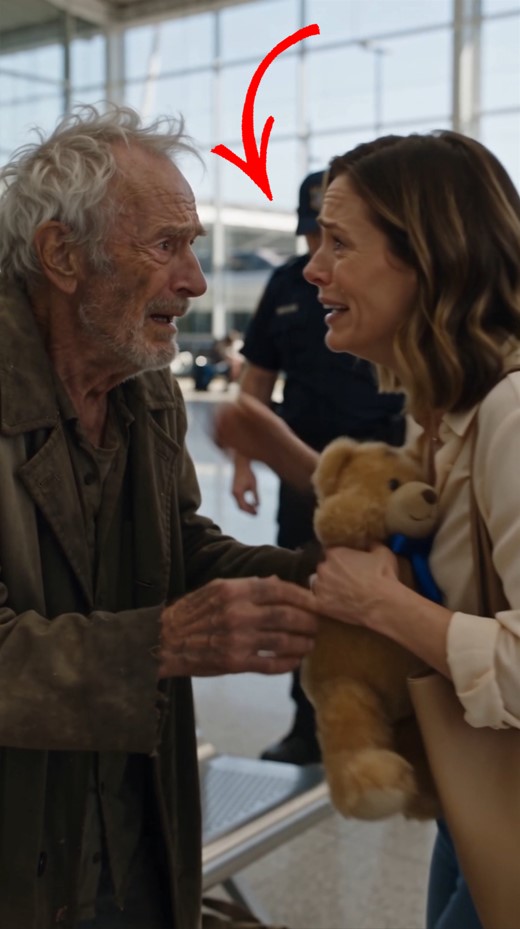
The elderly man stood beside a crowded ticket counter, holding a small brown suitcase and a folded train ticket.
His name was Arthur Bennett, and he had arrived early for a journey he had planned for weeks.
At seventy-four, Arthur moved carefully with a wooden cane, but his eyes remained bright and attentive.
He wore a modest gray coat, polished black shoes, and a knitted scarf his late wife had made years earlier.
The station was busy that morning, filled with hurried commuters, rolling luggage, and announcements echoing beneath the high ceiling.
Arthur approached the security checkpoint and politely asked which platform served his train.
A security guard named Derek Miller glanced at his worn suitcase and frowned.
“Can’t you read the signs?” Derek asked loudly.
Arthur looked toward the overhead boards, trying to explain that his eyesight had become weaker.
Instead of helping, Derek raised his voice, drawing the attention of nearby passengers.
Arthur lowered his head, embarrassed by the sudden attention.
Then a young woman carrying a university backpack hurried through the crowd, heard the guard’s voice, and stopped abruptly.
She stared at the elderly man.
“Grandpa Arthur?”
The Guard Who Judged Too Quickly
Derek had worked at the station for six years and believed that strictness was essential for keeping passengers safe.
He dealt with crowded platforms, missed trains, and occasional disputes every day.
However, his confidence had gradually turned into impatience, especially toward people who needed extra time or assistance.
When Arthur approached the checkpoint, Derek assumed the elderly man was holding up the line.
He noticed the old suitcase, the faded coat, and the trembling hand resting on the cane.
Rather than asking whether Arthur needed help, he treated him as another inconvenience.
“Move aside if you don’t understand the instructions,” Derek ordered.
Arthur tightened his fingers around the ticket.
“I am trying to find platform four,” he explained. “My train leaves in twenty minutes.”
Derek pointed toward the information board without checking the ticket.
“Then you should have arrived knowing where you were going.”
A woman standing behind Arthur frowned, while a young commuter quietly shook his head.
Arthur had spent thirty-five years teaching history at a local secondary school.
He had helped countless students prepare for examinations, apply for scholarships, and believe in their abilities.
Yet now he stood in a crowded station, struggling to receive the simplest courtesy.
“I am sorry if I am slowing things down,” he said.
Derek folded his arms.
“An apology won’t make the line move faster.”
Arthur looked down at his shoes, wishing he could disappear into the crowd.
He considered stepping away and asking someone else, but his train ticket was already growing damp inside his palm.
Then the young woman appeared beside him.
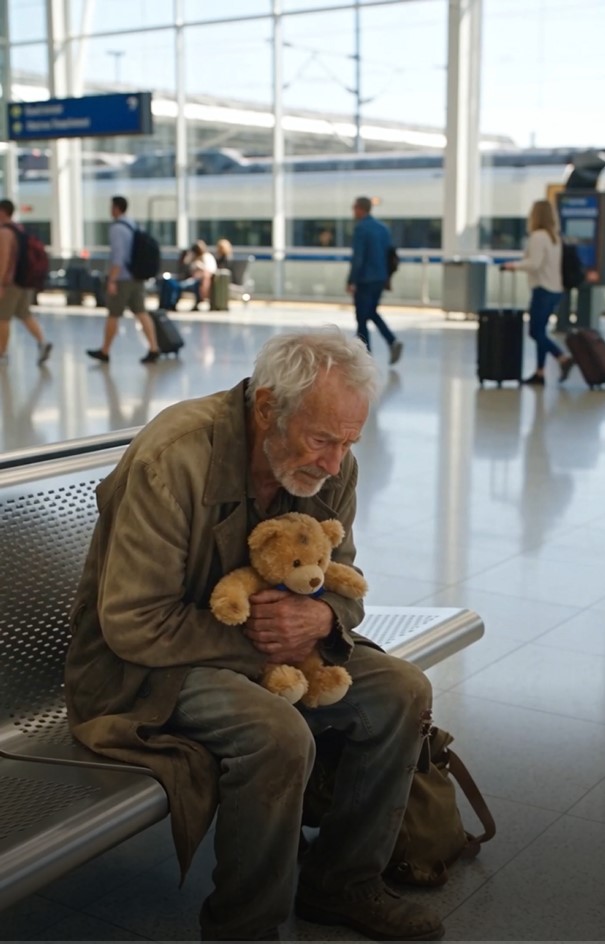
A Familiar Face in the Crowd
The young woman was Emily Bennett, Arthur’s twenty-two-year-old granddaughter.
She had been returning from a university examination when she noticed the familiar figure near the checkpoint.
At first, she could hardly believe what she was seeing.
Her grandfather was the person who had taught her to ride a bicycle, helped her through difficult school years, and stayed beside her during her mother’s long hospital treatment.
He had never raised his voice at her, even when she made mistakes.
Now she saw him standing silently while a stranger spoke to him with open contempt.
Emily hurried forward and placed a hand gently on Arthur’s shoulder.
“Grandpa, what happened?” she asked.
Arthur tried to smile.
“Nothing serious, sweetheart. I only need to find my platform.”
Derek interrupted before Emily could say anything else.
“Please keep moving. This checkpoint isn’t a family meeting.”
Emily turned toward him, visibly upset.
“My grandfather asked you a simple question. Why are you speaking to him like that?”
Derek looked her up and down, apparently unimpressed by her challenge.
“I’m responsible for security here, and I don’t have time to guide every confused passenger.”
Emily glanced at the ticket in Arthur’s hand.
Then she looked back at Derek.
“He isn’t asking you to carry his luggage or buy his ticket. He’s asking where to go.”
Several passengers had stopped walking, watching the exchange.
Arthur gently touched Emily’s arm, hoping to prevent the situation from escalating.
“Please, darling,” he murmured. “I don’t want trouble.”
But Emily had noticed something else.
Her grandfather’s eyes were lowered, and his shoulders had drawn inward in a way she had rarely seen.
She understood that this was no longer simply about finding a platform.
It was about the way a person could be made to feel small in a place where everyone deserved respect.
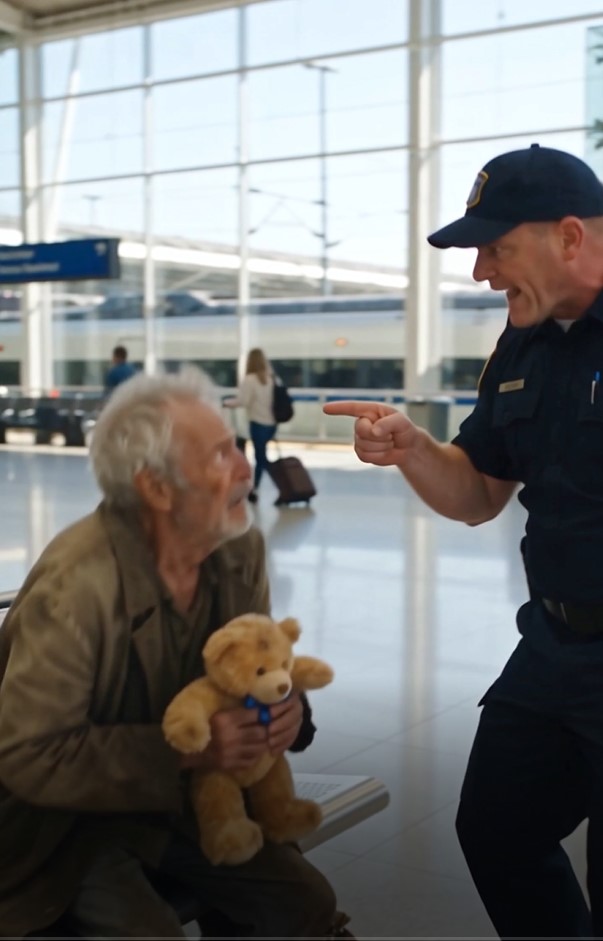
The Name That Changed Everything
Emily took Arthur’s ticket and checked the printed details.
His train was scheduled to depart from platform four, just as he had said.
She turned toward a nearby station employee and politely asked for directions.
Before the employee could answer, another voice called from behind the security desk.
“Emily Bennett?”
A middle-aged woman in a navy station uniform approached, looking surprised.
Emily recognized her as Rachel Morgan, the station’s passenger-services manager.
“Hello, Rachel,” Emily replied. “I’m here with my grandfather.”
Rachel smiled warmly at Arthur.
“Mr. Bennett, I didn’t realize you were traveling today.”
Derek’s expression shifted as he watched them greet each other.
Rachel explained that Arthur had spent decades volunteering with the station’s literacy program, helping young people who struggled with reading and writing.
After retiring from teaching, he had continued offering free tutoring sessions through a local community organization.
Several station employees had met him during volunteer events, and Rachel remembered his patience with nervous students.
Emily smiled faintly.
“Grandpa never talks much about the people he helps,” she said.
Arthur looked embarrassed by the attention.
“It was nothing special,” he replied. “Everyone deserves a chance to learn.”
Rachel then noticed the tension around the checkpoint.
She asked Emily what had happened, and Emily described the exchange without exaggerating or raising her voice.
Rachel listened carefully before turning toward Derek.
“Did you check his ticket or ask what assistance he needed?”
Derek hesitated.
“No,” he admitted. “I assumed he was holding up the line.”
Rachel’s expression became serious.
“That’s precisely why we have procedures. We ask questions before making assumptions.”
The passengers nearby remained quiet.
Derek suddenly seemed aware of how many people had witnessed his behavior.
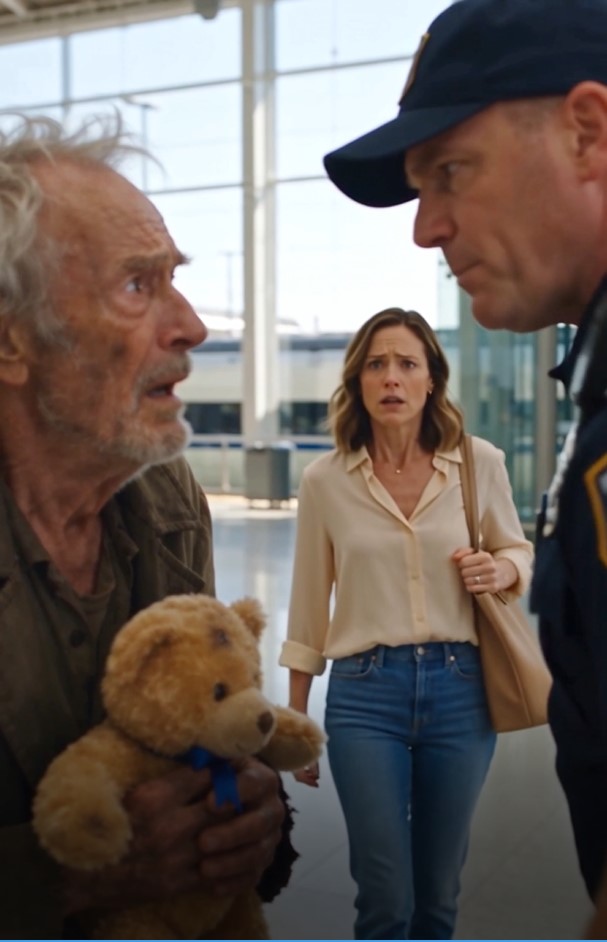
An Apology in Front of Everyone
Rachel asked another employee to direct passengers through the checkpoint while she addressed the situation.
She explained that security staff were expected to maintain order while treating travelers with dignity.
An elderly passenger who needed extra time was not automatically a problem, and asking for directions was not misconduct.
Derek listened without interrupting.
For the first time, he looked directly at Arthur rather than at his suitcase or his clothing.
“Mr. Bennett,” he began, “I was impatient, and I spoke to you disrespectfully.”
Arthur remained silent.
“I should have listened to your question instead of assuming you didn’t belong in the line,” Derek continued. “I’m sorry.”
The apology sounded uncomfortable, but it was clear.
Arthur nodded slowly.
“Thank you for saying that,” he replied. “I hope you’ll remember it the next time someone needs help.”
Derek lowered his eyes briefly.
Rachel told him that the incident would be documented and reviewed according to the station’s staff-conduct procedures.
He would also receive additional training on passenger assistance and communication.
Emily appreciated that her grandfather had received an apology, but she did not mistake it for an instant solution to every problem.
Respect had to be demonstrated consistently, especially when nobody important was watching.
Rachel then escorted Arthur and Emily toward the correct platform.
Along the way, Arthur stopped to help a nervous child who had dropped a small toy beneath a bench.
He retrieved it with his cane and returned it with a gentle smile.
Emily watched him and shook her head affectionately.
“Grandpa, you just got embarrassed by someone, and you’re still helping other people.”
Arthur chuckled softly.
“Someone else’s bad behavior doesn’t have to change who you are.”
Security Guard Treats a Senior Citizen Unfairly at the Station Before His Granddaughter Recognizes Him https://t.co/8RyYXi2DGi
— Animal Rescue Stories (@AnimalStory5) October 15, 2026
The Journey He Had Been Waiting For
Arthur’s train was still several minutes away, giving him time to settle onto a nearby bench.
Emily sat beside him while Rachel arranged for a station assistant to help with his suitcase when boarding began.
Arthur explained that he was traveling to visit a former student who had recently opened a community learning center.
The student had once struggled in his history class and nearly abandoned school.
Arthur had encouraged him to keep studying, reminding him that a difficult beginning did not determine the rest of his life.
Years later, that same student had invited Arthur to attend the center’s opening celebration.
Emily smiled as she listened.
“You always remember your students,” she said.
“They’re part of my story,” Arthur answered. “And I hope I helped them write a better part of theirs.”
When the train arrived, the station assistant helped Arthur board safely.
Emily hugged her grandfather before stepping back onto the platform.
“Call me when you arrive,” she reminded him.
“I will,” he promised.
As the train pulled away, Emily watched him through the window.
He raised one hand, the same way he had waved to her outside school when she was a little girl.
Across the station, Derek stood near the checkpoint, watching passengers pass through.
He could not undo the humiliation he had caused, but he could decide how to behave during his next encounter.
Later that week, Rachel reviewed the incident with the security team and emphasized the importance of patience, clear communication, and respectful treatment.
Derek completed the required training and was expected to demonstrate improvement in his daily work.
Arthur, meanwhile, arrived at the learning center to find former students waiting to greet him.
They welcomed him with warm smiles, handmade signs, and stories about the lives they had built since leaving school.
As he stepped into the room, Arthur realized that the greatest measure of his life had never been his clothes, his age, or the suitcase he carried.
It was the kindness he had offered others and the memories they had carried forward.
The security guard saw an elderly man who needed directions, but his granddaughter saw the teacher, mentor, and loving grandfather who had changed countless lives.