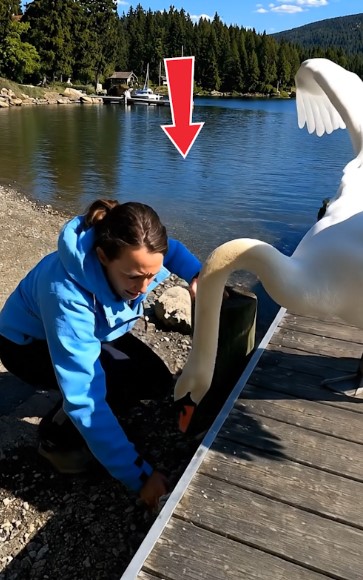
Swan Flaps Its Wings to Guide Two Women Toward a Cygnet and Fish in Trouble
A swan suddenly began flapping its wings beside two women near the water, refusing to simply swim away. The women initially thought the bird was reacting to their presence, but the swan kept looking toward the reeds and then back at them. Something about its behavior made them stop and pay closer attention.
The swan moved a short distance along the shoreline before turning around again. It continued making the same gestures, appearing unusually persistent as though it wanted the women to follow. Curious about what had caught the bird’s attention, the women carefully walked toward the area where the swan had been looking.
They soon noticed movement near the water.
A small cygnet was caught in a difficult position among vegetation close to the shoreline. Nearby, a fish was also struggling to move freely, making the situation even more unusual. The women realized that the swan’s strange behavior had brought them directly to two animals that appeared to need attention.
The Swan Keeps Calling for Attention
The adult swan remained close while the women assessed the situation. It continued flapping its wings and moving back and forth, while the cygnet stayed near the vegetation. The women understood that they needed to remain calm because rushing toward the animals could frighten them and potentially make the situation worse.
They first looked at the area around the cygnet to determine what was preventing it from moving normally. The vegetation was dense, and the narrow shoreline made it difficult to approach from certain directions. Rather than pulling at the young bird immediately, the women carefully considered how they could create a safer path.
The adult swan remained nearby throughout the process. It watched the women closely, occasionally turning toward the cygnet before looking back at them. Whether the swan understood exactly what the women were doing is impossible to know, but its attention never seemed to leave its young.
The fish also required careful attention. It appeared to have become caught in the same general area, leaving the women with two separate problems to consider. They knew that helping one animal should not create additional stress or danger for the other.
The women worked slowly and carefully. They created space around the cygnet and helped it move away from the vegetation without unnecessary handling. Once the young bird could move more freely, it quickly stayed close to the adult swan.
The adult immediately responded.
The family moved together toward clearer water, while the women continued watching from a respectful distance. The cygnet appeared much calmer once it was no longer caught among the vegetation.
The fish was also given an opportunity to move away from the area. Once it could swim freely, it disappeared into deeper water.
The entire situation began to settle.
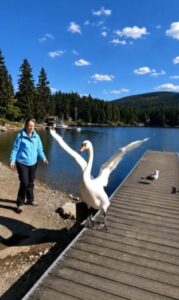
An Unexpected Guide From the Water
The women looked back at the adult swan, which remained close to its cygnet. Moments earlier, the bird’s repeated movements had seemed mysterious, but now the reason for its behavior appeared much easier to understand.
Wild animals communicate through movement, sounds, posture, and other forms of behavior. Humans cannot always know what an animal is trying to communicate, but unusual persistence can sometimes be a reason to stop and observe from a safe distance.
For the women, that decision had made all the difference.
They had not been searching for a rescue. They were simply near the water when a swan began behaving unusually. By paying attention instead of ignoring it, they discovered a situation involving both a young bird and a fish.
The encounter also highlighted the importance of respecting wildlife during a rescue. Even when an animal appears calm, approaching too closely can cause unnecessary stress. Keeping people and pets away from the area and contacting trained wildlife professionals when needed can often be the safest approach.
The adult swan eventually became calmer as well. Its wings were no longer moving as frantically, and it began swimming alongside the cygnet. The two remained together, gradually moving farther away from the shoreline where the trouble had occurred.
The women stayed behind and watched until they were confident that the animals were moving normally.
What made the encounter so memorable was how it had started.
Swan Flaps Its Wings to Guide Two Women Toward a Cygnet and Fish in Trouble pic.twitter.com/PlFoiaIxr4
— Animal Rescue Stories (@AnimalStory5) August 28, 2026
What should you do if you find a trapped cygnet?
If you find a cygnet that appears trapped, keep your distance and avoid immediately picking it up. First check whether the adult swan is nearby, keep children and pets away, and contact a wildlife rescue organization if the young bird is genuinely unable to free itself or appears injured.
These wildlife rescue safety tips can help reduce stress during an encounter with wild birds. Knowing how to help injured wild animals also means understanding when professional assistance is safer than attempting a rescue yourself.
Can you rescue a wild swan yourself?
Wild swans should generally not be physically handled by untrained people. They are strong birds and can react defensively when frightened, particularly when protecting their young.
If a swan or cygnet appears injured or seriously trapped, contact local wildlife authorities or a qualified wildlife rescue organization. Keep a safe distance and allow trained professionals to determine the safest way to assist the animals.