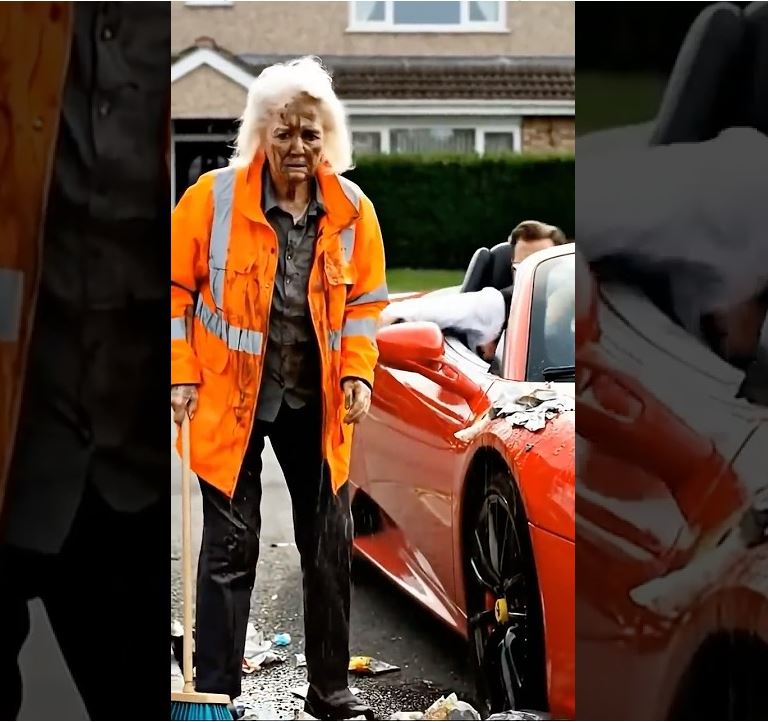
For years, the sanitation crew of Millfield had endured more than just the usual grumbles of the public. They were the ones everyone ignored, the ones whose hard work went unseen until it didn’t happen. They woke up before sunrise, drove through narrow streets and busy avenues, and collected the city’s waste while dodging impatient drivers, barking dogs, and the occasional careless pedestrian.
But recently, things had escalated. Trash bins were being tipped over deliberately, bags torn open, and the crew’s trucks keyed overnight. Citizens who once smiled and waved now shouted insults, blamed them for missed pickups, and accused them of taking days off when in fact they were working overtime.
It was Tuesday morning when something finally snapped.
The team gathered in the depot for their daily briefing, coffee in hand, looking tired but determined. Ramon, the foreman, slammed a clipboard onto the table.
“This is ridiculous,” he said. “Last night, someone left three full bins of broken glass at the corner of 5th and Main. Two hours to clean it up and half a dozen cuts. And the residents? Not one apology.”
Marcy, the youngest on the team, rolled her eyes. “It’s like they think we enjoy stepping on shards of glass.”
“Enough is enough,” said Hassan, the veteran driver. “We do our jobs every single day, and nobody respects us. I say we give them a little… taste of our creativity.”
The others leaned in, curiosity sparking in their eyes. Ramon grinned. “I think I know exactly what you mean.”
Over the next few days, the garbage team hatched a plan—one that would be clever, harmless, but unforgettable. They weren’t looking to hurt anyone, but they wanted to send a message: you can’t mess with the people who keep your city clean.
It started with small but symbolic gestures. They arranged trash cans in absurd patterns—one morning, every bin on Oak Street was perfectly aligned to spell out, in capital letters, “RESPECT US.” Residents rubbed their eyes in disbelief. Some laughed. Some were confused. But everyone noticed.
Next, the team got more creative. They filled one alley with carefully stacked empty boxes and plastic bottles, creating what looked like a mini obstacle course. The next day, a local blogger shared photos online with the caption: “Who knew garbage could be art?”
But the pièce de résistance came on Friday. The mayor’s office had been complaining about a particularly messy block downtown, claiming it was attracting pests. The team knew this street intimately—they had cleaned it hundreds of times—but this time, they had a plan.
Early in the morning, while the city was still quiet, the crew arrived in full force. Trucks, brooms, bins, and gloves at the ready. They worked methodically, but instead of their usual efficient pattern, they orchestrated a spectacle. Each bin was emptied into a massive, intricate sculpture: towers of colorful recyclables, arcs of aluminum cans, and piles of neatly folded cardboard. At the center stood a giant statue of a garbage truck, made entirely from discarded containers.
By the time the city woke, the scene was impossible to ignore. Pedestrians stopped in awe, taking pictures and videos. Social media exploded. The hashtag #GarbageArt began trending, with comments ranging from admiration to sheer amusement.
The mayor arrived personally, flanked by aides and reporters. She froze when she saw the sculpture. “What… what is this?” she stammered.
Ramon stepped forward, wiping his hands on his gloves. “This is what happens when you appreciate our work… or don’t. We clean your streets, and you walk by without a word. So we thought you could see what we see every day: the piles, the waste, the effort. And maybe, just maybe, you’d remember that someone’s always behind the scenes keeping this city livable.”