The waitress said no. The dog said otherwise. What followed was a moment so small and quiet that most people in the café almost missed it, yet so powerful that it stayed with everyone who witnessed it long after they walked out the door.
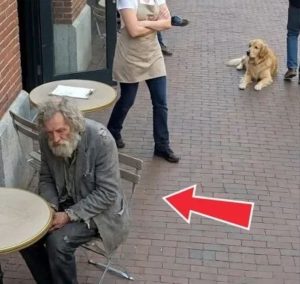
It was a rainy afternoon in a modest neighborhood café, the kind of place where the smell of coffee clung to your clothes and soft music hummed in the background. The windows were fogged from the warmth inside, and only a handful of customers sat scattered across the room. At a corner table near the door sat an elderly man, his coat worn thin at the elbows, his hands wrapped around a chipped mug of tea. Beside him lay a large dog, calm and dignified, with a graying muzzle and eyes that seemed to understand far more than they revealed.
The sign on the door was clear. No pets allowed.
When the waitress noticed the dog, she hesitated. She was not unkind, just tired. It had been a long shift, and rules were rules. She approached the table politely but firmly and explained that animals were not permitted inside. Her voice carried no anger, only obligation. The man nodded slowly, as if he had expected this moment. He apologized quietly and began gathering his things, his movements careful and stiff.
The dog did not move.
Instead, it sat up straighter, placing itself between the man and the edge of the table. It looked at the waitress, then back at the man, and gently nudged his hand with its nose. The man paused. For a brief second, the café seemed to hold its breath.
“I’ll go,” the man said softly. “He just needs a moment.”
But the dog had other ideas.
It stood, walked a few steps toward the waitress, and then did something no one expected. Slowly, deliberately, it sat down and lay its head on the floor, its eyes never leaving her face. There was no defiance in its posture, no aggression. Only patience. Only presence.
The waitress froze. She had seen dogs before. She had enforced this rule countless times. But something about this moment felt different. The dog was not begging. It was not asking. It was simply there, as if it belonged, as if leaving was not an option it recognized.
Other customers began to notice. Conversations faded. A woman near the window smiled faintly. A man at the counter stopped stirring his coffee. The silence grew heavier, filled with unspoken understanding.
“That’s a service dog?” someone asked gently.
The man shook his head. “No papers,” he said. “But he’s served me every day for twelve years.”
The waitress looked again at the dog, then at the man. She noticed the tremor in his hands, the way his shoulders curved inward, as though the world had slowly pressed down on him over time. She noticed how the dog leaned ever so slightly toward him, maintaining contact even while lying on the floor.
The rules were clear. But so was the bond in front of her.
She sighed, not in frustration, but in surrender. “I’ll bring you some water for him,” she said quietly. “And… just stay near the door.”
The man’s eyes filled with tears he did not try to hide. He nodded, unable to speak. The dog rose immediately, tail wagging once, then returned to the man’s side and sat, mission accomplished.
The rest of the café returned to life, but something had shifted. The air felt warmer. Lighter. As if everyone had been reminded of something important they had almost forgotten.
When the waitress returned with a bowl of water, the dog did not drink right away. Instead, it looked up at her and wagged its tail gently, then nudged the bowl toward the man’s feet before lowering its head again. The message was clear. He comes first.
Later, as the man prepared to leave, the waitress slipped a small paper bag onto the table. Inside was a sandwich wrapped carefully and a biscuit for the dog.