Christmas Eve had always been loud in my mother’s house. Too loud. The kind of loud that masked tension with laughter, that filled empty spaces with forced cheer and clinking glasses.
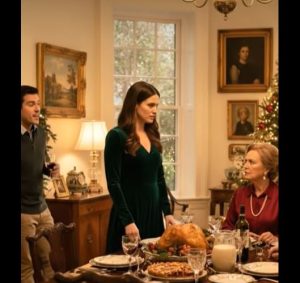
The living room glowed with lights wrapped too tightly around the tree, ornaments glittering like they were trying to prove something. Every surface held food, gifts, or expectations. And every year, without fail, someone asked me for something I wasn’t willing to give.
This year was no different.
I stood near the fireplace, warming my hands, listening as my relatives talked over one another. My aunt complained about money. My cousin hinted broadly about needing “help.” My uncle joked about how I was “the responsible one,” the kind of joke that always came with strings attached. I felt it building, that familiar pressure creeping in before the ask.
The mocking followed immediately. Someone joked that I’d “forgotten where I came from.” Another suggested I was getting “too big for family.” A third laughed outright and said, “Must be nice to think you’re better than us.”
I stood there, surrounded by tinsel and judgment, feeling strangely calm.
They didn’t know.
They thought my refusal came from selfishness. From arrogance. From forgetting my roots. They had no idea that my father’s past sat heavy on my shoulders every time someone asked me to sacrifice myself for their convenience.
My father wasn’t the saint they spoke of so casually.
He had been generous once. Too generous.
When I was a child, I watched him say yes to everyone. Loans he never got back. Promises that drained him. Family emergencies that were somehow always his responsibility. He worked longer hours, skipped meals, smiled through exhaustion. And every time he helped, someone found a reason to ask for more.
I remembered one Christmas clearly. I was ten. The tree was smaller that year. Fewer gifts. My father sat at the table late into the night, papers spread out, head in his hands. I asked him if Santa was running late.
He smiled and said, “Something like that.”
Years later, I learned the truth. He had emptied our savings to help a relative avoid foreclosure. The same relative who now laughed at me by the fireplace.
My father never recovered financially. The stress wore him down quietly. By the time he got sick, there was no safety net left. No family stepping in. No repayment. Just hospital bills and promises that never materialized.
I held his hand in that hospital room, listening as machines hummed softly. He looked at me with tired eyes and said, “Don’t make my mistakes.”
Those were his last clear words to me.
So when they mocked me that Christmas, I didn’t argue. I didn’t explain. I didn’t raise my voice.
“Yeah, yeah,” my uncle said. “He was a giver. You’re not.”
I met his eyes. “He gave until there was nothing left. And when he needed help, no one showed up.”
She stood slowly, hands trembling slightly as she adjusted her cardigan. “You don’t get to talk about him like that,” she said. “Not after what he went through.”
My aunt scoffed. “Oh please. He made his choices.”
“Yes,” my mother replied. “And all of you benefited from them.”
Silence spread through the room like a chill.
She looked at me then, her eyes soft but resolute. “Your father protected you by not telling you everything. But they don’t deserve that protection.”
She turned back to the family.
“Do you know why he kept working while he was sick?” she asked. “Because he was still paying off debts he took on for you. Do you know why he never asked for help? Because every time he did, someone told him it wasn’t a good time.”
No one spoke.
“Do you know why she says no?” my mother continued, gesturing to me. “Because she watched her father die tired and disappointed, surrounded by people who only showed up for the inheritance that didn’t exist.”
I spoke then, my voice steady. “I won’t repeat his story. I won’t fund other people’s irresponsibility. And I won’t apologize for protecting what he couldn’t.”
The room was quiet except for the soft hum of the heater and the faint jingle of an ornament someone had brushed against earlier.
Christmas suddenly felt different. Not warmer. Not happier. But clearer.
One by one, conversations resumed, subdued now, careful. No one asked me for anything else that night. No one joked. No one mocked.
Later, as I helped my mother clear dishes, she squeezed my hand. “He’d be proud of you,” she said.