Ricardo had learned to expect noise in the courthouse hallway—raised voices, hurried footsteps, the echo of heels against polished floors. What he hadn’t learned to expect was this. Two small figures burst through the double doors, sneakers squeaking, laughter tumbling out of them like sunlight, and without hesitation they ran straight past him.
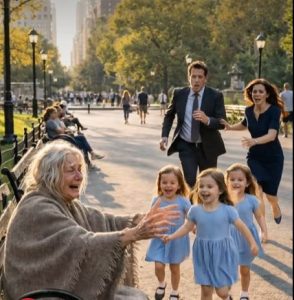
Straight into her arms.
“Grandma!” they shouted together, voices bright and certain.
Ricardo froze.
He stood there with a folder tucked under his arm, documents half-reviewed, his mind still in the rhythm of schedules and signatures. For a heartbeat, the world narrowed to that single word—Grandma—and the way it landed in the air, soft and undeniable. The children collided with her knees and wrapped their arms around her waist as if they had done it a thousand times before. She laughed, the kind of laugh that comes from deep in the chest, and bent to gather them close, pressing kisses into their hair.
“Slow down,” she said, smiling. “You’ll knock me over one of these days.”
Ricardo didn’t move. He couldn’t.
Because the woman they were holding onto wasn’t supposed to be anyone’s grandmother. Not on paper. Not in the case file he’d been carrying for weeks. She was listed as temporary guardian, community volunteer, non-relative caretaker. Clinical words. Safe words. Words that kept emotions at arm’s length.
And yet here they were, calling her Grandma like it was the most natural thing in the world.
Ricardo had met her three months earlier, when the case first landed on his desk. Two siblings. Eight and five. Removed from an unstable situation with no immediate family able—or willing—to step in. The kind of case that weighed heavy without being dramatic enough to make headlines. The kind that quietly changed lives while the system moved on to the next file.
She had walked into his office wearing a faded coat and sensible shoes, hands folded neatly in front of her. Her name was Elena Morales. Sixty-eight years old. Widowed. Lived in a modest apartment near the old part of town. Volunteered twice a week at the community center. No prior foster experience.
“I can take them,” she had said calmly, as if offering to water someone’s plants.
Ricardo had looked up from the file, surprised. “You understand this isn’t short-term,” he said. “It could be months. Longer.”
She nodded. “Children don’t come with return dates,” she replied.
He had hesitated then, professional instinct clashing with something more human. “They’re… a lot,” he added carefully. “They’ve been through things.”
Elena met his gaze without flinching. “So have I.”
That had ended the interview.
Now, standing in the hallway, watching those same children cling to her like she was their anchor in the world, Ricardo felt something crack open in his chest.
The little boy pulled back first, holding up a crumpled piece of paper. “Grandma, look! We drew you something!