The sun had barely risen when Manuel shuffled down the cracked pavement, his worn wooden cart creaking with each uneven step. The early morning air was thick with the smell of dust, sweat, and the faint scent of overripe fruit from the neighboring stalls.
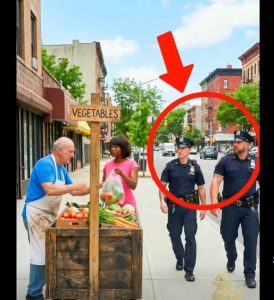
Manuel had been selling vegetables on the streets for years, waking before dawn each day to prepare his modest cart, arranging tomatoes, cucumbers, and bundles of leafy greens in neat, albeit fading, patterns.
His earnings were meager, barely enough to cover rent and food, but he took pride in his small enterprise. Every day, he told himself, he was surviving, and that was enough.
But that morning, survival seemed suddenly impossible.
Two uniformed police officers appeared around the corner, their boots clicking sharply against the cobblestones. Manuel froze, his heart racing. “Buenos días, señor,” one of them said with a forced politeness, “we need to speak with you about your cart.”
“What? My cart?” Manuel stammered, a cold sweat running down his back. “I—this is my livelihood. I pay what I can, I—”
There was no time for explanation. The officers began lifting the cart, its worn wooden frame squealing in protest. Manuel reached for it, his hands gripping the edge desperately. “Please! Please! I need that to eat! To live!”
But the officers were firm. With a gentle but unyielding tug, they pulled him away from the street where he had worked for so long. His neighbors peeked through their windows, some offering sympathetic looks, others shaking their heads in disappointment.
Manuel felt his chest tighten, as though the sky itself were pressing down on him. He had nowhere to go, no backup plan, no shelter for his small business.
He followed them in silence, feeling the humiliation and fear weigh him down. The officers walked him to a small vehicle, opened the back, and gestured for him to sit. Manuel obeyed, his mind racing with thoughts of ruin. How would he survive now? How could he start over?
Hours seemed to pass as the vehicle rattled along narrow streets and sharp corners. Manuel’s fingers drummed nervously against his knees, his cart’s absence a hollow ache he could not ignore. He had imagined endings like this before—losing his cart, losing his goods, losing hope—but reality always hit harder than memory.
Finally, the vehicle stopped. The officers turned toward him with an expression he could not read. “Sit still,” one of them said. “Close your eyes for a moment.”
Manuel’s eyes widened. “What? Why?” he asked, panic creeping back in.
“Just trust us,” the officer replied, his voice calm but firm.
Trembling, Manuel obeyed. He closed his eyes, pressing his palms against his face, bracing for whatever punishment or disappointment awaited him. His mind raced with fear, imagining fines, confiscation, perhaps even imprisonment. He could feel the weight of the past years of struggle pressing down on him like a mountain.
Moments stretched, and then—soft footsteps. Voices. Something being placed beside him. The officers spoke in hushed tones, and Manuel’s heart thudded in confusion. What was happening? Why had they taken him away only to leave him here in darkness?
“Open your eyes,” one of the officers said gently.
Manuel blinked against the sunlight that suddenly streamed through a wide doorway. Slowly, his gaze adjusted, and what he saw stole his breath.
Before him stood a small shop, modest yet clean and inviting, with a polished wooden counter and shelves carefully stocked with fresh vegetables and fruits. The walls were painted a soft cream color, and a small sign above read simply, “Manuel’s Market.”
His hands flew to his mouth. “My… my cart…” he whispered.
“No cart needed anymore,” one of the officers said with a smile. “We bought this shop for you. Now you can sell indoors, safe from the elements, without worrying about fines or harassment. It’s yours.”
Manuel staggered forward, tears blurring his vision. He sank to his knees inside the shop, staring at the neatly arranged produce and the space that would become his new livelihood.
The officers stood back, letting him take in the reality of the gift. For the first time in years, Manuel felt a surge of hope, overwhelming and almost too heavy to bear.
He ran his fingers over the polished counter, imagining the customers who would soon come, the conversations he would have, the laughter that would fill the small space. He saw the possibilities that had been hidden behind years of struggle—the chance to build a future not just for himself, but perhaps for his family, who depended on his meager earnings.