Every morning at exactly the same time, the old man stepped out of his small brick house at the end of Willow Street. His name was Arthur, and at eighty-two years old, his world had become quiet and predictable. He moved slowly, carefully, leaning on a worn wooden cane that had once belonged to his own father. Each step required effort now, and though he rarely complained, the strain showed in the way he paused to catch his breath or tightened his jaw when his knee protested.
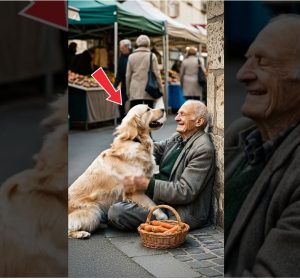
Waiting faithfully by the door every morning was Milo, a medium-sized mixed-breed dog with intelligent brown eyes and ears that seemed to miss nothing. Milo had been Arthur’s companion for five years, ever since a neighbor had found the dog wandering alone near a construction site. Arthur hadn’t planned on keeping him, but loneliness has a way of opening doors the heart didn’t know were there. From that day on, Milo became more than a pet—he became purpose.
Their routine was simple. Arthur walked slowly down the sidewalk toward the park, Milo trotting at his side, occasionally glancing up as if checking that his human was still okay. Most days, the walk was manageable. But lately, Milo had noticed changes. Arthur stopped more often. His grip on the cane tightened. His breathing grew heavier, especially near the small hill just before the park bench.
Milo noticed everything.
One chilly morning, as the wind rustled fallen leaves across the pavement, Arthur struggled more than usual. Halfway down the street, his foot caught on a crack in the sidewalk. He stumbled—not enough to fall, but enough to scare them both. Arthur steadied himself, heart pounding, and forced a weak chuckle.
“I’m alright, boy,” he murmured.
But Milo didn’t relax. His tail lowered slightly, ears tilting back with concern. He moved closer to Arthur’s leg, pressing his side gently against him, offering balance without being asked. Arthur smiled and rested his hand on Milo’s head, unaware that this small moment had triggered something important in the dog’s mind.
From that day on, Milo watched Arthur even more closely. He began walking on the side where Arthur leaned most, matching his pace step for step. When Arthur paused, Milo stopped instantly. When Arthur struggled with the slight incline near the park, Milo instinctively leaned into him, acting as a living brace.
Still, there were moments when even that wasn’t enough.
One afternoon, Arthur sat heavily on the park bench, chest rising and falling as he caught his breath. His hands trembled slightly as he reached into his coat pocket—only to realize he’d left his phone at home. Milo sat in front of him, head tilted, eyes fixed on Arthur’s face. Something was wrong. Arthur tried to stand again but sank back down with a quiet groan of frustration.
That was when Milo made a decision.
Without barking or panicking, Milo turned and trotted away from the bench. Arthur frowned. “Milo?” he called softly. The dog didn’t respond. Instead, he ran toward the path leading out of the park, disappearing behind a row of trees.