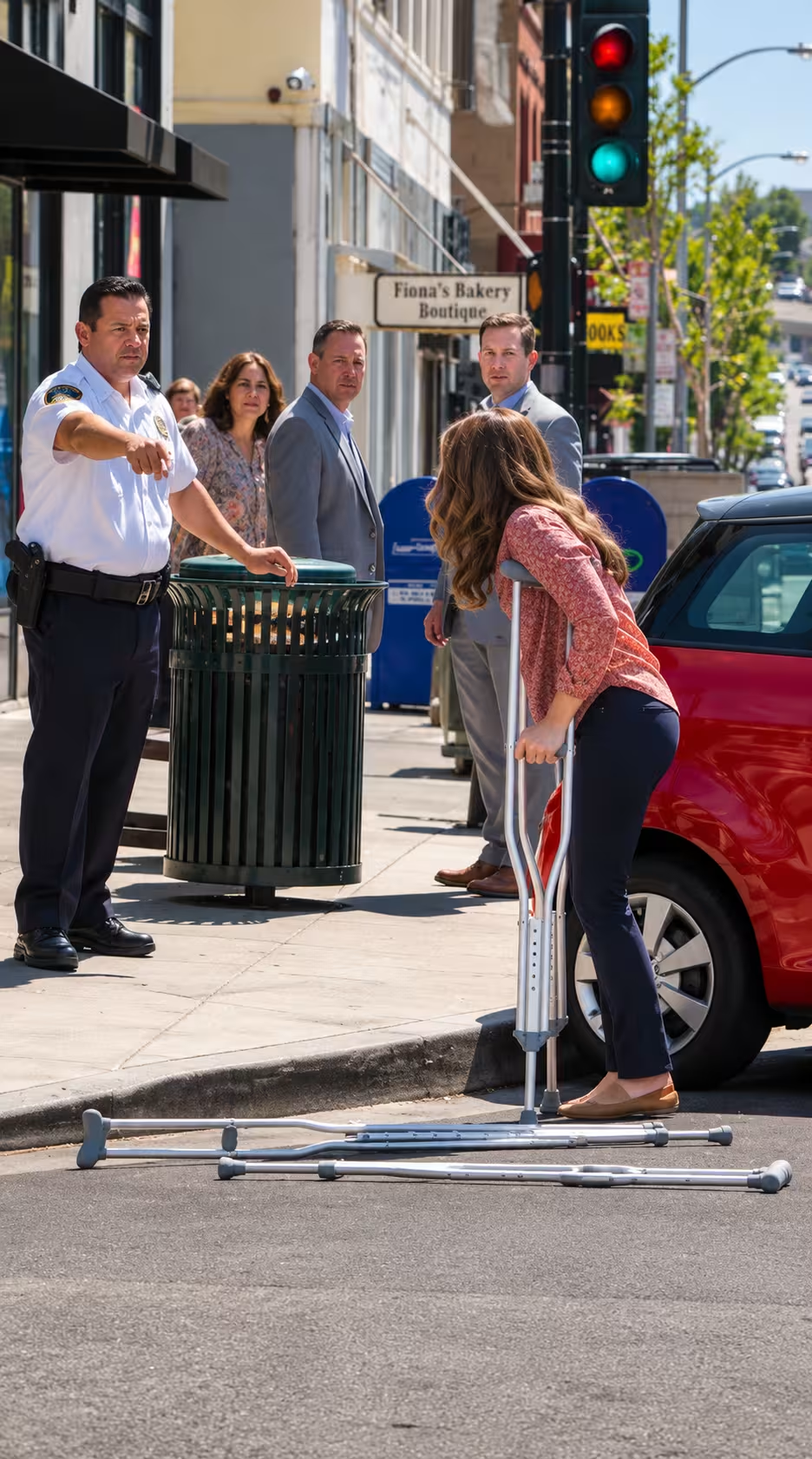
The woman stood beside her car, carefully supporting herself with a pair of crutches.
She looked toward the driver’s door before adjusting her position on the pavement.
Two uniformed officers walking through the parking area noticed her movements and stopped nearby.
One officer greeted her while the other observed the limited space surrounding her vehicle.
The woman explained that she was experiencing difficulty getting into her car comfortably.
Although she had managed similar situations before, the circumstances that afternoon presented an additional challenge.
The officers listened carefully as she described her concerns.
Their conversation gradually revealed how seemingly ordinary parking arrangements could affect someone with mobility difficulties.
An Ordinary Afternoon Away From Home
Thirty-nine-year-old Claire Dawson lived in a quiet residential neighborhood outside the town center.
She worked remotely as an administrative assistant and enjoyed maintaining an independent lifestyle.
Following a previous injury, Claire relied on crutches to move around comfortably.
She had adapted her daily routine to accommodate her mobility requirements.
Driving allowed her to visit local businesses, attend appointments, and spend time with friends.
That afternoon, Claire traveled to a shopping center to purchase several household essentials.
She parked in a designated accessible space near the main entrance.
The additional room beside her vehicle allowed her to open the driver’s door fully.
After collecting her belongings, she entered the shopping center and completed her errands.
Claire stopped briefly at a small café before returning to the parking area.
She was looking forward to spending a relaxing afternoon at home.
However, when she reached her vehicle, she noticed that another car had parked unusually close beside it.
The available space was considerably narrower than when she had arrived.
Finding Limited Space Beside the Car
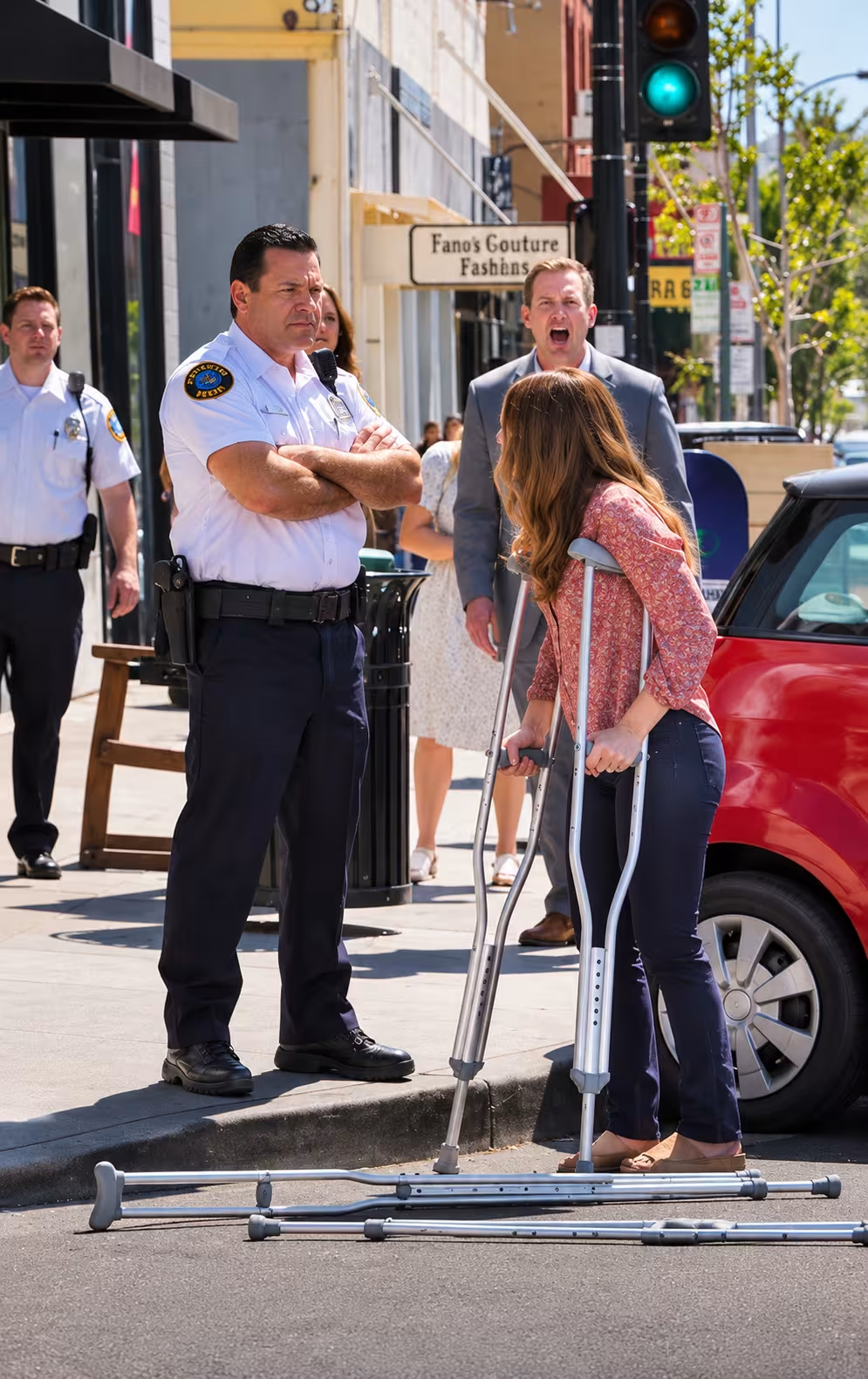
Claire stopped beside her vehicle and examined the distance between the two cars.
She needed sufficient room to position her crutches and open the driver’s door comfortably.
Unfortunately, the neighboring vehicle occupied part of the designated access area.
Claire attempted to determine whether she could enter her car without assistance.
She carefully adjusted her position but quickly recognized that the available space was insufficient.
Rather than risk losing her balance, she decided to remain beside the vehicle.
She looked around, hoping the neighboring car’s owner might return shortly.
Several shoppers passed through the parking area carrying bags and pushing shopping carts.
Claire considered contacting the shopping center’s customer service desk.
However, returning to the building would require another lengthy walk.
She rested beside her car while considering the most practical solution.
At that moment, two uniformed officers entered the parking area during a routine patrol.
They noticed Claire standing with her crutches beside the driver’s door.
Her difficulty accessing the vehicle encouraged them to stop and speak with her.
The Two Officers Listen to Her Concerns
Officer Samuel Price approached Claire and greeted her politely.
His colleague, Officer Rebecca Lawson, stood nearby while Claire explained the situation.
She pointed toward the neighboring vehicle and described the difficulties it created.
Samuel examined the parking markings and noticed that the designated access area was partially obstructed.
Rebecca asked Claire whether she needed somewhere comfortable to sit.
Claire explained that she was managing but would appreciate resolving the parking issue.
The officers reassured her that they would investigate the circumstances.
Rebecca contacted the shopping center’s management office to request assistance locating the vehicle’s owner.
Meanwhile, Samuel remained beside Claire and continued their conversation.
She explained that accessible parking spaces provided more than convenient proximity to building entrances.
The additional space was essential for safely entering and leaving her vehicle.
Samuel acknowledged the importance of her explanation.
He understood that maintaining clear access areas could significantly affect someone’s daily independence.
The officers continued assisting Claire while waiting for a response from the shopping center.
Resolving the Parking Situation Together
A shopping center employee arrived several minutes later and examined the neighboring vehicle.
The employee confirmed that an announcement had been made requesting its owner to return.
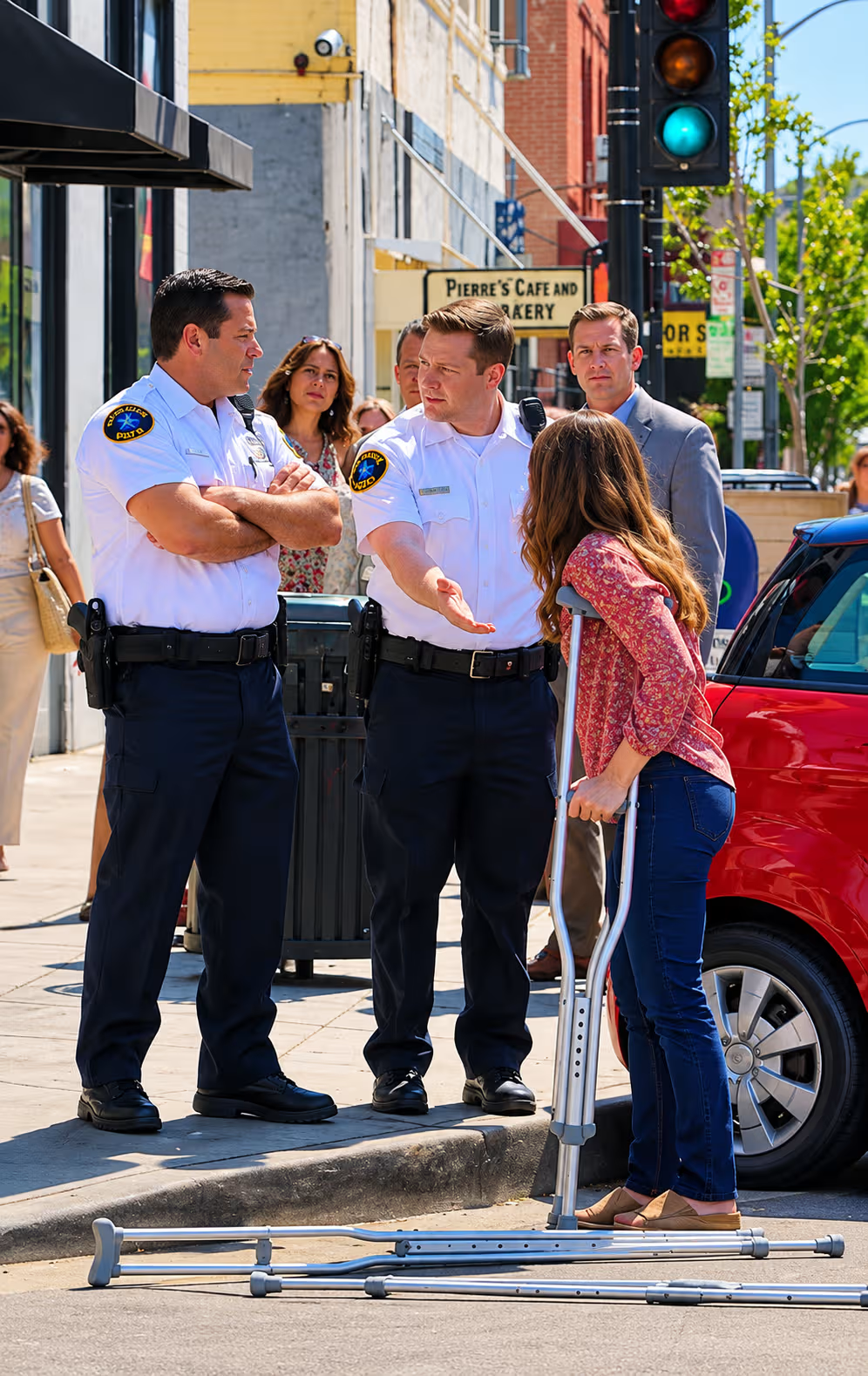
Claire remained beside her car while the officers ensured she had sufficient space to stand comfortably.
Shortly afterward, a man carrying several shopping bags approached the neighboring vehicle.
He appeared surprised to find the officers speaking with Claire.
Samuel greeted him and explained that his vehicle partially obstructed the accessible parking area.
The man examined the markings beneath his car and acknowledged the parking mistake.
He explained that he had not fully understood the purpose of the additional marked space.
Rebecca calmly described why keeping that area clear was important.
Claire explained how the obstruction had prevented her from entering her vehicle comfortably.
The man apologized and immediately agreed to reposition his car.
Once the vehicle had been moved, Claire had sufficient room to open her driver’s door.
The officers remained nearby while she prepared to enter her car.
With the access area restored, Claire was able to manage the process independently and comfortably.
A Conversation About Everyday Accessibility
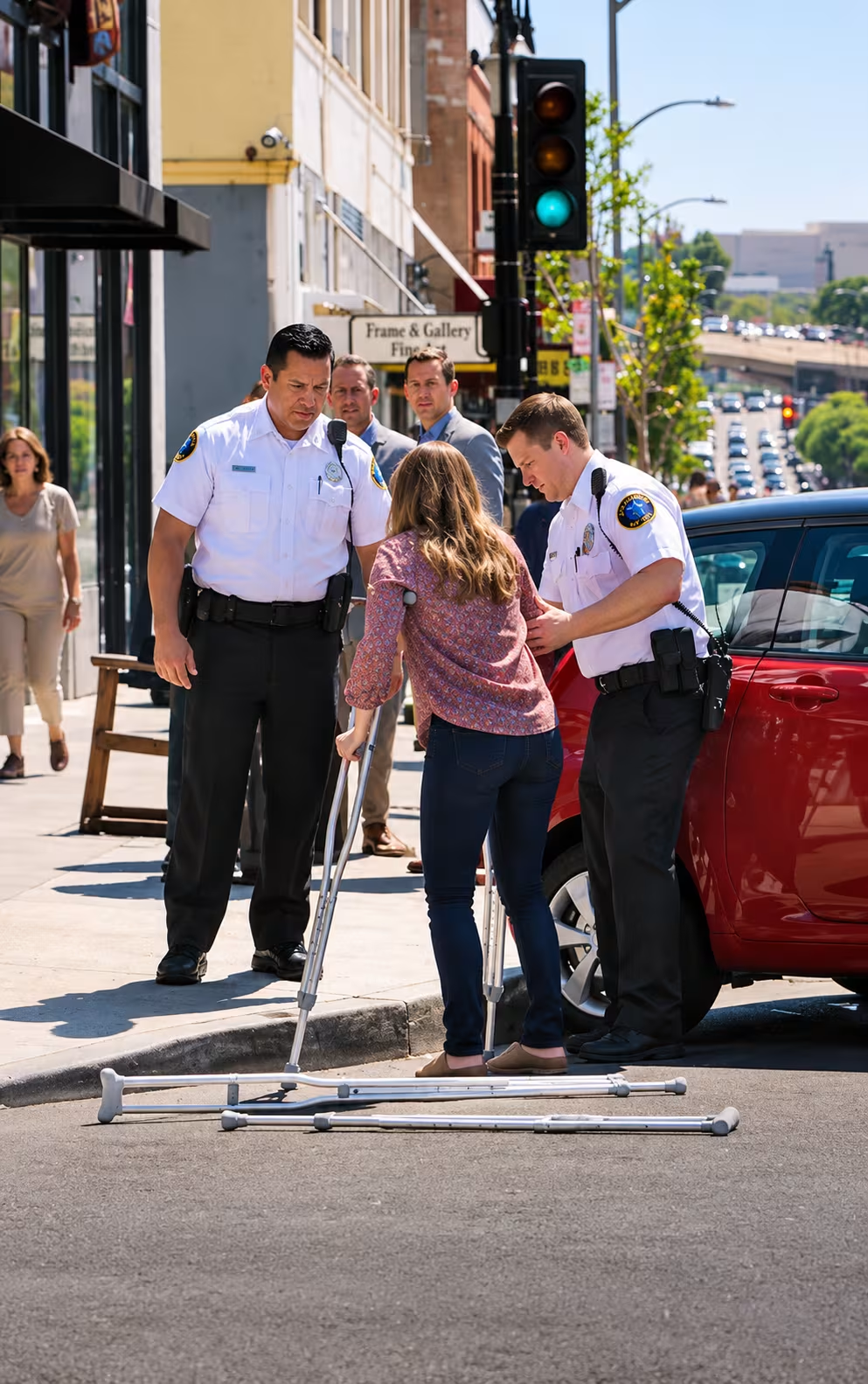
Before leaving, Claire thanked both officers for taking her concerns seriously.
She explained that similar situations occasionally occurred during her visits to public places.
Sometimes, shopping carts or incorrectly parked vehicles occupied designated access areas.
Although these obstacles might appear minor, they could create considerable inconvenience.
Rebecca acknowledged that greater public awareness could help prevent such difficulties.
The shopping center employee also participated in their conversation.
He suggested reviewing the parking area’s signs and painted markings.
Samuel encouraged the employee to discuss these improvements with the center’s management team.
Claire appreciated that everyone was willing to consider practical solutions.
The neighboring driver apologized once more before continuing his afternoon.
Claire accepted his apology and thanked him for moving his vehicle.
She then placed her crutches securely inside her car and prepared to leave.
Both officers wished her a pleasant afternoon before returning to their patrol.
Claire drove home feeling relieved that the situation had been resolved respectfully.
Creating a More Considerate Community
Several weeks later, Claire returned to the same shopping center.
She noticed that the accessible parking markings had been refreshed.
Additional signs reminded drivers to keep the designated access areas clear.
Shopping center employees were also paying closer attention to the surrounding parking spaces.
Claire parked comfortably and entered the building without experiencing any difficulties.
She appreciated seeing practical improvements that could benefit other visitors with mobility requirements.
Later that afternoon, she contacted the management office to express her appreciation.
The employees explained that her experience had encouraged them to review their accessibility arrangements.
In this fictional story, two uniformed officers spoke with a woman using crutches beside her car.
Their conversation helped identify an accessibility concern and resolve it through respectful communication.
The experience demonstrated how thoughtful assistance could support individuals without diminishing their independence.
For Claire, the officers’ willingness to listen was just as meaningful as their practical assistance.
She continued enjoying her familiar routine, confident that small improvements could make public spaces more welcoming for everyone.
Sometimes, making someone’s day easier begins with listening carefully, understanding their needs, and ensuring they have the same opportunities to move through the world independently.