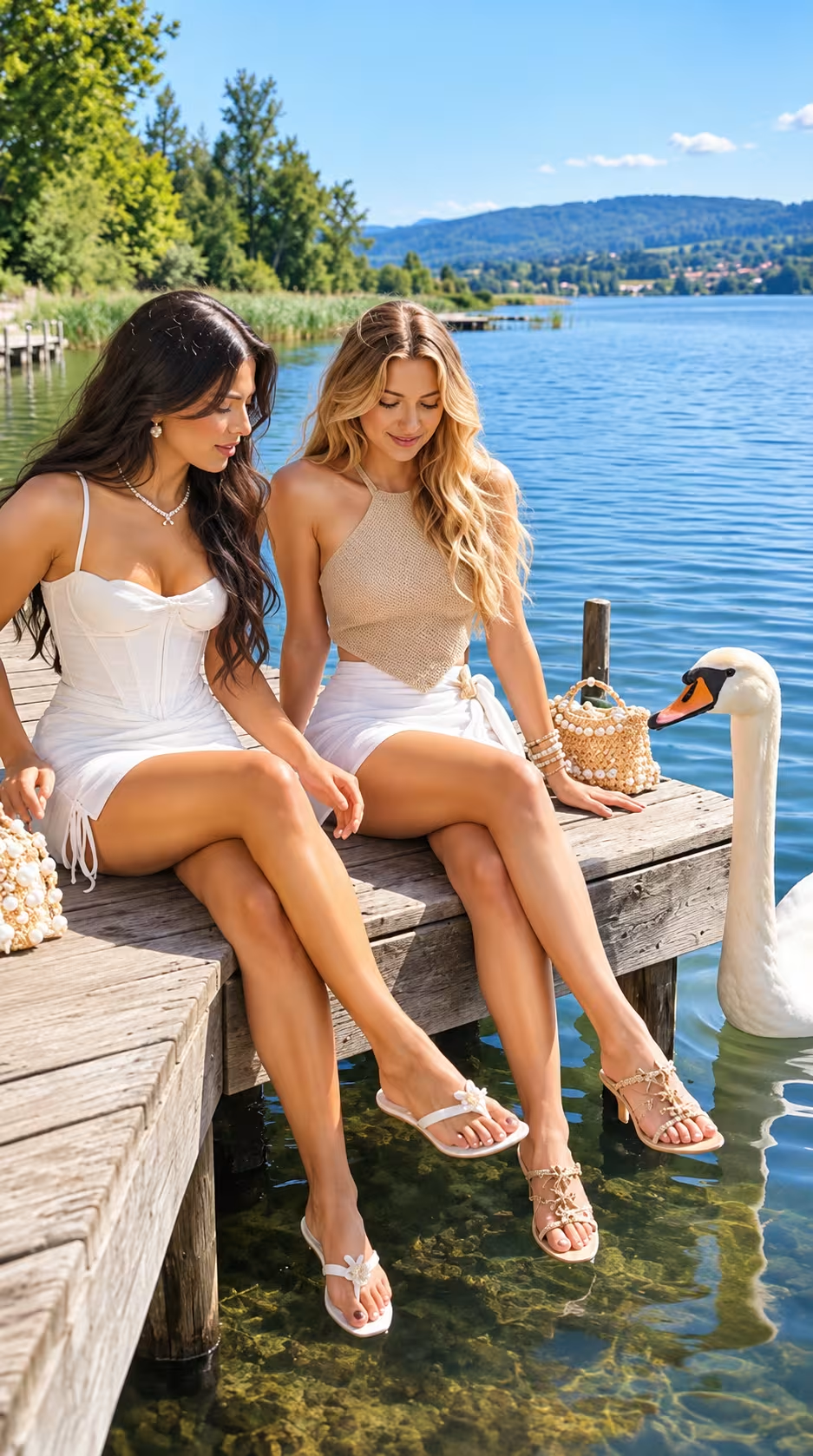
The white swan moved slowly beside the wooden dock, repeatedly turning toward a sheltered section of the shoreline.
Thirty-three-year-old Olivia Bennett noticed the bird while enjoying a morning walk with her friend, Grace Morgan.
Unlike the other swans swimming across the lake, this one remained close to the wooden structure.
The women followed its movements from the dock, maintaining a respectful distance.
Near the shoreline, Grace noticed another swan struggling among reeds and floating vegetation.
A section of discarded netting appeared wrapped around the younger bird.
Realizing that the animal needed professional assistance, Olivia contacted a local wildlife rescue organization.
The women waited nearby, watching the water until a trained wildlife worker arrived with appropriate rescue equipment.
A Peaceful Morning Beside the Lake
Olivia and Grace regularly visited the lakeside nature reserve during their weekends.
They enjoyed walking along its scenic pathways and observing the birds that gathered near the water.
The reserve featured several wooden docks extending into sheltered sections of the lake.
Swans, ducks, and other waterbirds frequently rested near these structures.
That morning, the weather was mild, with sunlight reflecting across the calm surface.
Olivia carried a camera, hoping to photograph the surrounding landscape.
Grace brought binoculars for observing birds along the distant shoreline.
After walking through a wooded section of the reserve, they reached a familiar wooden dock.
Several ducks were swimming peacefully near its supporting posts.
A large white swan approached from the opposite side.
The bird moved alongside the dock before turning toward a nearby inlet.
Olivia initially assumed it was searching for food.
However, the swan repeatedly returned to the same section of water.
Grace noticed its unusual movements and suggested watching for a few moments.
Following the Swan Along the Wooden Dock
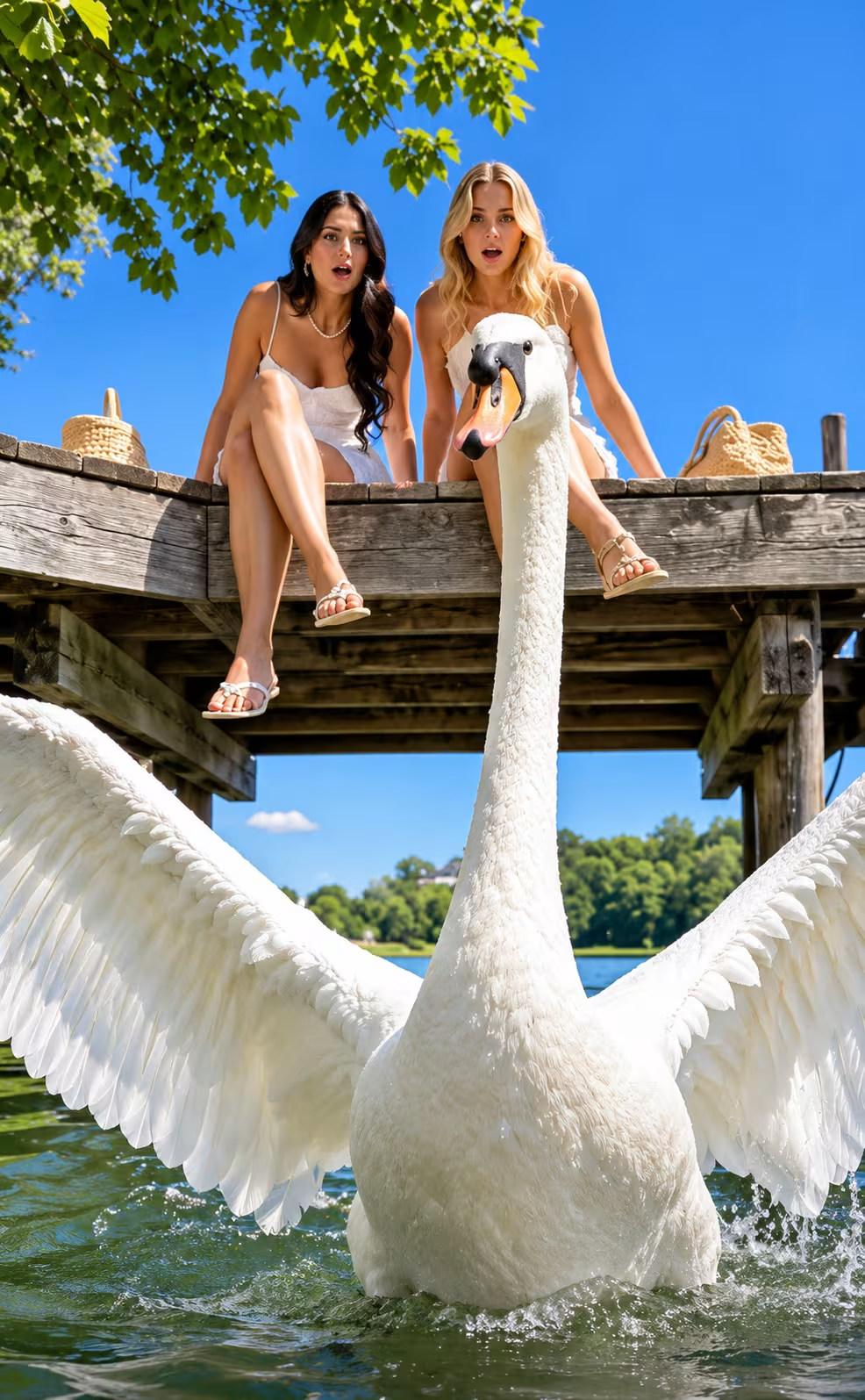
The swan continued swimming beside the dock, occasionally stretching its neck toward the shoreline.
Olivia and Grace walked slowly along the wooden boards.
They avoided sudden movements that might disturb the bird.
At the far end of the dock, the swan turned toward a cluster of reeds.
It disappeared briefly behind the vegetation before returning to open water.
Grace raised her binoculars and examined the sheltered area.
She noticed another bird partially concealed among the reeds.
Its feathers were lighter gray, suggesting that it was a young swan.
The youngster moved awkwardly whenever it attempted to swim away.
Olivia looked through the zoom lens of her camera.
She spotted a thin section of green netting floating beside the bird.
Part of the material appeared tangled around its body.
The young swan attempted to move forward but remained close to the vegetation.
The adult swan continued swimming nearby.
Neither woman could determine whether the birds belonged to the same family.
However, their proximity encouraged them to investigate the situation more carefully.
Discovering the Tangled Netting
Grace noticed that the discarded netting extended toward a partially submerged branch.
The young swan appeared unable to move beyond that section of water.
Each attempt to swim seemed to pull the material tighter.
Olivia immediately recognized that entering the lake could create additional risks.
The water near the reeds was deep, and submerged branches were difficult to see.
A distressed swan could also react defensively if approached.
The women agreed that professional assistance was necessary.
Olivia found the wildlife rescue telephone number displayed on a nearby information board.
She called the organization and described the trapped bird.
The dispatcher asked whether the swan could keep its head above water.
Grace confirmed that it remained upright and appeared alert.
Olivia provided the dock number and described the surrounding vegetation.
The dispatcher advised both women to remain on the wooden walkway.
A trained responder would arrive with suitable equipment.
While waiting, Grace continued observing the young swan through her binoculars.
The adult bird remained nearby, occasionally moving closer to the reeds.
A Wildlife Worker Arrives and Frees the Young Swan
Approximately twenty minutes later, a wildlife rescue vehicle arrived near the lakeside parking area.
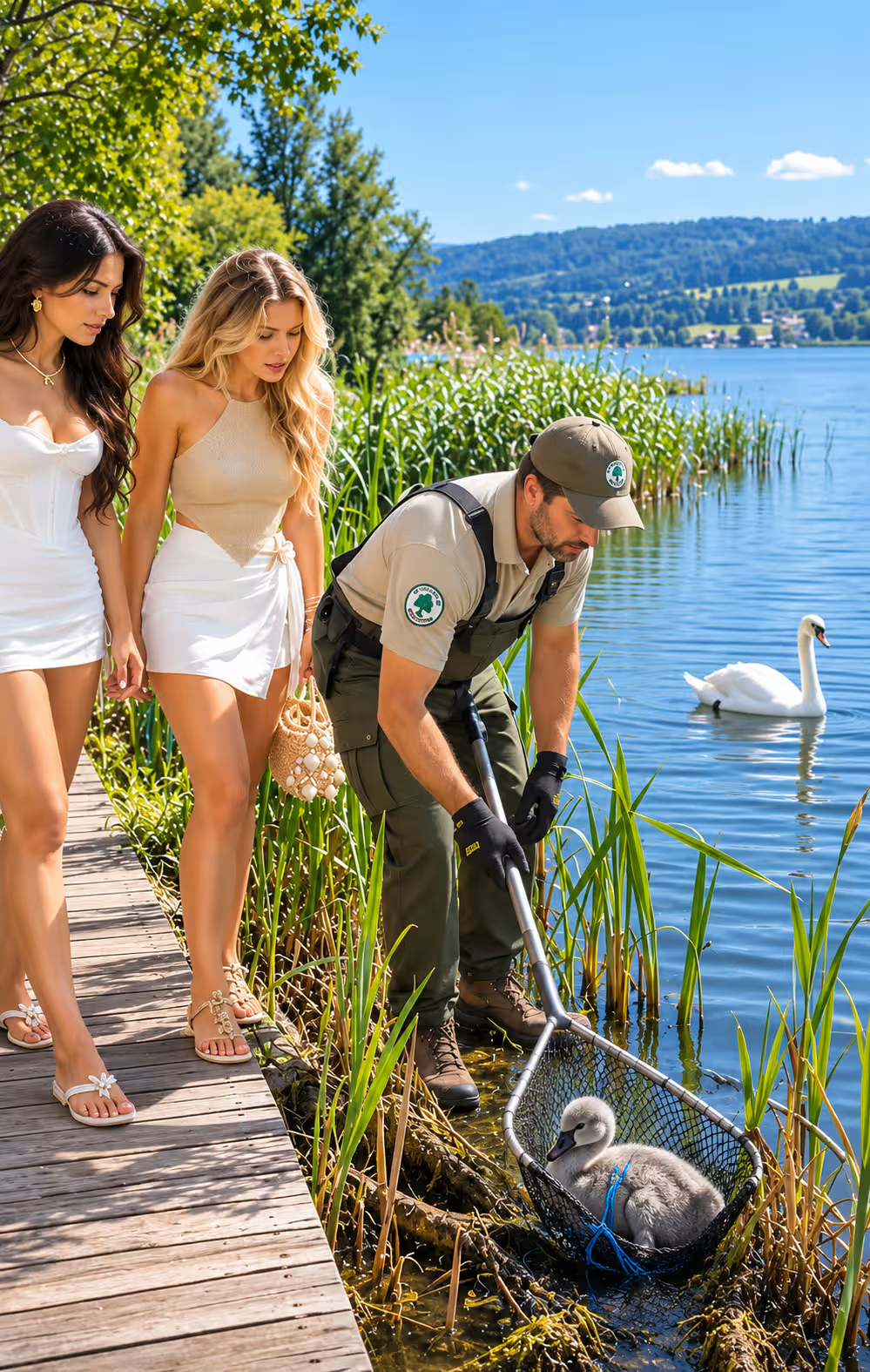
A responder named Owen Fletcher approached the dock carrying protective equipment and a suitable bird carrier.
Olivia explained how they had followed the adult swan toward the sheltered shoreline.
Grace pointed toward the netting surrounding the younger bird.
Owen examined the situation carefully before preparing his equipment.
A reserve employee arrived to assist with the rescue and monitor the surrounding area.
Together, they identified a suitable approach that minimized disturbance to both swans.
Owen asked the women to remain several yards away.
Using appropriate wildlife handling equipment, the responders carefully secured the young swan.
Owen discovered that the netting had become wrapped around one leg and part of its wing.
He carefully removed the material while his colleague supported the bird.
The youngster gradually regained freedom of movement as the tangled sections were removed.
Owen checked for visible injuries before placing the swan inside a ventilated carrier.
The adult swan remained in the nearby water throughout the operation.
Olivia and Grace watched with relief as the responders brought the youngster onto stable ground.
A Professional Assessment Before Returning to the Lake
Owen examined the young swan for signs of discomfort and restricted movement.
The affected leg showed mild irritation where the netting had tightened.
Although the bird remained alert, Owen wanted a veterinary professional to assess its condition.
He arranged transportation to a nearby wildlife rehabilitation facility.
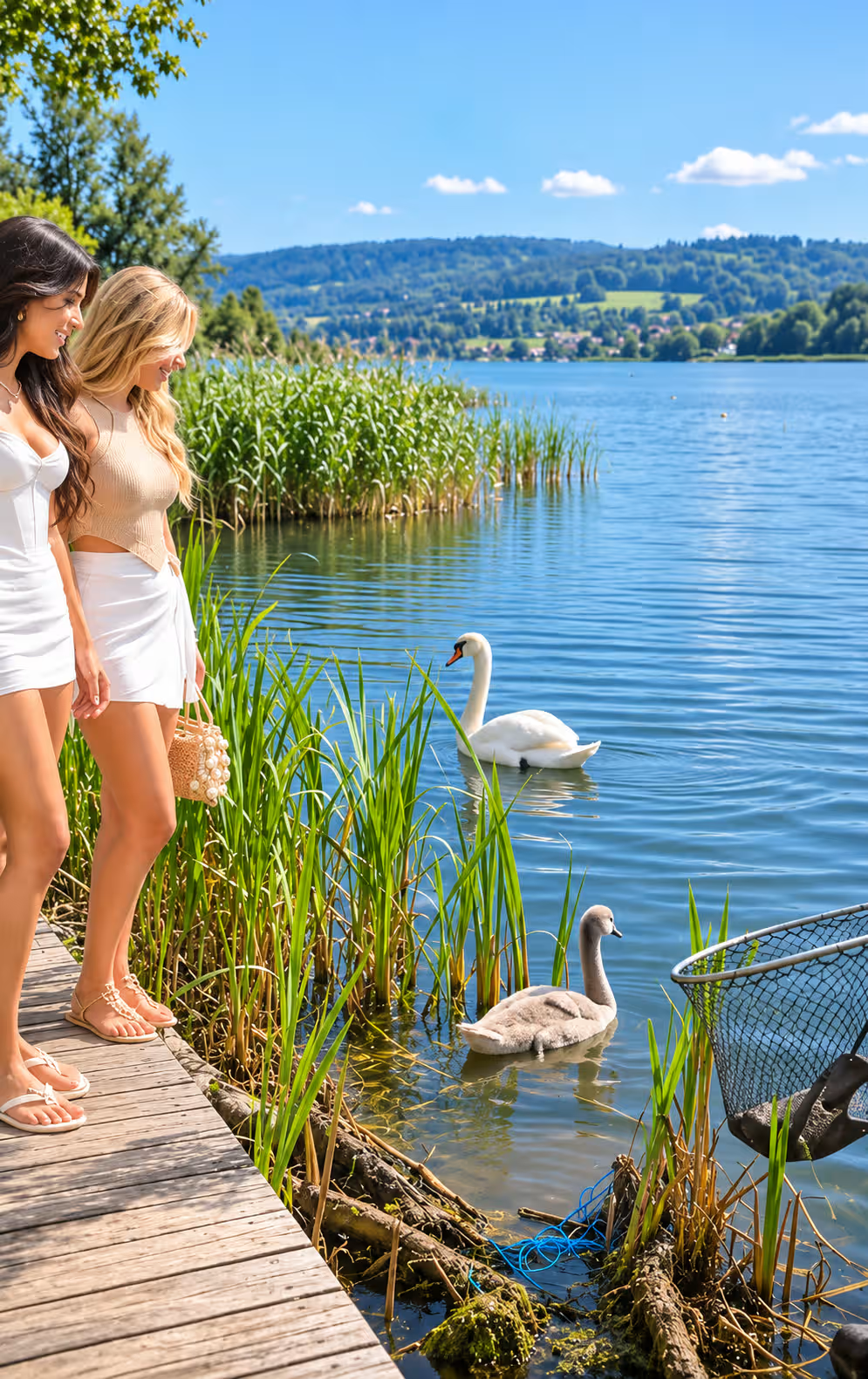
The reserve employee collected the remaining netting from the accessible shoreline.
Several smaller pieces of discarded fishing material were also discovered among the reeds.
Olivia wondered how long the youngster had been trapped.
Owen explained that determining the exact duration was difficult.
Fortunately, the women had reported the situation before the bird’s condition visibly deteriorated.
At the rehabilitation facility, a veterinarian examined the swan’s wing and leg.
No serious injuries were identified during the initial assessment.
The youngster received appropriate care and remained under observation.
Over the following days, staff monitored its swimming ability and general behavior.
Once the bird demonstrated normal movement, the team began preparing for its return to the lake.
A Welcome Return to Familiar Waters
Several days later, Olivia received an encouraging update from the wildlife rescue organization.
The young swan had recovered sufficiently to return to its natural habitat.
The rehabilitation team selected a quiet shoreline location near the original rescue area.
Olivia and Grace visited the reserve later that week.
They watched several swans swimming peacefully beyond the wooden dock.
Among them was a younger bird with gray feathers.
Although they could not confirm its identity, seeing the swans moving freely brought them comfort.
The experience encouraged both women to participate in an organized lakeside cleanup.
Working alongside reserve employees, they helped collect litter from designated public areas.
The reserve also increased inspections around popular fishing locations.
In this fictional story, two women followed a swan along a wooden dock and discovered another bird caught in discarded netting.
Their decision to contact a trained wildlife worker helped ensure that the young swan received appropriate assistance.
The encounter highlighted the importance of responsible waste disposal and protecting shared natural habitats.
Olivia and Grace continued visiting the lake, appreciating its wildlife with renewed awareness.
As the swans glided across the peaceful water, the two friends remembered the youngster caught among the reeds and felt grateful that their willingness to stop, observe, and seek help had given it another chance to swim freely.