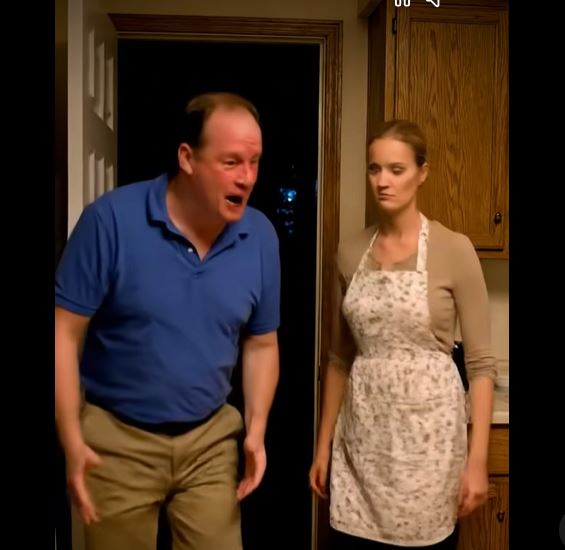
I still remember the exact sound the door made when I opened it. A soft click from the lock, followed by the familiar creak of hinges that always needed oil. It was a sound I’d heard thousands of times before, a sound that meant home. That evening, I expected nothing more than the usual—shoes by the wall, a quiet house, maybe a tired conversation before bed. I had no idea that one sentence, spoken without shouting or drama, would quietly divide my life into before and after.
I had come home later than usual. Work had dragged on, and my phone battery had died hours earlier. By the time I parked the car, the street was nearly empty, the houses glowing softly behind their curtains. As I walked up the steps, I noticed the lights were on in every room. That should have felt welcoming, but instead it stirred a faint unease I couldn’t explain.
Not the peaceful silence of rest, but the kind that feels staged, deliberate. My coat slipped from my shoulder and landed on the floor, and I noticed it echoed more than it should have. I took a few steps forward, glancing toward the living room. Everything looked normal—too normal. The cushions were perfectly arranged. The table was cleared. There was no television noise, no music, no movement.
My partner was sitting at the dining table, hands folded, posture straight. Across from them sat my older sister, her back rigid, eyes fixed on the tabletop. They both looked up at the same time when they heard me.
No one answered right away. My sister swallowed hard. My partner glanced at her, then back at me, as if silently negotiating who would speak first. I set my bag down carefully, suddenly aware of my own breathing.
“Why are you both sitting like that?” I asked, trying to sound light, joking even. “Did I miss something?”
My partner stood up. Not abruptly, but deliberately, like someone preparing to deliver bad news. They walked around the table and stopped a few feet away from me. I searched their face for clues—anger, guilt, fear—but what I saw instead was resolve.
Those four words alone were enough to raise every defense I had. But I nodded, bracing myself.
Before I could speak again, my partner took a breath and said the sentence that changed everything.
For a moment, I honestly didn’t understand what they meant. The words didn’t explode. They didn’t accuse. They just… existed. Heavy. Unavoidable.
My partner didn’t raise their voice. They didn’t cry. That was what made it unbearable.
“I’ve been walking on eggshells for a long time,” they continued. “Every time I try to be honest, it turns into an argument. Or silence. Or weeks of tension. And I can’t do that anymore.”
My partner answered instead. “Because I needed someone there when I said this. Someone who could help me say it out loud.”
The realization hit me slowly and painfully: this conversation had been planned. Not maliciously—but carefully. Thought through. Practiced. This wasn’t a moment of anger. It was a conclusion.
They explained calmly, methodically. How certain conversations were avoided because they felt unsafe. How important topics were softened, delayed, or hidden entirely. How love had slowly turned into self-censorship. My sister added examples I didn’t remember happening that way—conversations I thought were resolved, moments I believed were minor.
Listening to them felt like looking into a mirror that reflected a version of myself I didn’t recognize but couldn’t entirely deny.
I realized then that everything had changed not because of what they accused me of, but because of what they no longer trusted me with. The truth. Their unfiltered thoughts. Their fears. Their needs.
My partner didn’t hesitate. “Now we see if this can be rebuilt. But only if things change. Really change.”