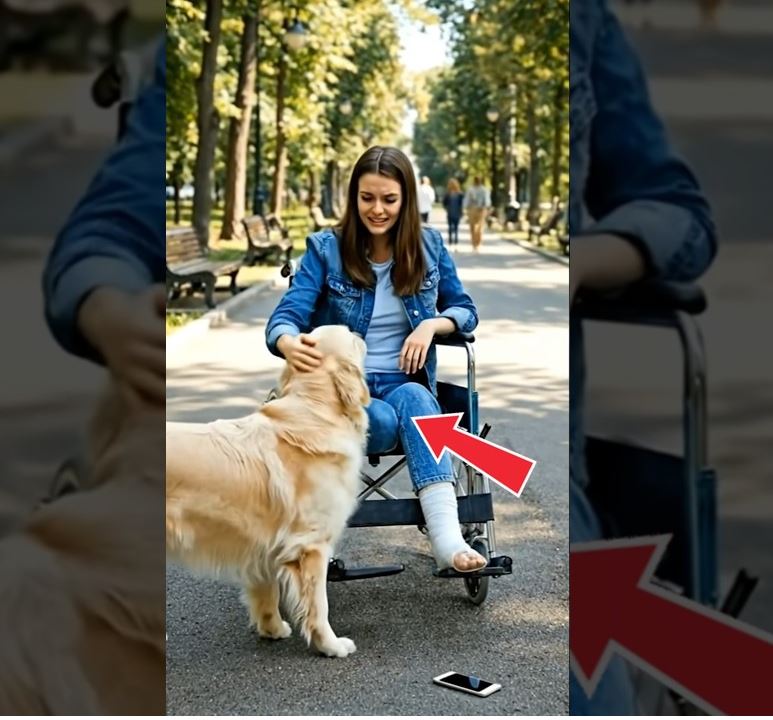
Every morning at exactly 7:40, Sofia waited at the same bus stop on the corner of Maple Street and Third Avenue. She sat in her wheelchair, hands folded neatly in her lap, backpack hanging from the handle behind her. Cars passed. People passed. Most never looked at her.
Sofia was twelve years old and had been disabled since birth. Her legs were weak, unable to support her weight for more than a few seconds. Her mother worked double shifts at a nursing home, so Sofia took the city bus to school on her own. She had learned to be independent early, not because she wanted to, but because she had to.
That morning, the sky was gray and heavy with rain. The sidewalk was slick, and puddles had formed along the curb. When the bus finally arrived, it stopped a little too far from the curb. The hydraulic ramp malfunctioned, jerking halfway down and then freezing.
The driver frowned and pressed a button again. Nothing happened.
“I’m sorry,” he said, sounding more annoyed than concerned. “Ramp’s not working. You’ll have to wait for the next bus.”
Sofia’s stomach sank. The next bus wouldn’t come for another forty minutes. She would be late again. Late meant detention. Detention meant another lecture about responsibility.
“Can someone help lift me?” she asked quietly, looking around.
There were people nearby. A man in a business suit scrolling on his phone. Two teenagers laughing with earbuds in. A woman holding a coffee cup, clearly in no rush.
No one moved.
The bus driver shrugged. “I can’t leave my seat,” he said, then closed the doors.
The bus pulled away, splashing dirty water onto the curb.
Sofia blinked hard. She refused to cry in public. She had learned that tears made people uncomfortable—and discomfort made them look away even faster.
She tried to roll her wheelchair forward, but the curb was too high and the pavement too wet. Her hands slipped on the rims. She nearly tipped over and froze, heart pounding.
A medium-sized dog stood beside her—golden-brown fur damp from the rain, ears perked, eyes alert and warm. He had no leash. No collar. Just a calm presence that felt strangely reassuring.
The dog didn’t bark. He simply stepped closer and sat, as if waiting for instructions.
A few feet away, an older man stood under an awning, watching. “That’s Max,” he called out. “He’s a stray, but he hangs around here. Smartest dog I’ve ever seen.”
Max looked at Sofia’s wheelchair, then at the curb, then back at her face. His tail wagged once.
Before Sofia could stop him, the dog gently took hold of the strap hanging from the side of her wheelchair. Not pulling hard—just testing. When the chair didn’t move, he adjusted his grip, braced his paws against the wet pavement, and leaned back.
Max pulled again, stronger this time. The front wheels bumped against the curb, hesitated, then rolled up onto the sidewalk. The chair tilted dangerously for a moment, but Max planted himself firmly, holding steady until the balance settled.
Max wasn’t finished. He moved to the other side, nudging the wheel, pushing with his shoulder until Sofia was fully and safely on the sidewalk.
Then he stepped back and sat, panting lightly, tail wagging as if he had done nothing special.
Sofia stared at him, stunned. Her hands shook—not from fear, but from something warm and overwhelming she couldn’t name.
The man under the awning approached, eyes wide. “I’ve never seen him do that before,” he said. “He just… knew.”
Other people gathered now. The woman with the coffee looked ashamed. The teenagers stood silently. The man in the suit avoided eye contact.
A woman pulled out her phone. “Does she need help getting to school? I can drive her.”
Another added, “We should call animal services—for the dog, I mean. Or maybe… someone can adopt him.”
Sofia wrapped her arms around Max’s neck. He smelled like rain and pavement and something comforting, like safety.
Animal services arrived later that day, but not to take Max away. The story had already spread—videos, comments, praise pouring in from everywhere. A local news station showed up. So did the school principal.
Sofia wasn’t late to school that day. She arrived with Max trotting beside her and a dozen people holding umbrellas over them both.
Within a week, Max had a collar, a home, and a new job. He became the school’s official therapy and assistance dog, trained to help students with disabilities. But everyone knew the truth: he had already been a hero before any training ever began.