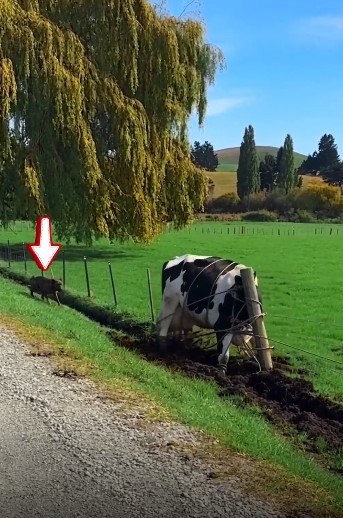
The quiet afternoon sun illuminated the tall green grass along the mountain pasture.
A large dairy cow grazed peacefully near the rustic wooden fence at the edge of the clearing.
Its movement was somewhat limited by the high stone wall lining the back of the field.
A solitary gray wolf emerged silently from the dense pine forest near the upper ridge.
The wolf stepped cautiously onto the open grass, its eyes fixed on the resting livestock.
It moved with slow, deliberate steps across the meadow toward the stone perimeter.
The cow turned its head toward the sound of rustling grass, noticing the wild visitor.
A tense silence settled over the sunlit pasture as the distance between them closed.
The wolf stopped its forward movement and sat firmly on the cool, damp earth.
It raised its nose to catch the breeze, evaluating the size and calm presence of the cow.
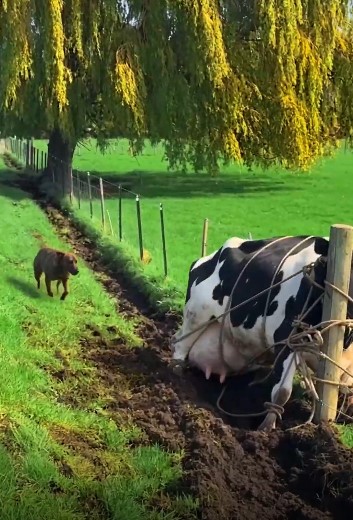
The cow stood its ground near the stone wall, keeping a steady watch on the predator.
Neither animal made a sudden move or aggressive gesture in the quiet mountain clearing.
The soft breeze rustled the leaves on the surrounding birch trees, scattering quiet shadows.
A distant cowbell rang softly as the rest of the herd grazed further down the valley.
Hearing the sound of the approaching herd, the wild wolf turned its head toward the woods.
It realized the pasture was actively monitored and chose to step back toward the trees.
The wolf glided smoothly through the tall grass, disappearing into the shade of the forest.
The cow took a deep, steady breath and shifted its weight comfortably on the lush grass.
It resumed grazing on the fresh clover near the stone wall as the afternoon hours passed.
The quiet atmosphere of the pasture was fully restored without any conflict or disturbance.
The mountain valley continued to offer a safe and peaceful environment for the livestock.
The sun began its slow descent toward the western peaks, casting a warm golden glow.
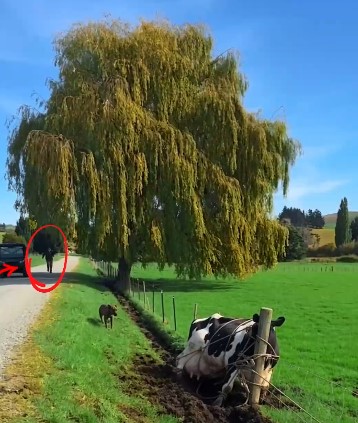
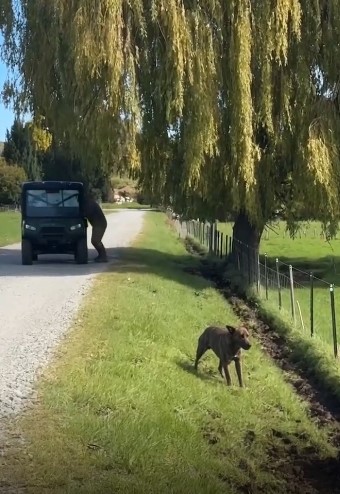
The farmer walked up the path to guide the herd back into the security of the main barn.
The cow joined the rest of the animals, walking comfortably down the wide dirt trail.
The wolf remained deep within its natural woodland habitat, far from the farm boundary.
Both creatures returned to their natural routines, sharing the vast mountain landscape safely.
The evening sky turned to soft shades of purple and orange as night settled over the ridge.
The barn doors closed securely, ensuring complete comfort and safety for the entire herd.
The countryside remained a quiet sanctuary where wild nature and domestic care exist together.
The night air brought complete rest and peace to every animal in the mountain valley.
The morning sun would soon bring another calm and productive day to the quiet farm.
Every path across the pasture stayed open and safe for the livestock under the farmer’s care.
The natural world maintained its steady balance through mutual space and vigilant oversight.
The story highlights the importance of strong farm boundaries and attentive livestock management.
Proper fencing protects domestic animals while allowing local wildlife to navigate their natural territory.
The peaceful resolution of the encounter reflects the harmony possible in well-managed rural areas.
The cow rested comfortably on the soft bed of straw inside the warm and quiet barn shelter.
The wild wolf roamed the high ridges of the forest, content in its undisturbed domain.
The farm property stood as a model of security, peace, and practical livestock protection.
The day ended as serenely as it had begun, with complete safety for every creature.
The timeless routines of farm life continued to thrive under the clear and starry night sky.
The valley remained a haven of safety, natural beauty, and quiet cooperation between species.
The future held many more peaceful days for the herd in the high mountain pastures.
Protecting Livestock in Mountain Habitats
Understanding predator behavior in high-altitude pastures helps farmers design effective security measures.
Maintaining sturdy perimeter fences deters wild animals from entering active livestock grazing zones.
Using trained livestock guardian dogs provides a reliable line of defense for free-ranging herds.
Routine herd monitoring during peak grazing hours ensures that animals remain safe in open pastures.
Coexistence between native predators and domestic farm animals is achieved through proactive land management.
Securing livestock in well-built shelters at night eliminates risks during peak nocturnal wildlife activity.
Wild Wolf Encounters a Cow in the Mountain Pasture pic.twitter.com/OLSHddBQIo
— Animal Rescue Stories (@AnimalStory5) September 27, 2026
How do livestock guardian dogs protect cows from wild predators in open pastures?
Livestock guardian dogs live directly with the herd from a young age, forming a strong protective bond with the domestic animals.
When a wild predator approaches the pasture, these dogs position themselves between the herd and the visitor, using firm barking and a confident presence to deter the animal.
Their constant watchful presence encourages wild predators to seek food elsewhere in their natural forest territories.
What fence designs are most effective for keeping mountain pastures secure?
Effective pasture fencing combines high-tensile wire mesh with strong wooden or steel posts anchored firmly in the ground.
Incorporating top and bottom wires deters wild animals from leaping over or crawling beneath the barrier.
Additionally, maintaining clear vegetation buffers along the fence line provides maximum visibility, allowing livestock and handlers to spot approaching wildlife early.