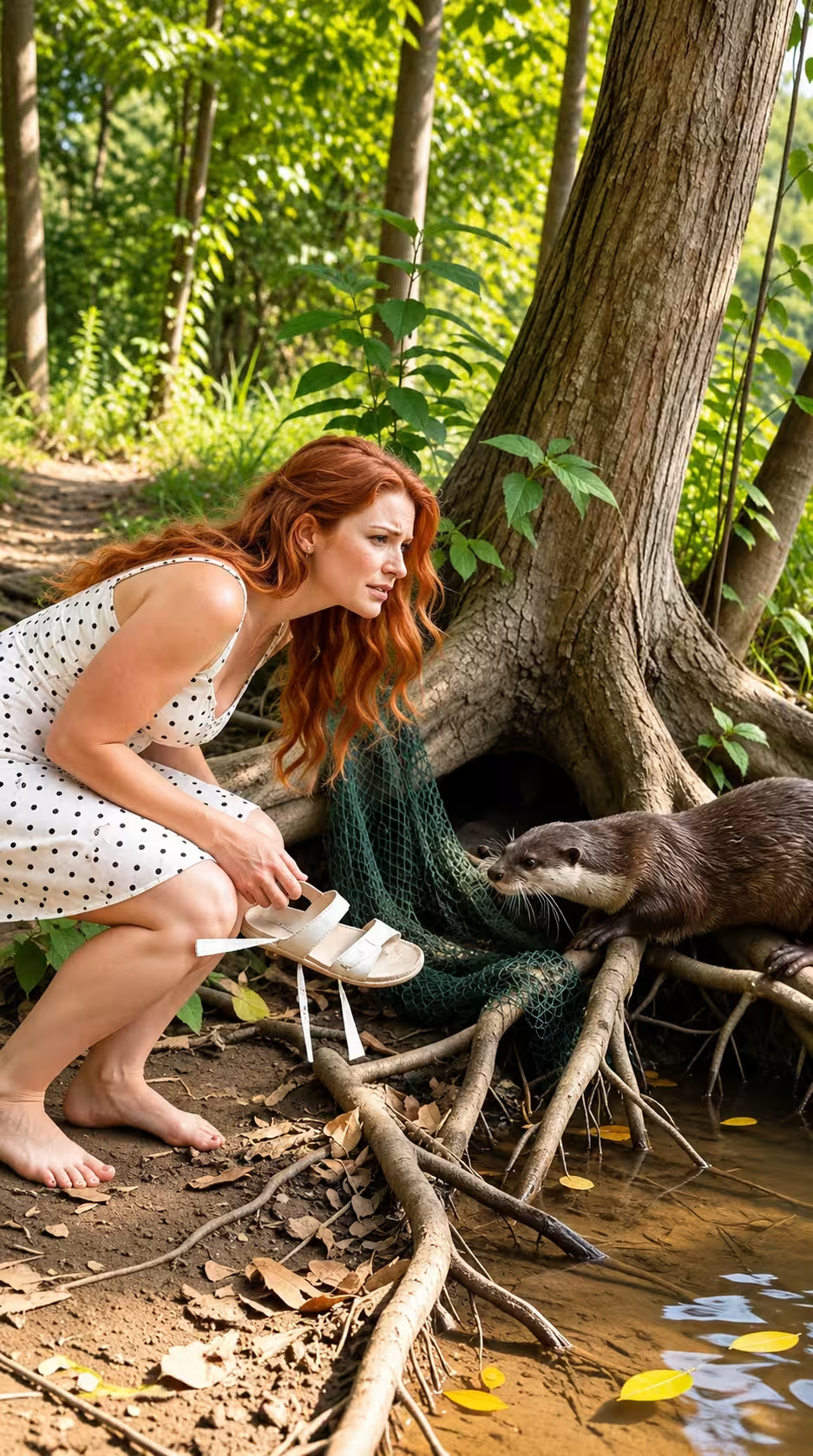
The otter appeared beside the wooden dock just as the morning sunlight reached the river.
Thirty-six-year-old Laura Mitchell stopped walking when she noticed the animal climbing onto the damp boards.
Instead of disappearing into the water, the otter paused and looked toward the nearby riverbank.
Laura watched as it slipped back into the river and swam toward a cluster of exposed tree roots.
Moments later, she heard a faint squeaking sound coming from the muddy shoreline.
The otter surfaced again, remaining close to the same location.
Laura followed along the public footpath, keeping a respectful distance from the animal.
When she reached the riverbank, she noticed movement beneath a fallen branch.
Something appeared to be caught among the tangled roots.
She contacted a local wildlife rescue service, unaware of how carefully the situation would need to be handled.
A Peaceful Morning Along the River
Laura had lived near the Willowbrook River for almost ten years.
She often visited the riverside park before beginning her workday.
The area contained walking trails, wooden docks, and several quiet observation points.
Tall willow trees shaded parts of the shoreline.
Their roots extended into the river, creating natural shelter for fish and small wildlife.
Laura enjoyed watching ducks, herons, and occasional otters moving through the water.
Although she had seen otters before, they usually disappeared quickly when people approached.
That morning, the park was particularly quiet.
Only a few walkers could be seen along the distant trail.
Laura carried a small camera and a reusable bottle of water.
She planned to spend approximately thirty minutes photographing the river.
As she approached the wooden dock, she noticed ripples beside one of its support posts.
A dark brown head appeared above the surface.
An otter climbed onto the boards and shook water from its fur.
Laura stopped immediately, careful not to disturb it.
An Otter Moves Toward the Riverbank
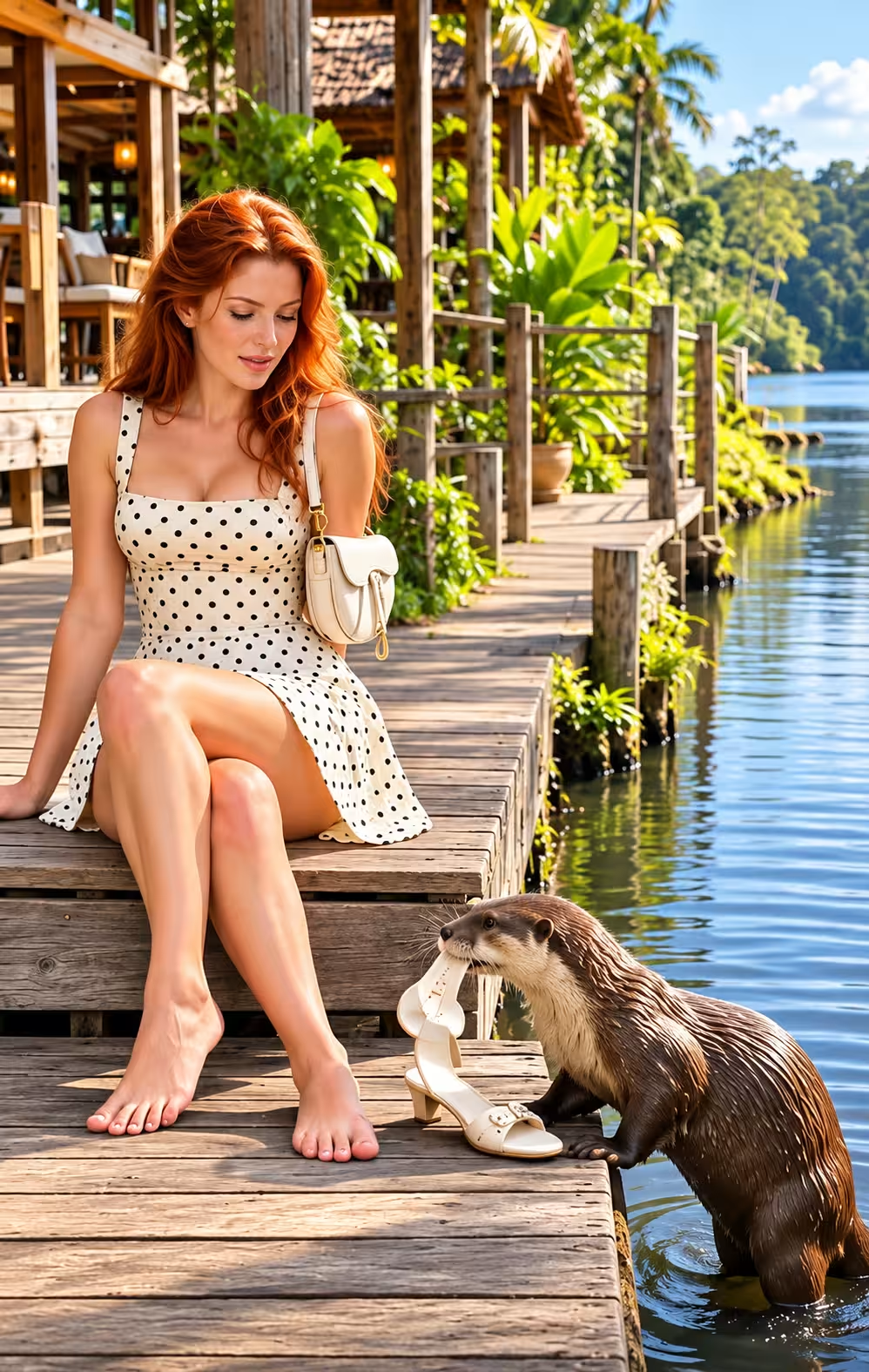
The otter remained on the dock for several moments.
Its whiskers moved as it examined the surrounding area.
Laura stood quietly near the beginning of the walkway.
The animal suddenly turned and slipped back into the water.
Rather than swimming downstream, it headed toward the opposite side of a small inlet.
Laura noticed that it repeatedly surfaced near a large willow tree.
The tree’s exposed roots formed a complicated network along the muddy bank.
She began walking along the public trail, which curved toward that location.
The otter continued moving through the shallow water.
Occasionally, it disappeared beneath the surface before returning near the same tree.
Laura wondered whether it was searching for food.
Then she heard a faint, high-pitched sound.
She stopped and listened.
The sound came again, apparently from somewhere among the roots.
Laura moved toward a designated observation area overlooking the riverbank.
From there, she could see a smaller otter partially concealed beneath a fallen branch.
The youngster appeared unable to move freely.
A Second Otter Among the Tree Roots
Laura raised her camera and carefully examined the area through its zoom lens.
The smaller otter was lying beside a thick root near the waterline.
A thin length of discarded fishing line appeared tangled around one of its hind legs.
The line extended toward a submerged branch.
Whenever the youngster moved, the material seemed to tighten.
Laura lowered her camera, concerned that the animal might be injured.
The larger otter surfaced nearby and briefly approached the trapped youngster.
It then returned to the water.
Laura could not know whether the animals were related.
However, the larger otter’s repeated visits suggested that it was remaining close to the distressed animal.
She considered moving closer but immediately recognized the risks.
The muddy bank was steep, and the exposed roots were slippery.
A frightened otter could also bite if someone attempted to handle it.
Laura decided not to interfere.
She called the regional wildlife rescue organization and described what she had observed.
The dispatcher asked for her location and the condition of the trapped animal.
Laura provided the nearby dock number and agreed to wait.
A Wildlife Worker Arrives at the River
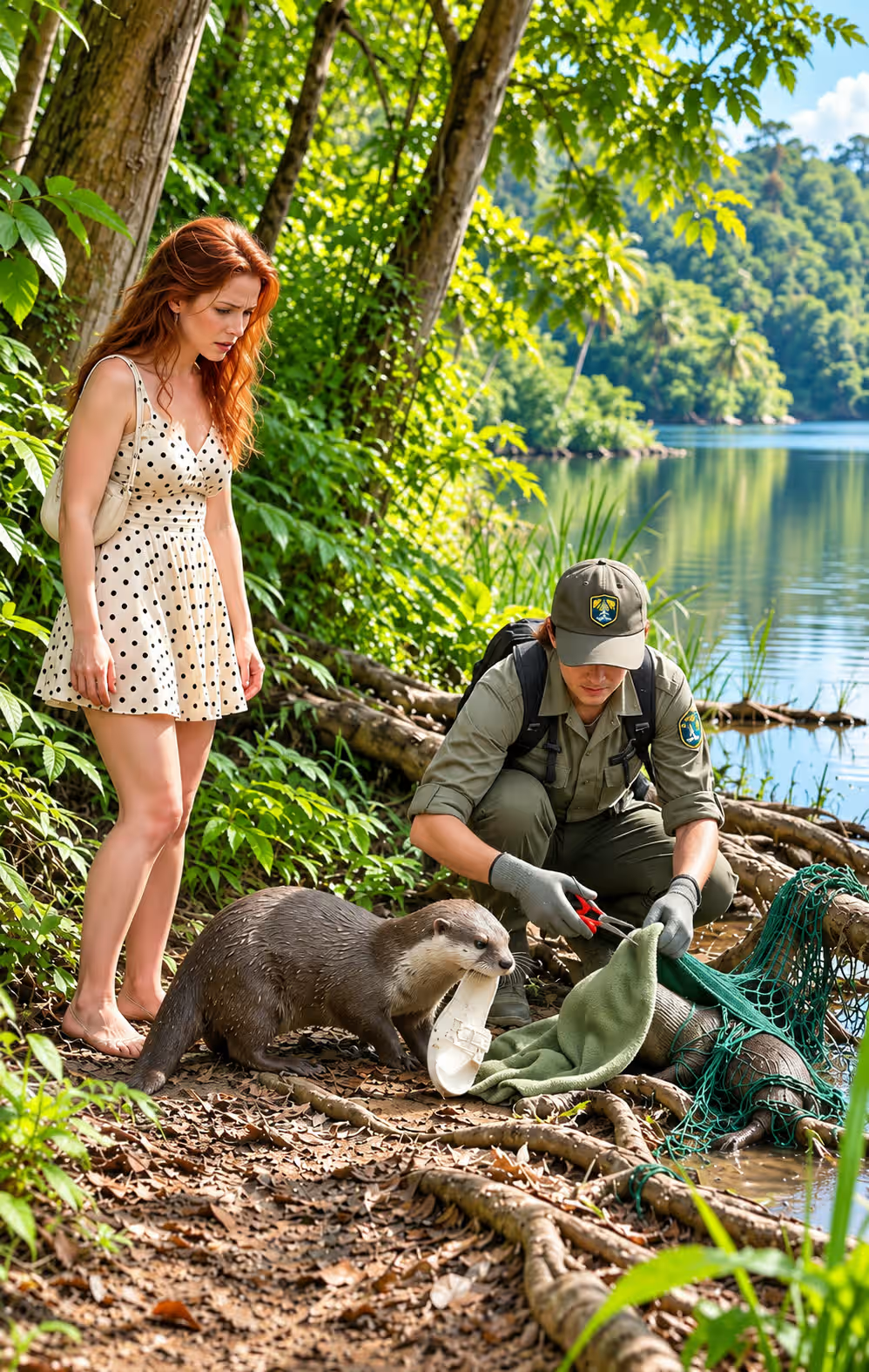
Approximately twenty-five minutes later, a wildlife rescue vehicle entered the park.
A worker wearing protective clothing approached Laura along the riverside trail.
He introduced himself as Daniel Harris, a trained wildlife rehabilitation responder.
Laura explained how she had first noticed the larger otter beside the wooden dock.
She then pointed toward the roots where the smaller animal remained trapped.
Daniel examined the location from the observation area.
He used binoculars to assess the youngster’s position and the surrounding hazards.
The larger otter was still visible in the nearby water.
Daniel explained that the rescue would require a careful approach.
He contacted a colleague and confirmed that the necessary handling equipment was available.
A second responder, Rebecca Lewis, arrived shortly afterward.
Together, they established a small working area away from the public trail.
Daniel asked Laura to remain behind the temporary boundary.
He also advised nearby walkers to avoid approaching the animals.
The team waited until the larger otter moved farther downstream.
Then they prepared to reach the trapped youngster without disturbing the surrounding roots unnecessarily.
Carefully Freeing the Young Otter
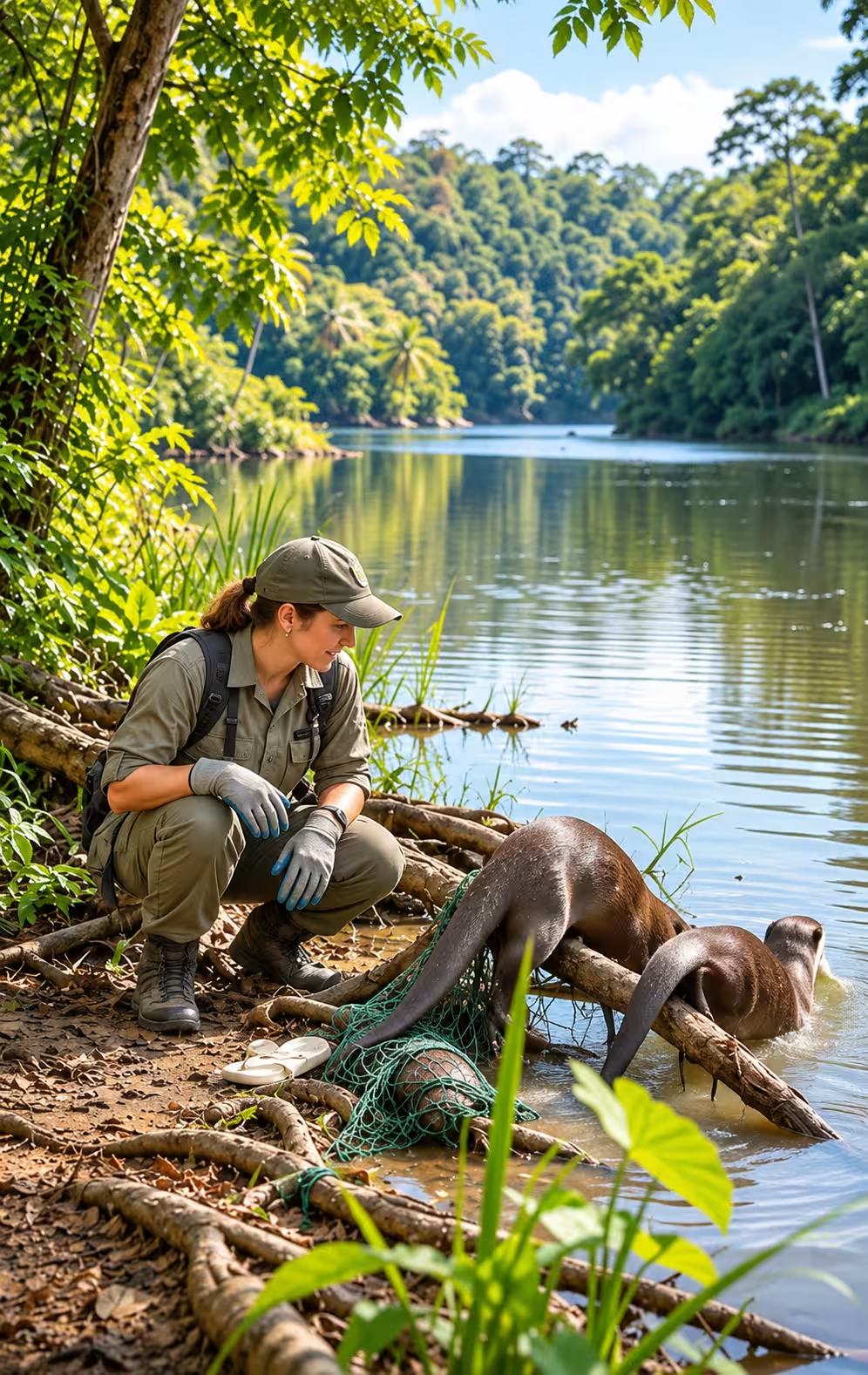
Daniel approached the riverbank using a stable access route identified during his assessment.
Rebecca remained nearby with a suitable animal carrier and protective equipment.
The smaller otter moved slightly when Daniel reached the exposed roots.
He paused, allowing the animal time to settle.
A length of fishing line was wrapped around its hind leg.
The material had also become caught beneath a submerged branch.
Daniel used appropriate protective handling equipment to prevent sudden movements.
Rebecca helped stabilize the surrounding area while he examined the entanglement.
The line was tight enough to restrict the youngster’s movement.
Daniel carefully cut the section attached to the branch.
He then removed the remaining accessible loops from the animal’s leg.
The otter tried to move away but appeared tired.
Daniel noticed mild swelling around the affected area.
Rather than releasing it immediately, the team placed the youngster in a secure, ventilated carrier.
Rebecca covered part of the carrier to reduce visual stimulation.
Laura watched from the observation area as the responders returned to level ground.
Daniel explained that the animal needed a veterinary assessment before any release decision.
A Careful Recovery and Return to the River
The wildlife team transported the young otter to a licensed rehabilitation facility.
A veterinarian examined its leg and checked for additional injuries.
Fortunately, the examination revealed no obvious fractures.
However, the fishing line had caused irritation and swelling.
The youngster received appropriate care and remained under observation.
Laura contacted the rescue organization several days later to ask about its condition.
A staff member explained that the otter was recovering and moving more comfortably.
The team continued monitoring its appetite, mobility, and behavior.
After further assessment, the rehabilitation staff determined that it was ready for release.
They selected a suitable location within its original river habitat.
Laura was informed that the release would be conducted quietly by trained personnel.
She respected the decision not to invite visitors.
The otter eventually returned to the river under the team’s supervision.
Its relationship with the larger otter remained unknown.
In this fictional story, a woman noticed an otter near a wooden dock and followed its movements from a safe distance.
Her observations led her to another otter trapped among exposed tree roots.
A wildlife worker arrived, carefully removed the fishing line, and arranged professional treatment.
The experience encouraged Laura to become involved in local river conservation activities.
She later joined a community cleanup organized to remove discarded fishing equipment from accessible shoreline areas.
The volunteers worked under park guidelines, avoiding sensitive wildlife habitats.
Laura continued visiting the wooden dock, although she never knew whether she saw the same otters again.
Whenever Laura watched the river flowing beneath the willow trees, she remembered the small animal hidden among the roots and felt grateful that a quiet morning of observation had helped give it another opportunity to swim freely through its natural home.