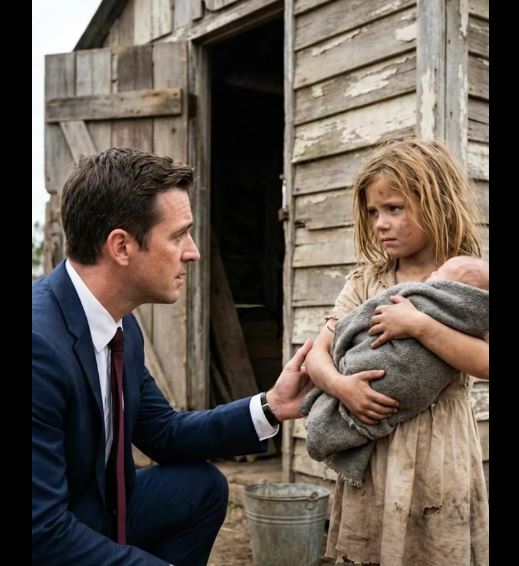
He had everything people spend their entire lives chasing—money, influence, freedom. At forty-seven, Marcus Hale was a self-made millionaire with a glass penthouse overlooking the city, a private driver, and more money than he could ever realistically spend.
What he didn’t have was waiting for him at the end of the day: no family, no voices, no warmth. Just silence, echoing through rooms far too big for one man.
Marcus told himself he preferred it that way. No obligations. No disappointments. No goodbyes. He worked, traveled, signed deals, attended charity galas where everyone praised his success, then returned home alone.
Friends had slowly faded over the years. Romantic relationships never lasted—women either wanted his money or tried to change him. Eventually, he stopped trying altogether.
One rainy evening, after a long meeting ran late, Marcus decided to drive himself home instead of calling the driver. He liked driving at night; it gave him time to think, to feel in control.
The highway was nearly empty, streetlights blurring into streaks of gold through the rain. He was already mentally rehearsing tomorrow’s schedule when something near the shoulder of the road caught his eye.
Two small figures huddled near a broken guardrail, soaked, trembling, dangerously close to traffic. Marcus’s foot hit the brake before his mind fully caught up. He pulled over, hazard lights flashing, heart pounding for reasons he didn’t yet understand.
When he stepped out, the cold rain hit him hard. As he approached, the figures became clear—two children, a boy and a girl, maybe eight and five years old. The boy stood in front of the girl protectively, his thin jacket wrapped around her shoulders. Both were filthy, their shoes worn down, eyes wide with fear.
Marcus learned quickly that they had been abandoned. Their mother had left them there hours earlier after the car ran out of gas—or so she said. She told them she’d be right back. She never returned. They had waited as cars sped past, afraid to move, afraid to ask for help, because they had been taught that adults didn’t always mean safety.
Marcus wrapped his coat around both of them and guided them to his car. He didn’t think about lawyers, or headlines, or responsibility. He just knew he couldn’t leave them there. As the heater warmed the car, the girl fell asleep almost instantly, her head resting against her brother’s arm. The boy stayed awake, watching Marcus carefully, as if daring him to disappear too.
He drove them to a diner first, ignoring the late hour. He ordered hot food, dry towels, milkshakes they barely touched because they ate too fast, like the food might be taken away. Marcus watched them, something unfamiliar tightening his chest. He realized he hadn’t eaten a meal with another human being in years.
From there came the hospital, then social services. Marcus expected to feel relief once professionals took over. Instead, when the children were led away, the girl looked back and reached for him.
He followed up the next day. Then the next. He learned their names—Ethan and Lily. He learned about the shelters they’d bounced between, the teachers who’d tried to help, the nights Ethan stayed awake to make sure Lily was still breathing. He learned that no relatives had stepped forward. No one was looking for them.
Marcus told himself he was just checking in. Just helping financially. Just making sure they were safe. But when Lily started asking if he’d visit tomorrow, and Ethan began relaxing enough to laugh, the lie became obvious.
The adoption process was long, invasive, and terrifying. Marcus had built billion-dollar companies with less paperwork. He doubted himself constantly. What did he know about parenting? He’d never even owned a pet. But every time he considered walking away, he remembered that rainy road, that word—morning—and how small they had looked against the world.
The day the adoption was finalized, Marcus stood in a plain courtroom, hands shaking. When the judge declared him their legal father, Lily threw her arms around his neck, laughing, while Ethan wiped his eyes angrily and muttered, “Told you he wouldn’t leave.”
The penthouse changed after that.
Toys appeared where art sculptures once stood. Silence was replaced with footsteps, questions, laughter, occasional tears. Marcus learned how to make pancakes badly, how to check homework, how to sit beside a bed during nightmares. He learned that love was not efficient, not predictable, and not something you could schedule—but it was real in a way nothing else in his life had ever been.