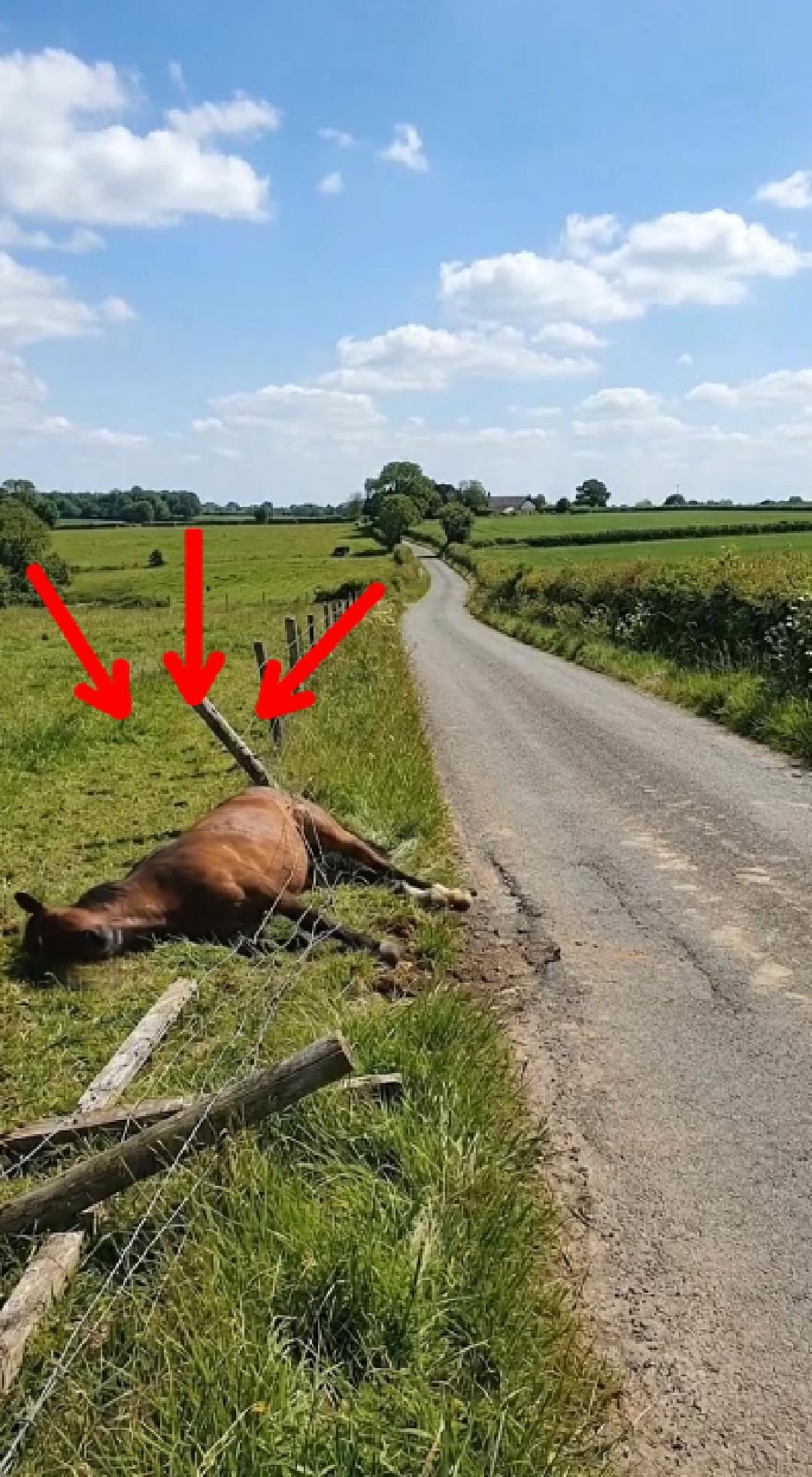
The road was long, empty, and slightly uneven, cutting through open countryside where fields stretched out endlessly on both sides. It was the kind of place where trucks passed regularly but people rarely stopped, except for necessity.
The wind moved freely across the land, bending grass and carrying the distant sound of engines from far away. It was quiet in a way that made even small disturbances noticeable.
A long-haul truck was traveling along that road, its engine steady and familiar to the driver who had spent years covering routes just like this one.
He was used to long hours, isolated stretches of highway, and the rhythm of driving where the world outside often blurred into a passing landscape. But on this particular day, something forced him to break that rhythm.
As the truck approached a bend in the road, the driver noticed movement near the roadside fence. At first, it looked like an animal caught in brush. But as he slowed down and looked more closely, he realized it was something far more serious.
A horse was trapped in barbed wire.
It stood near the edge of the field, partially tangled in a section of fencing that had likely been damaged or weakened over time.
The wire had wrapped around its leg and lower body, pulling tight enough to restrict movement but not yet causing visible severe injury. The horse was struggling, shifting its weight carefully, but every movement seemed to tighten the wire further.
The sight was immediately alarming.
The driver pulled the truck over as soon as it was safe to do so, parking it on the side of the road. He stepped out into the open air, taking a moment to assess the situation. The horse was clearly stressed, breathing heavily, its head turning as it tried to understand how to escape the trap it was in. The barbed wire was old but still sharp and strong enough to cause injury if handled carelessly.
He approached slowly, making sure not to startle the animal. Horses, especially when panicked, can react unpredictably, and any sudden movement could make the situation worse. He spoke softly, not expecting the animal to understand his words, but using his voice to signal calm presence.
The horse reacted slightly, shifting its head toward him, but it remained trapped. Its leg was caught at an angle that limited its ability to pull back without tightening the wire further. The driver quickly understood that this was not something that would resolve on its own. The animal needed help, and it needed it carefully.
He returned to the truck and retrieved a set of basic tools he carried for road emergencies. Among them was a wire cutter, something not unusual for someone who often traveled through rural areas where fences and roadside hazards were common.
Returning to the horse, he moved slowly, staying aware of every reaction from the animal. The horse was still tense, but it was no longer thrashing wildly. It seemed to sense that he was not a threat, only something new in its environment.
He crouched slightly, examining the exact points where the wire had wrapped around the leg. Barbed wire is dangerous not only because of its sharp edges but also because of how easily it can tighten under pressure. One wrong cut or pull could cause injury, so precision was essential.
The driver began by carefully loosening tension where possible, using his hands to create slight slack without pulling on the animal’s leg. The horse shifted again but remained relatively still, as if exhausted from struggling.
Then he positioned the wire cutters.
The first cut was slow and deliberate. The metal snapped with a quiet tension, releasing one section of pressure. The horse flinched slightly but did not panic. That was important—it meant the worst of its fear was beginning to ease.
He continued, cutting through each section of wire one by one. Each piece removed reduced the pressure, giving the horse more freedom of movement. The process was not quick. It required patience, steady hands, and constant awareness of the animal’s reactions.
At one point, the horse tried to step away instinctively, but the remaining wire still held it in place. The driver paused immediately, waiting for it to settle before continuing. Rushing could have made the situation worse.
Eventually, only one section remained tangled around the leg. It was the most difficult part, tightly wrapped and partially embedded in brush. The driver adjusted his position carefully, ensuring he had a clear view and stable footing before making the final cuts.
With a final controlled movement, he cut through the last section.
For a moment, nothing happened.
Then the tension released completely.
The horse pulled its leg free.