Recently, many people have been surprised after cutting into fresh strawberries and noticing tiny white worm-like shapes inside the fruit.
For most, the first reaction is shock or concern. It can be unsettling to discover something unexpected in food that is usually associated with sweetness, freshness, and health.
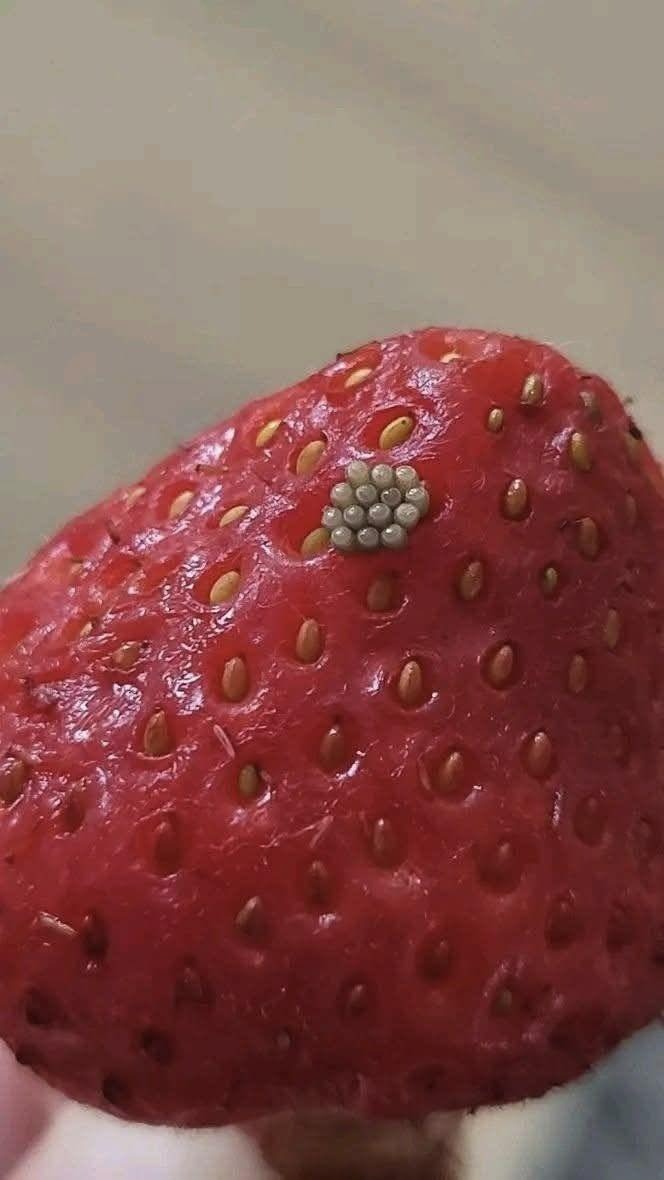
However, before jumping to conclusions, it’s important to understand what these tiny organisms actually are and whether they pose any real risk.
In most cases, what people are seeing are not harmful parasites, but small fruit fly larvae. These larvae sometimes develop inside ripe or overripe strawberries, especially when the fruit has been exposed to natural outdoor conditions during farming.
Strawberries are delicate fruits. They grow close to the ground, have soft skin, and ripen quickly. Because of this, they can occasionally attract small insects like vinegar flies or fruit flies during the growing process.
While the idea may sound unpleasant, it’s important to know that this is a natural part of agriculture, especially in organic farming where fewer pesticides are used.
Are the strawberries still safe to eat?
In most cases, yes.
The presence of larvae does not automatically mean the fruit is unsafe or harmful. These organisms are not toxic, and they do not make the fruit dangerous to consume. Many regulatory food safety organizations consider them harmless if accidentally ingested, though understandably most people prefer not to eat them.
The real concern is usually freshness and proper cleaning, rather than health risk.
Simple saltwater soak method (optional)
If you are worried or simply want peace of mind, there is a simple method some people use to check and clean strawberries more thoroughly:
- Mix 1–2 tablespoons of salt into about 4 cups of cold water
- Place the strawberries in the solution
- Let them sit for 10–15 minutes
- Rinse thoroughly afterward under clean running water
If any tiny larvae are present, they may become visible during this process. However, it’s important to note that most strawberries will show no signs of anything at all.
This step is optional and mainly used for reassurance, not necessity.
Best ways to safely enjoy strawberries
If you want to reduce any chance of contamination and keep your fruit fresh, a few simple habits can help:
Wash strawberries under cool running water just before eating. This helps remove dust, dirt, and any surface residues.
Remove the green leafy tops (hulling). This is where insects sometimes lay eggs, so removing it reduces any risk.
Store strawberries in the refrigerator. Cold temperatures slow down any natural development of microorganisms and help keep the fruit fresh longer.
Eat strawberries soon after purchasing them. The longer they sit at room temperature, the more likely natural ripening processes will continue.
Avoid using soap, vinegar, or bleach. These are not necessary for fruit cleaning and may leave unwanted residues. Clean water is usually enough.
Why this happens in the first place
It’s easy to assume that modern food should always look perfect, but strawberries are one of the fruits most affected by natural environmental exposure.
They grow close to the soil, often in open fields, and rely heavily on natural pollination. This makes them more vulnerable to small insects compared to fruits with thicker skins like bananas or oranges.
Even in carefully managed farms, occasional exposure to fruit flies can happen. This is not a sign of poor quality, but rather a reflection of how natural food production works.
Organic farms, in particular, avoid heavy chemical treatments, which means they rely more on natural balance rather than elimination of all insects.
Should you be worried?
In most situations, there is no reason to panic.
Finding something unusual in food can be surprising, but it does not always mean danger. The key is understanding what you are seeing and handling it properly.
If strawberries are washed, stored correctly, and consumed fresh, they remain one of the healthiest fruits available. They are rich in vitamin C, antioxidants, fiber, and natural nutrients that support overall health.
Final thoughts
Nature is not sterile, even when food looks perfect on the outside. Fruits grow in real environments, not laboratories, and sometimes that means small natural surprises can appear.
But that doesn’t take away from their nutritional value or safety when handled correctly.
So if you ever notice tiny white spots or unexpected textures inside strawberries, stay calm. In most cases, it’s simply a natural part of how the fruit grows.
Wash them well, prepare them properly, and enjoy them as part of a healthy diet.
Because even imperfect-looking food can still be perfectly safe—and incredibly beneficial—for your body.