For fifteen years, I served as a Marine Corps hand-to-hand combat instructor. I trained Force Recon operators, MARSOC Raiders, and thousands of Marines who would go on to serve in dangerous environments around the world.
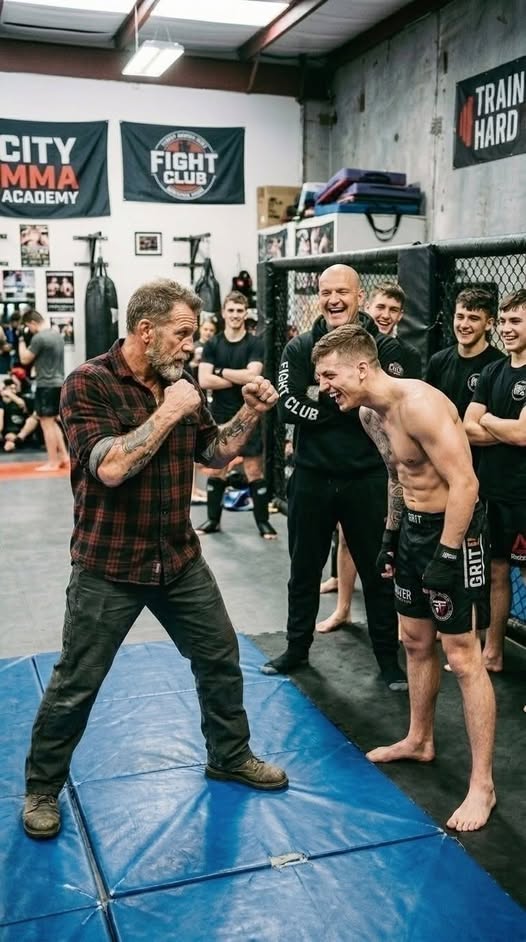
My rule was simple: never use my skills outside of duty. Never lay a hand on a civilian. No matter what.
I lived by that rule for years.
Until the day it broke.
It started with my daughter, Marcy.
She was always a bright, confident young woman. But over time, something changed. Her smile became forced. She started wearing long sleeves even in warm weather. She stopped talking openly at dinner.
My wife, a nurse, noticed first.
One evening, she leaned toward me and whispered, “I saw bruises on her arm. Finger marks.”
That sentence hit me harder than anything I had ever faced in the field.
I began watching closely. And the truth became clear.
Her boyfriend, Dustin, was controlling, aggressive, and dangerous.
At first, I thought I could handle it calmly. I tried to talk to Marcy, to understand what was happening. But she was afraid.
One night, she finally broke down.
“Dad… please don’t do anything,” she cried. “If I leave him, his uncle will hurt us. They’re connected.”
That was the moment everything inside me changed.
Not just as a father.
But as someone who understood exactly what kind of threat we were dealing with.
The next day, I received a call from my wife at the hospital.
Her voice was shaking.
“Marcy is here… ER intake. Concussion. Bruised ribs. She says she fell down the stairs.”
But I knew better.
This wasn’t an accident.
I didn’t go to the hospital first.
I drove straight to Dustin’s gym.
The place was loud, filled with music, heavy bags swinging, and the smell of sweat and arrogance. Fighters were laughing, wrapping their hands, talking like nothing in the world could touch them.
Dustin was at the center of it all.
He saw me walk in and immediately smirked.
“Well, well,” he said loudly. “Daddy came to visit.”
His coach, a large man with tattooed arms and a shaved head, looked me over and laughed.
“What are you going to do?” he said. “Give us a lecture?”
A few of the fighters around him chuckled.
They saw an older man.
A father.
Nothing more.
I stopped a few feet away.
My voice was calm.
“You put your hands on my daughter.”
Dustin tilted his head, amused.
“Your daughter is clumsy,” he said. “She doesn’t understand how things work. I had to teach her respect.”
That word—respect—landed like fuel on fire.
His friends began moving slightly, surrounding me, expecting intimidation to work.
The coach stepped forward.
“Here’s how this goes,” he said. “You turn around and leave, or you’re leaving on a stretcher.”
I looked at all of them.
And for a moment, the room felt smaller.
Quieter.
I rolled my shoulders.
And something in the atmosphere shifted.
“I was a Marine Corps hand-to-hand combat instructor for fifteen years,” I said calmly. “I trained elite units. Men who went into places most people don’t come back from.”
I paused.
My eyes locked on Dustin.
“You’re going to need more than three guys.”
Silence followed.
Not the kind of silence that comes from fear alone.
But the kind that comes when people suddenly realize they’ve misjudged the situation entirely.
The coach’s smile faded slightly.
Dustin stopped laughing.
For the first time, they were no longer looking at just a father.
They were looking at someone they no longer fully understood.
And in that moment, everything in the gym changed.