An Unexpected Problem at the Restaurant Entrance
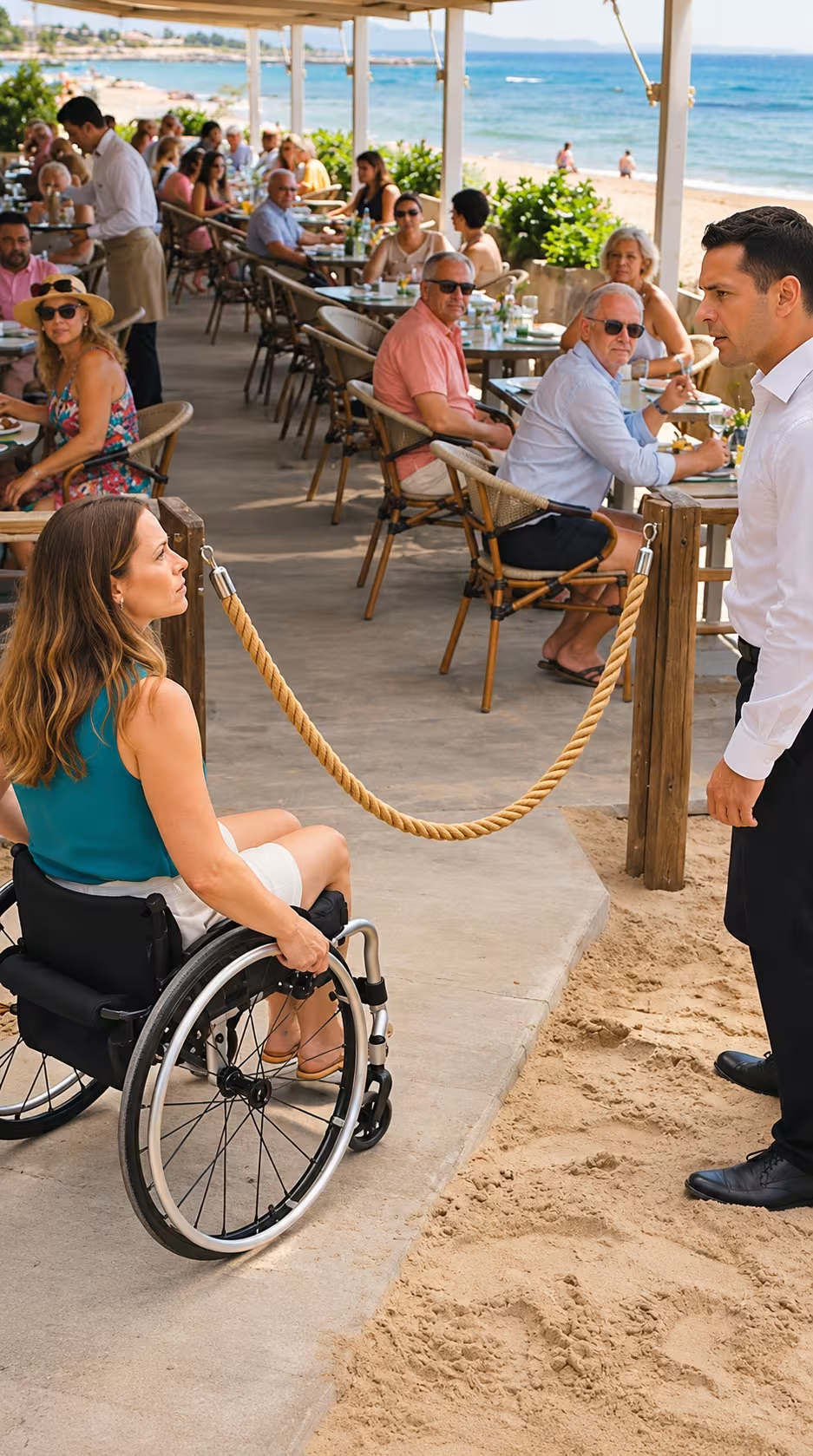
The restaurant employee stepped into the entrance just as a woman in a wheelchair approached the outdoor dining area.
“I’m sorry, ma’am. You can’t go through here right now.”
Thirty-four-year-old Sarah Mitchell stopped beside the wooden gate, confused by the unexpected refusal.
She had reserved an outdoor table for an important family dinner.
The employee, Daniel, glanced toward the crowded patio before explaining that the usual entrance was blocked.
Sarah looked past him and noticed several chairs narrowing the pathway.
“I made this reservation three days ago,” she replied.
Daniel apologized but suggested that she use the restaurant’s indoor seating instead.
Sarah glanced toward the decorated tables outside.
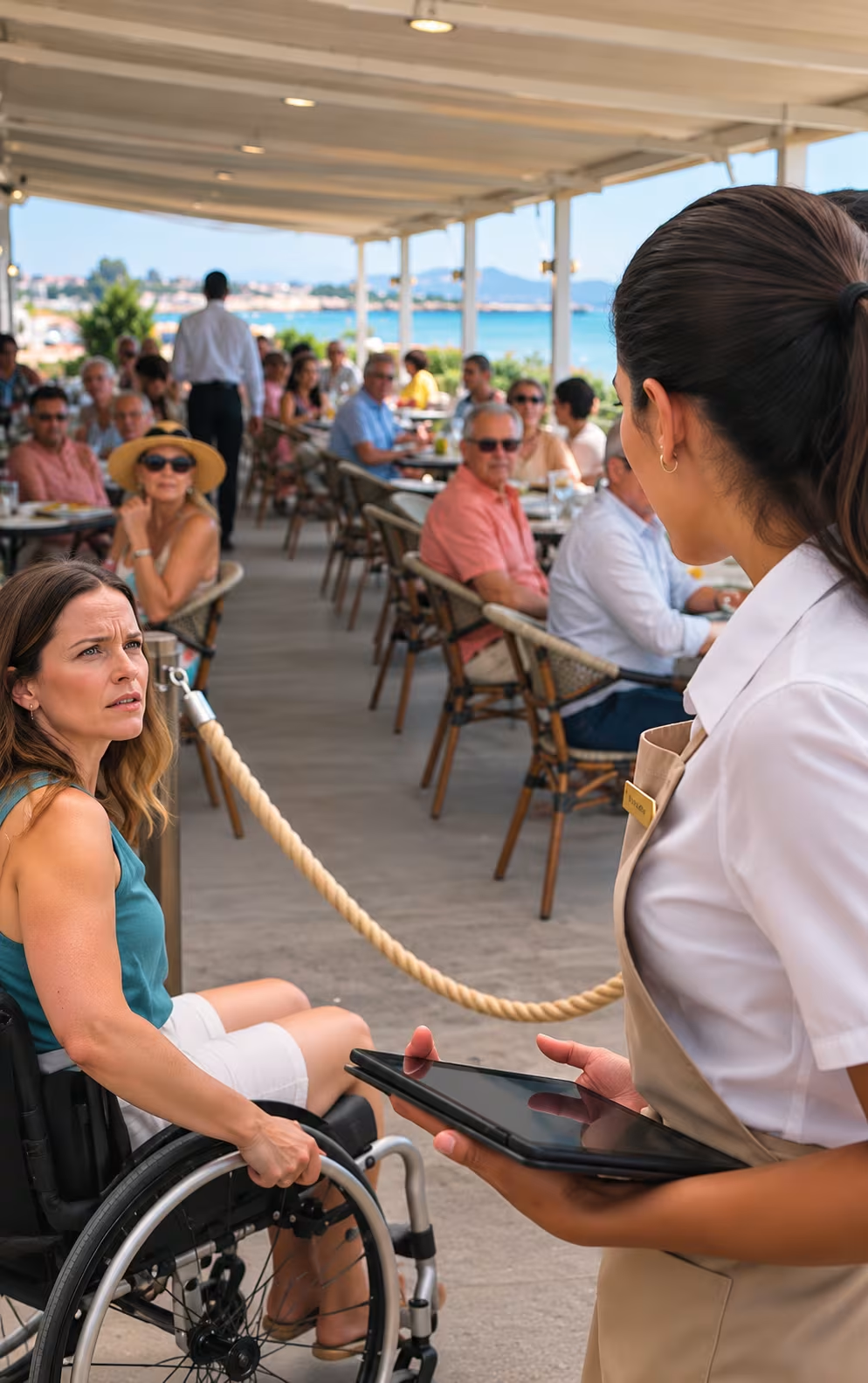
Then a young waitress noticed the conversation and approached the entrance.
A Reservation That Suddenly Became Complicated
Sarah had chosen the restaurant because its outdoor dining area overlooked a peaceful garden.
Her younger sister, Emily, was celebrating her engagement that evening.
The family had arranged a small gathering before Emily’s upcoming wedding.
Sarah had specifically requested an accessible outdoor table when making the reservation.
The restaurant had confirmed the request by telephone.
Now, standing at the entrance, she wondered why the arrangement had changed.
Daniel explained that a large birthday party had arrived earlier than expected.
Several additional tables had been placed near the outdoor gate.
The rearrangement left insufficient clearance for Sarah’s wheelchair.
“Could someone move those chairs?” Sarah asked.
Daniel hesitated.
“The guests are already seated, and the patio is nearly full.”
Sarah looked toward the empty table visible near the garden wall.
It appeared to have enough space around it.
But the narrow entrance prevented her from reaching it.
“I don’t need anyone to carry me,” she explained calmly.
“I just need the accessible route you confirmed when I booked.”
Daniel realized that he couldn’t offer a satisfactory answer.
Before he could respond, the waitress reached the gate.
The Waitress Notices What Others Missed
The waitress introduced herself as Olivia Carter and asked Sarah about her reservation.
Sarah explained the blocked entrance and her confirmed outdoor seating request.
Olivia immediately recognized the booking.
She had personally added a note requesting clear wheelchair access to the garden table.
“Your table is ready,” Olivia said. “The problem is getting you there.”
Daniel explained that the birthday party’s extra seating had narrowed the entrance.
Olivia examined the arrangement and noticed two unused chairs beside a service station.
She also saw that a decorative planter had been moved into the pathway.
Neither item belonged in the designated accessible route.
Olivia asked Daniel whether the tables had been arranged according to the approved patio layout.
He admitted that the staff had moved furniture to accommodate additional guests.
Olivia explained that the restaurant needed to restore a clear entrance before seating anyone else.
Sarah appreciated that someone finally understood the issue.
However, the birthday party occupied several tables immediately beyond the gate.
Moving the furniture without disrupting service would require coordination.
Olivia contacted the floor supervisor and requested assistance.
A Difficult Choice During a Busy Dinner Service
The floor supervisor, Michael Reynolds, arrived and examined the crowded patio.
He confirmed that the current furniture arrangement obstructed the accessible entrance.
Michael asked Daniel why the additional chairs had been placed there.
Daniel explained that he had tried to accommodate several unexpected birthday guests.
He had not realized that the arrangement would prevent wheelchair access.
Michael acknowledged the mistake but insisted that the pathway be restored.
Olivia suggested returning two tables to their original positions.
The birthday group could still remain together with a slightly different seating arrangement.
But one guest objected when Michael explained the proposed change.
“We’ve already ordered drinks. Why do we need to move?”
Michael apologized and explained that the restaurant had blocked an essential access route.
He offered to have the staff move the furniture without disturbing their drinks.
The guest eventually agreed after understanding the reason.
Meanwhile, Sarah received a call from Emily, who had arrived at the parking area.
Sarah explained the delay but asked her sister not to worry.
“I think they’re fixing it now.”
Olivia returned with a measuring tape to confirm that the restored pathway would provide sufficient clearance.
The Entrance Finally Opens
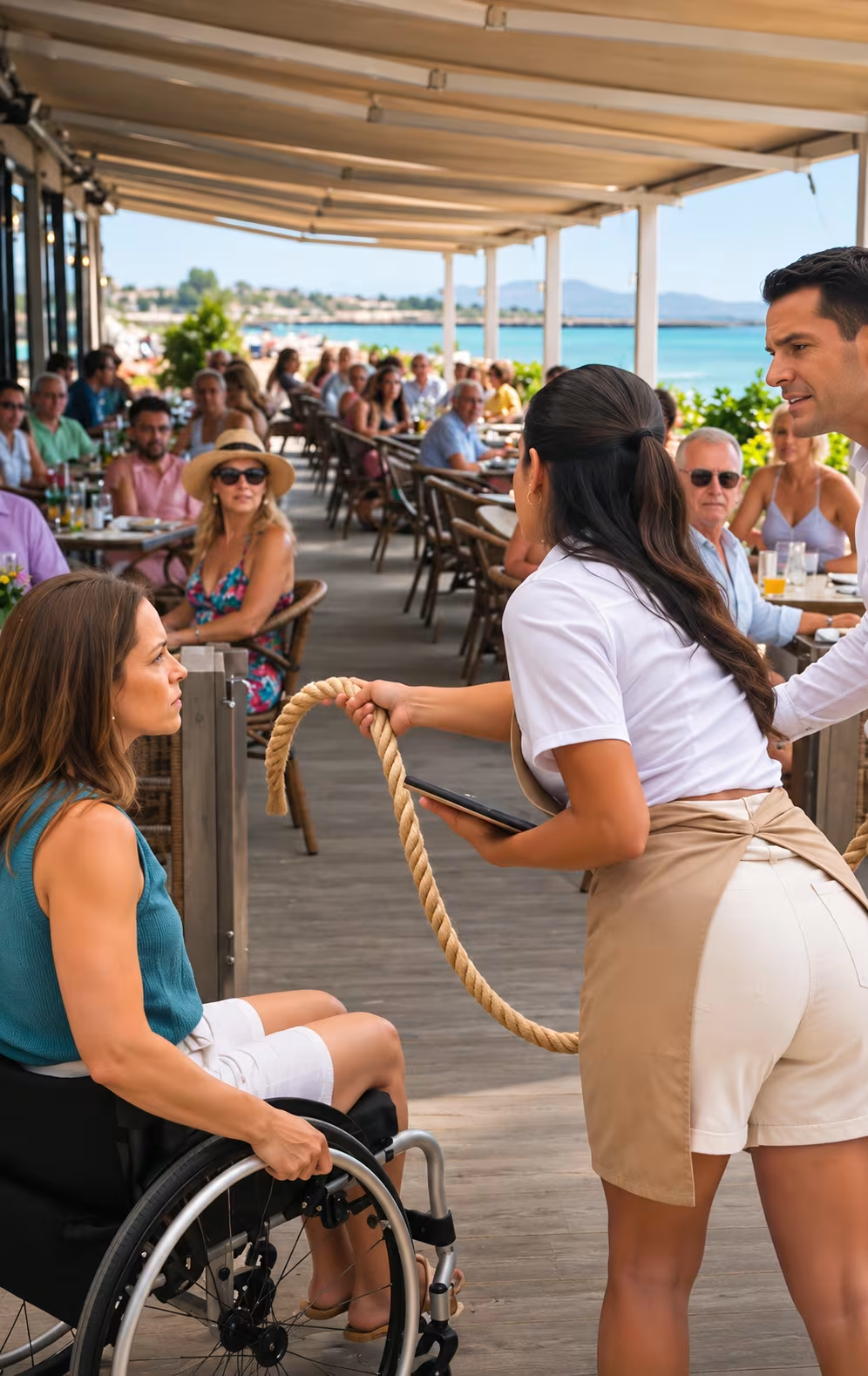
Michael and Daniel carefully repositioned the two tables while Olivia moved the unused chairs.
Another employee returned the decorative planter to its original location.
The birthday guests remained seated while staff adjusted the surrounding furniture.
Within several minutes, the entrance looked noticeably different.
Olivia checked the route from the gate to Sarah’s reserved table.
She confirmed that the pathway was clear and that the gate opened fully.
Then she returned to Sarah.
“Everything is ready now. Would you like to come through?”
Sarah looked toward the garden table and smiled.
“Yes, thank you.”
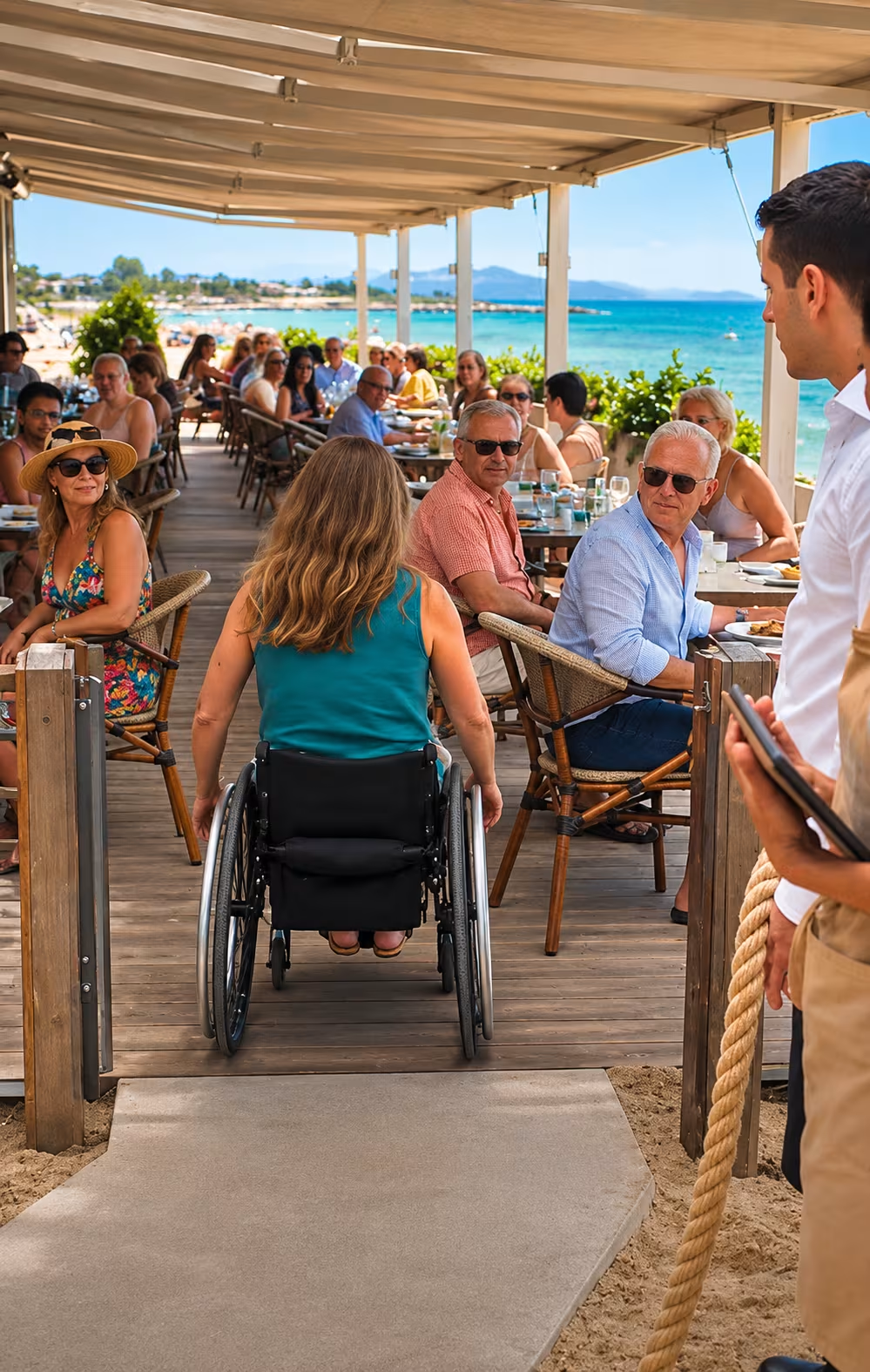
Olivia opened the gate and stepped aside, leaving Sarah enough room to maneuver independently.
Sarah guided her wheelchair through the entrance without difficulty.
She continued along the restored pathway toward the outdoor dining area.
Daniel watched as she passed the section that had been blocked earlier.
At the table, Olivia removed an unnecessary chair to provide comfortable positioning.
Sarah settled beside the garden wall and examined the available space.
For the first time that evening, she felt confident that the restaurant could accommodate her reservation.
Emily arrived moments later and found her sister waiting at the table.
“What happened?” she asked.
Sarah glanced toward Olivia.
“Someone finally helped them fix the entrance.”
A Conversation That Changed the Evening
Emily hugged Sarah before sitting beside her.
Their parents arrived shortly afterward, carrying a small gift for the engaged couple.
Sarah explained the entrance problem without turning the evening into another confrontation.
Olivia returned with menus and apologized for the inconvenience.
She assured Sarah that the accessible route would remain clear throughout dinner.
Michael also approached the table to acknowledge the restaurant’s mistake.
He explained that staff would review the patio layout before accepting additional seating requests.
Sarah appreciated the apology but wanted something more meaningful.
“I don’t want special treatment,” she told him.
“I just want the same opportunity to enjoy dinner as everyone else.”
Michael agreed and asked whether she had any suggestions for improving the entrance.
Sarah recommended keeping the access route clearly marked and checking it before every service.
Olivia added that reservation notes should be reviewed during the staff briefing.
Michael agreed to implement both suggestions.
The family continued their celebration, sharing stories about Emily’s upcoming wedding.
Later, Daniel approached Sarah and apologized personally.
He admitted that he should have requested assistance instead of immediately suggesting indoor seating.
Sarah accepted his apology and thanked him for helping restore the entrance.
A Return Visit With a Different Experience
Two weeks later, Sarah returned to the restaurant for lunch with a friend.
This time, she noticed a clear pathway leading directly into the outdoor dining area.
The decorative planter had been relocated, and the entrance remained unobstructed.
A small floor marking helped employees identify the space that needed to remain clear.
Daniel greeted Sarah when she approached the gate.
“Welcome back. Your table is ready.”
He opened the entrance and stepped aside without making unnecessary assumptions about assistance.
Sarah entered comfortably and joined her friend beneath the patio umbrellas.
Olivia recognized her from across the dining area and offered a friendly greeting.
The restaurant had also updated its reservation procedures and outdoor seating checklist.
Employees now checked accessible routes before rearranging furniture for large groups.
This fictional story began with a confirmed reservation that became difficult because of poor planning.
It ended when employees corrected the obstruction and improved their procedures.
Sarah’s family celebration had continued because Olivia recognized the actual problem and helped resolve it.
The following visit showed that the restaurant had learned from the experience.
For Sarah, the most meaningful part of returning wasn’t being welcomed with special attention, but being able to enter and enjoy her afternoon just like everyone else.