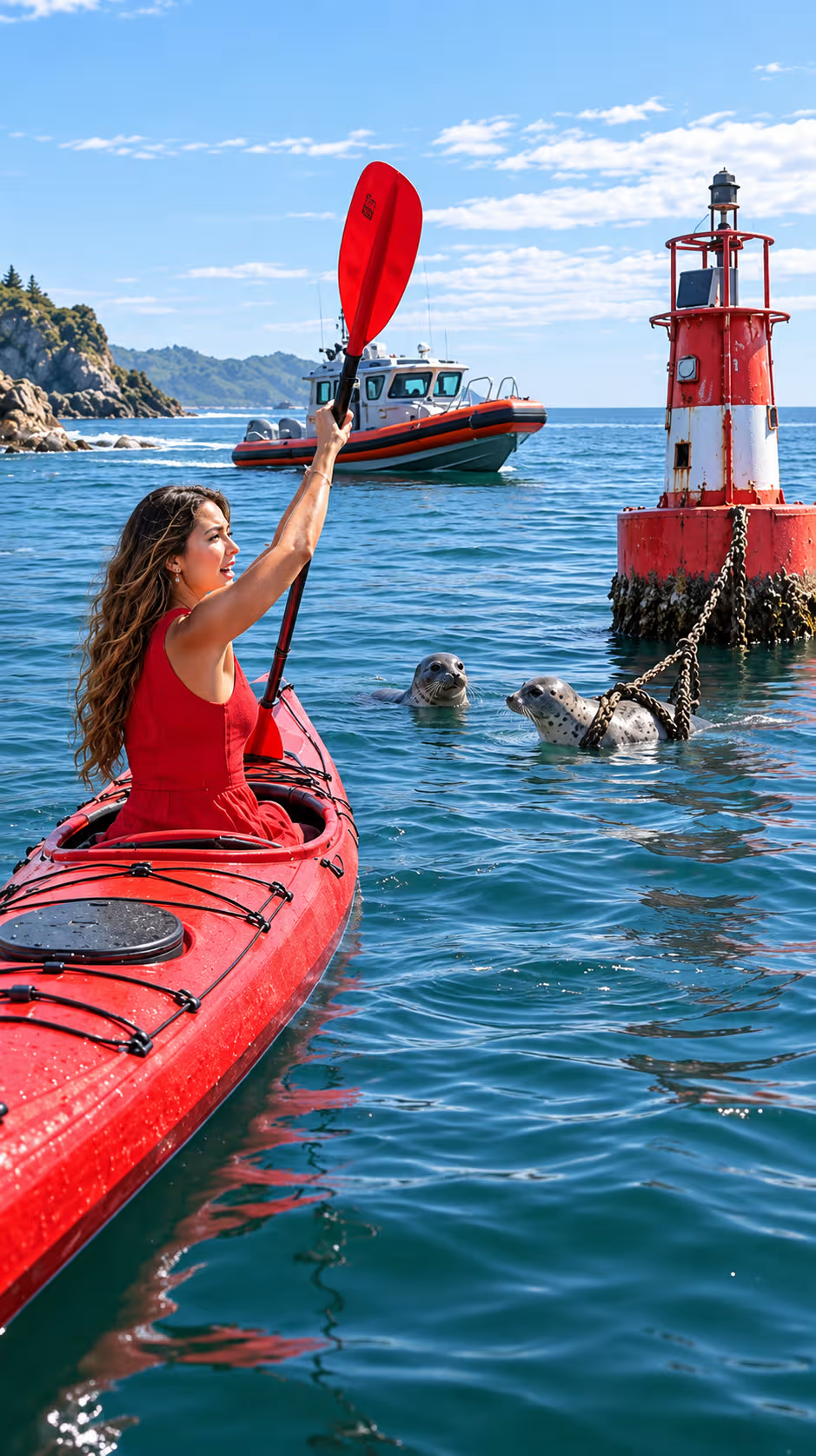
The seal surfaced beside a yellow navigation buoy, then disappeared beneath the gently moving water.
Thirty-four-year-old Emily Carter stopped paddling and watched the animal from her kayak.
She had been exploring a sheltered coastal inlet when she noticed something unusual about its movements.
The seal repeatedly returned to the same buoy instead of swimming toward open water.
Emily soon spotted a dark fishing line trailing behind its body.
When the animal surfaced again, she noticed tangled material near one of its flippers.
She kept her distance and reached for the waterproof phone secured inside her kayak.
Within minutes, she was speaking with a marine wildlife rescue dispatcher.
As Emily described the situation, the seal surfaced again, struggling against the tangled line.
A rescue vessel was already being prepared nearby.
A Peaceful Journey Along the Coast
Emily had enjoyed kayaking along the coastline for several years.
She preferred sheltered waters where she could observe seabirds, rocky shores, and occasional marine wildlife.
That morning, she launched her kayak from a small public beach shortly after sunrise.
The weather forecast indicated light winds and relatively calm conditions.
Before leaving, Emily checked her safety equipment and informed a friend of her planned route.
She wore a personal flotation device and carried a waterproof communication device.
Her journey followed a familiar stretch of coastline bordered by low cliffs.
Fishing boats occasionally passed through the deeper channel beyond the sheltered inlet.
Emily paddled steadily, enjoying the quiet morning.
After approximately forty minutes, she approached a yellow buoy marking the channel boundary.
A dark shape appeared briefly beneath the water.
At first, Emily thought it was a piece of drifting seaweed.
Then a seal lifted its head above the surface.
She slowed her kayak and watched from a respectful distance.
Something about the animal’s repeated movements made her remain nearby.
The Seal Appears to Be in Difficulty
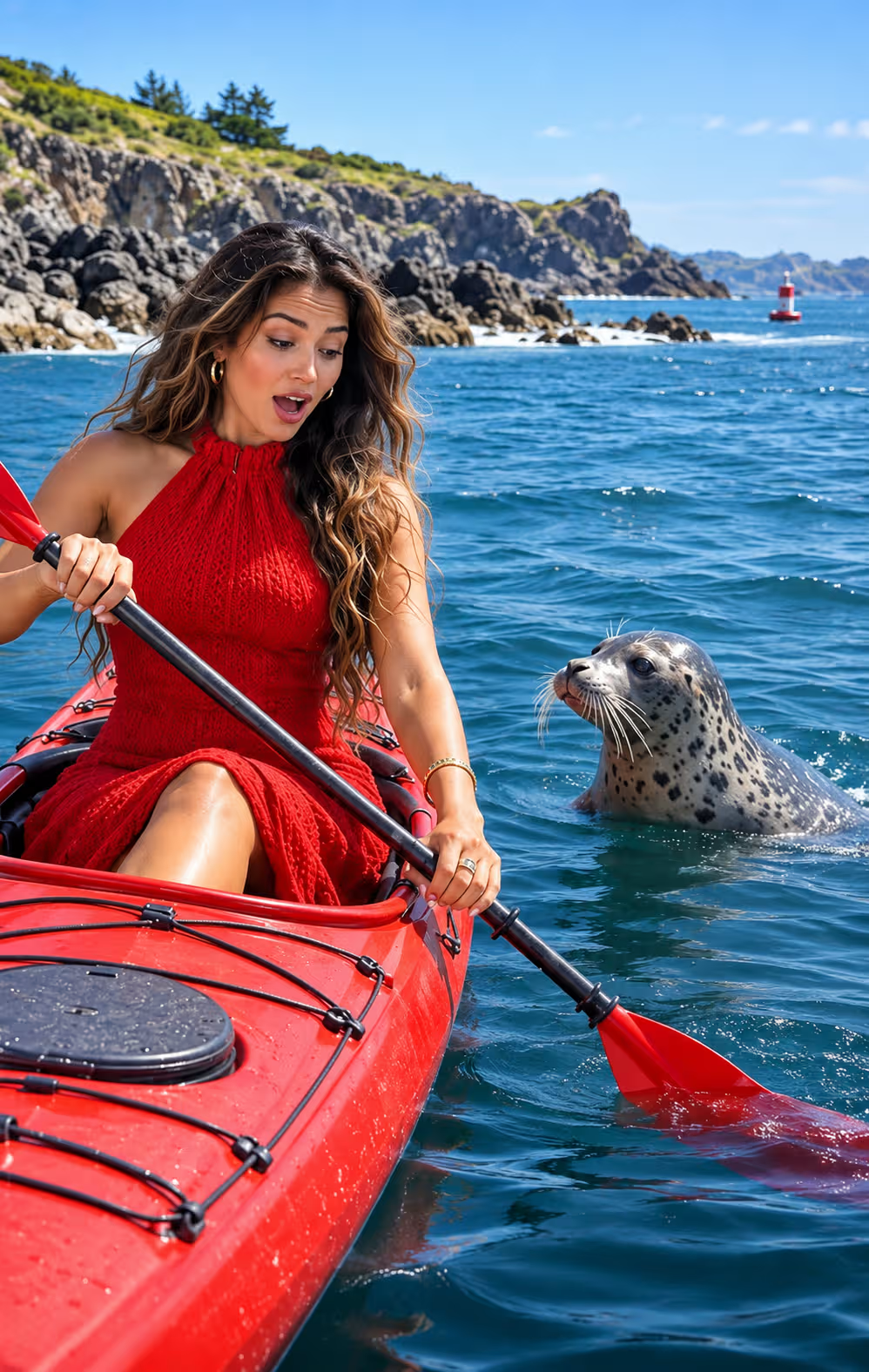
The seal surfaced again near the buoy.
Emily noticed that it seemed unable to swim freely away from the marker.
A thin line stretched across the water before disappearing beneath the surface.
She wondered whether the animal had become caught in discarded fishing equipment.
The seal turned awkwardly and briefly raised one flipper.
A section of dark netting appeared wrapped around it.
Emily immediately recognized that the situation could be dangerous.
She knew wild seals could bite when frightened or injured.
Approaching the animal could also cause it to struggle more forcefully.
Instead, she moved her kayak farther from the buoy.
She observed the seal’s position while keeping the surrounding water clear.
The animal surfaced several times, remaining close to the same location.
Emily used her phone to contact the regional marine wildlife rescue service.
The dispatcher asked for the buoy identification number and her approximate coordinates.
She described the visible netting and the seal’s restricted movements.
The dispatcher advised her not to attempt a rescue herself.
Emily agreed and remained available to guide the approaching crew.
A Rescue Vessel Approaches the Buoy
Approximately twenty minutes later, Emily heard a boat engine approaching from the harbor.
A small rescue vessel entered the inlet at reduced speed.
Three crew members stood aboard, wearing protective clothing and flotation equipment.
The team leader, Daniel Harris, contacted Emily by telephone.
She raised her paddle briefly to indicate her location.
Daniel acknowledged the signal and directed the vessel toward the buoy.
His colleagues, Rebecca Lewis and Michael Turner, prepared specialized wildlife rescue equipment.
Emily explained what she had observed before their arrival.
Daniel thanked her for remaining at a safe distance.
The crew approached slowly and examined the water surrounding the marker.
They confirmed that discarded fishing line had become tangled around the buoy’s attachment.
The seal appeared to have caught part of its flipper in the loose material.
Rebecca observed the animal’s breathing and movements.
Michael prepared a protected cutting tool and a suitable handling net.
Daniel contacted the team’s veterinary adviser before proceeding.
The crew agreed on a careful approach designed to minimize additional stress.
Emily remained nearby but outside the rescue area.
The Crew Carefully Assists the Seal
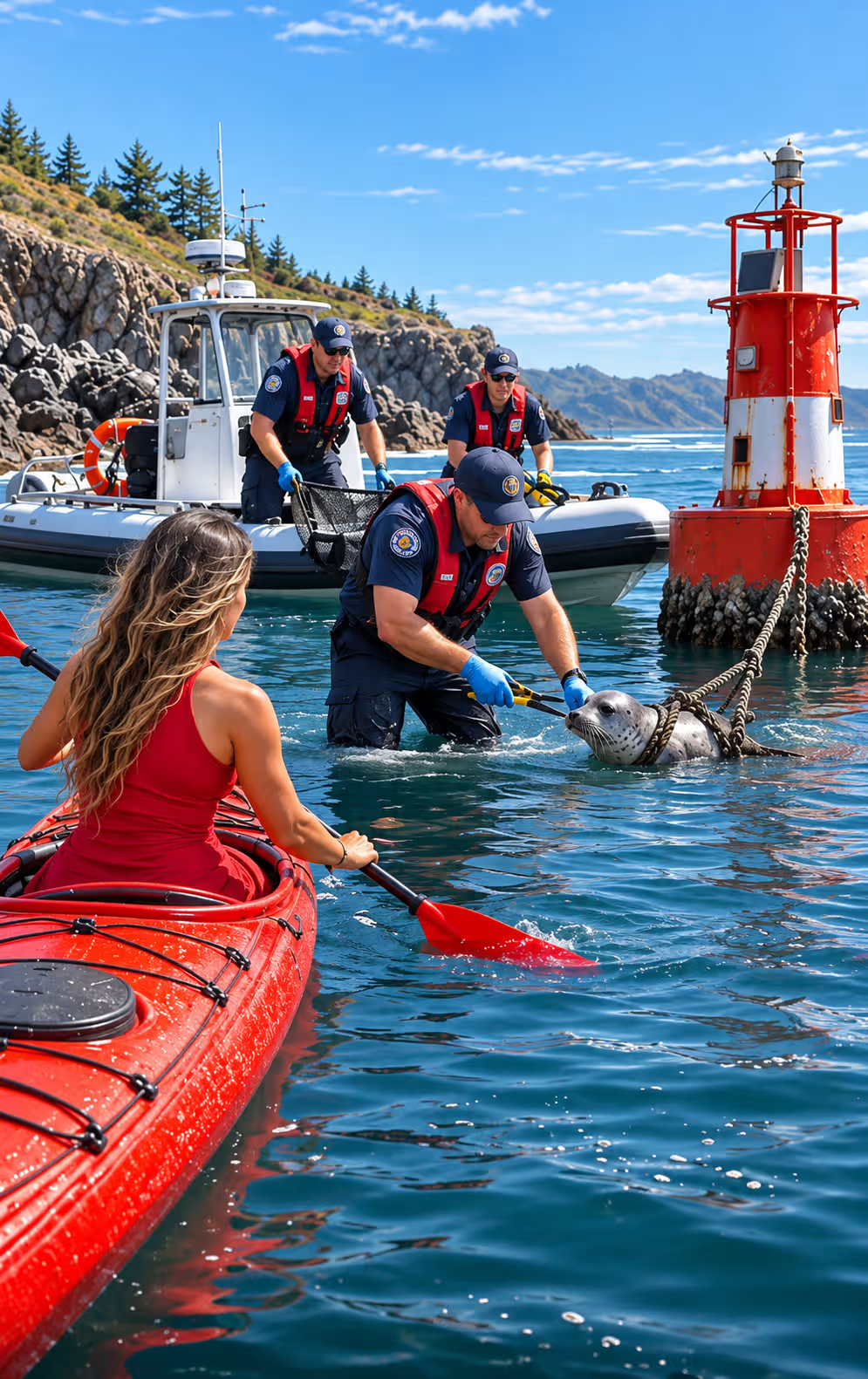
The rescue vessel moved into position beside the buoy.
Daniel maintained control of the boat while Rebecca monitored the seal.
Michael secured a loose section of netting attached to the buoy line.
The animal surfaced again and moved away from the vessel.
The crew waited rather than pursuing it immediately.
When the seal returned, Rebecca assessed whether the tangled material could be reached safely.
Michael carefully cut a section of line connected to the buoy.
The movement released some tension around the animal’s flipper.
However, a smaller loop remained attached.
The crew used appropriate handling equipment to briefly control the seal near the surface.
Rebecca kept the animal’s head clear while Michael removed the remaining accessible netting.
Daniel monitored the surrounding water and maintained the vessel’s position.
After the final loop was released, the crew allowed the seal to move away.
It submerged briefly before resurfacing several yards from the buoy.
Rebecca watched closely for signs of continued restriction.
The seal appeared able to move its flippers more freely.
The crew collected the discarded netting and secured it aboard the vessel.
A Careful Assessment After the Rescue
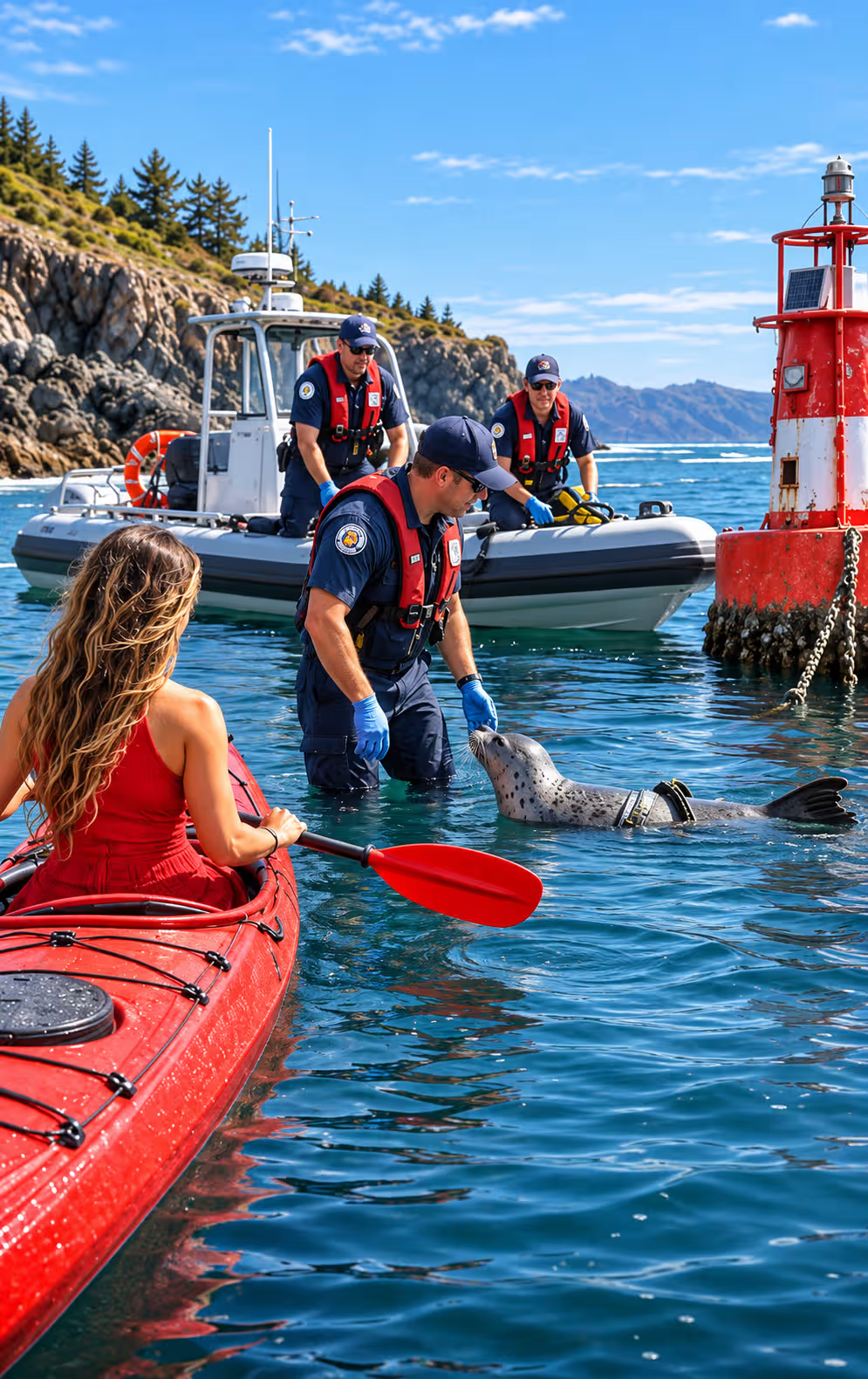
The seal remained near the surface for several moments.
Rebecca observed a small area of irritated skin around the affected flipper.
She contacted the veterinary adviser and described the animal’s condition.
The adviser recommended continued observation without unnecessary additional handling.
Daniel moved the vessel away to provide more space.
Emily watched from her kayak, relieved that the tangled line had been removed.
The seal surfaced again before swimming toward a nearby rocky shoreline.
Its movements appeared more coordinated than before the rescue.
However, Rebecca explained that a brief observation could not guarantee complete recovery.
The team recorded the location and details of the entanglement.
They planned to monitor the surrounding area for further signs of difficulty.
Michael inspected the buoy for additional loose fishing equipment.
He removed several remaining strands that could endanger other animals.
Daniel thanked Emily for reporting the situation promptly.
He explained that accurate location information had helped the crew respond efficiently.
Emily asked whether she could do anything else.
Daniel encouraged her to continue reporting dangerous marine debris through official channels.
A Morning Remembered for Compassion
After the rescue, Emily began paddling toward the public beach.
The water remained calm as she followed the familiar shoreline.
She occasionally looked toward the rocks where the seal had disappeared.
Back on land, she contacted her friend and explained the unexpected encounter.
Her friend was relieved that Emily had avoided approaching the distressed animal.
Later that afternoon, Emily submitted her observations to the marine rescue organization.
She included the buoy identification number and photographs taken from a safe distance.
Several days later, the organization confirmed that the area had been inspected.
No additional entangled animals had been reported during the follow-up checks.
The seal’s long-term condition remained uncertain, although its movements after release had been encouraging.
In this fictional story, a woman kayaking near a coastal buoy discovered a seal caught in fishing equipment.
She contacted trained responders rather than attempting a dangerous rescue herself.
The crew arrived, carefully removed the tangled netting, and monitored the animal afterward.
Their coordinated efforts allowed the seal to swim away without the visible restriction.
Emily continued kayaking but became more attentive to abandoned fishing lines and marine debris.
She also encouraged fellow paddlers to report wildlife emergencies responsibly.
The experience reminded her that helping wild animals often required patience, professional assistance, and respect for their safety.
As Emily watched the evening light settle across the quiet bay, she remembered the seal swimming away from the buoy and felt grateful that a simple decision to seek help had given the animal a chance to return to the open water.